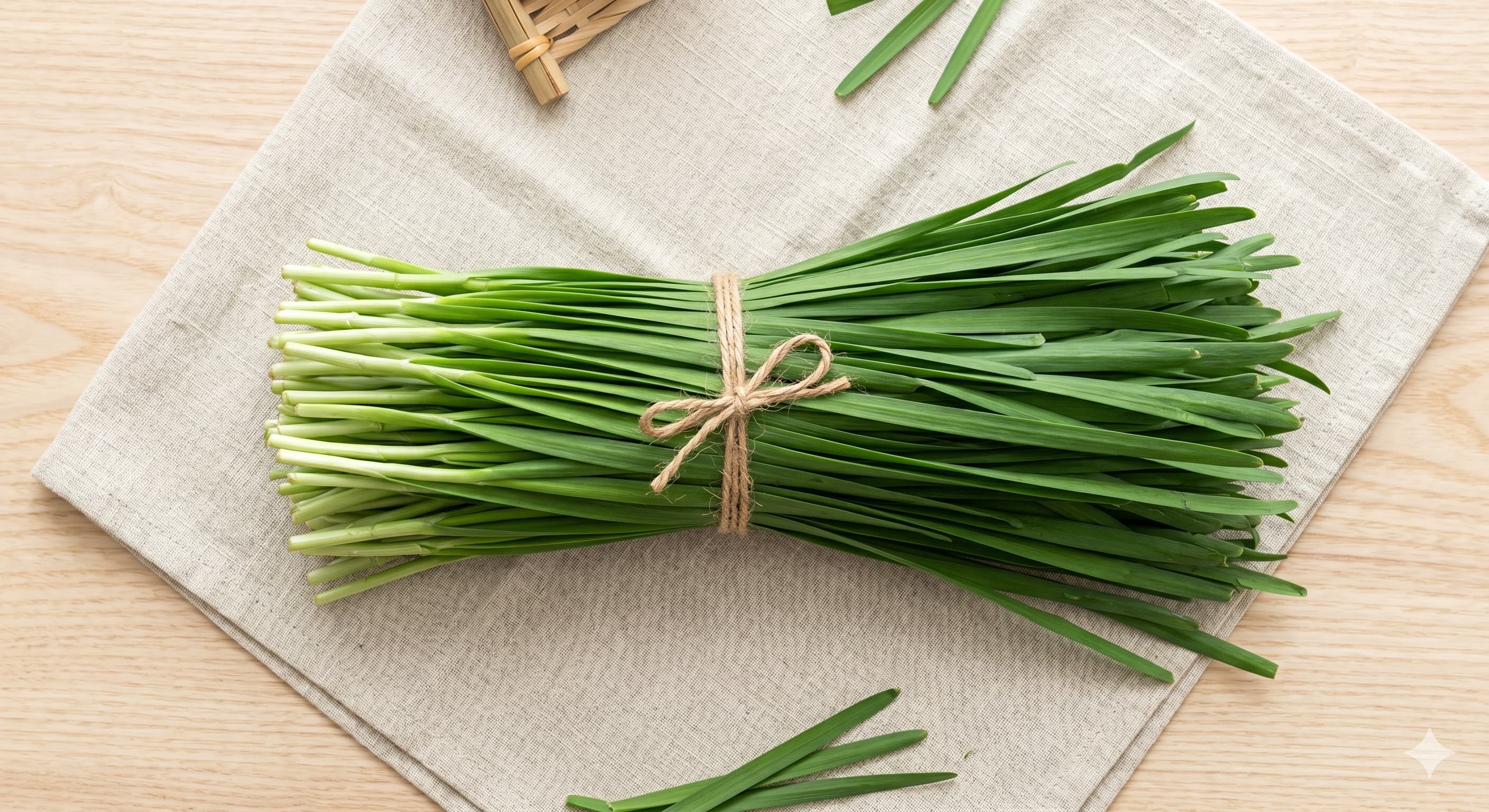
Chives (Korean)
Allium tuberosum
Korean chives (buchu) have been cultivated and consumed in Korea for centuries, valued equally as a culinary ingredient and medicinal herb. The Donguibogam classifies buchu (韭/구) as warm in nature and pungent-salty in flavor, noting it warms the kidneys, tonifies yang energy, and promotes qi circulation. It is notable that buchu is one of the 'five pungent vegetables' (오신채) forbidden in Korean Buddhist temple cuisine, as it is believed to stimulate desire and disturb meditation. Outside of temple cooking, however, buchu is ubiquitous — buchu-jeon (chive pancakes) is one of Korea's most beloved street foods and home-cooked comfort dishes, and buchu-kimchi is a popular quick-fermented kimchi variety. Korean chives are flatter and more garlicky than Western chives, with a robust flavor that holds up to cooking.
New to Chives (Korean)?
Is this edible?
Yes! Korean chives are eaten throughout Korea in pancakes, kimchi, dumplings, and stir-fries. They are a staple ingredient that appears in home cooking constantly. Note that they are avoided in Buddhist temple cuisine due to their stimulating nature.
What does it taste like?
Similar to Western chives but flatter, wider, and more intensely garlicky. Imagine the love child of garlic and chives — robust enough to be a main ingredient rather than just a garnish.
Where to buy
Korean grocery stores (H Mart, Lotte) always stock them. Chinese grocery stores sell them as 'garlic chives' or 'Chinese chives.' Some farmers markets carry them in summer. Regular Western chives are thinner and milder but can substitute in a pinch.
How to prepare
Wash and trim the root ends. Cut into 5cm lengths for most recipes. For buchu-jeon (chive pancakes), keep them long so they create a lacy pattern in the pancake.
Pro tip: Buchu wilts quickly — use within 2-3 days of purchase. For buchu-jeon, make sure the pan and oil are very hot before adding the batter, and resist the urge to flip the pancake too early — let it develop a deep golden-brown crust first.
Traditional Medicine
Source: Donguibogam
Nature (性)
Warm (溫)Flavor (味)
pungent
Target Organs (歸經)
Liver (肝), Kidney (腎), stomach
Benefits
- circulation
Invigorates blood and dispels stasis
혈을 풀어주고 어혈을 없앤다
Source: Donguibogam
- digestion
Warms the stomach and supplements qi
위를 따뜻하게 하고 기를 보한다
Source: Donguibogam
Key Compounds
This information is based on traditional Korean medicine texts (Donguibogam) and is for cultural reference only. It does not constitute medical advice.
Seasonal Availability
Most flavorful in late spring to summer. Available year-round but loses potency in winter.
Culinary Profile
Flavor
Mild garlic-onion flavor, slightly sweet
Texture
Flat, tender blades with a slight snap
Common Uses
Western Substitutes
Related Recipes
Tofu Donggeurangtaeng (Fried Tofu Patties)
두부 동그랑땡
Medium | 40 min
Spicy Zucchini Dumplings
매콤하고 담백한 애호박만두
Easy | 80 min
Pan-grilled Tofu on Chive Bed
부추 두부구이
Easy | 40 min
Spicy Stir-fried Dried Shiitake Mushrooms
건표고버섯볶음
Easy | 40 min
Oisobagi (Stuffed Cucumber Kimchi)
오이소박이
Easy | 30 min
Buchu Kimchi (Garlic Chive Kimchi)
부추김치
Easy | 15 min
Vegan Kimchi Mandu (Dumplings)
비건 김치만두
Medium | 60 min
Mushroom Rice Bowl
버섯밥
Easy | 40 min
Gimbap (Korean Rice Rolls)
두부 김밥
Easy | 80 min
Colorful Sushi
알록달록 꽃김밥
Medium | 80 min
Vegetable Bibimbap with Young Radish Kimchi
채소 열무 비빔밥
Easy | 40 min
Chive and Soft Tofu Doenjang Stew
부추된장
Easy | 40 min
Crispy Chive Jeon
부추전
Easy | 15 min
Gochujang Jangddeok
고추장 장떡
Easy | 26 min
Zucchini Vegetable Dumplings
애호박 만두
Medium | 120 min
Temple-style Chive Jeon
사찰식 부추전
Easy | 15 min
Yasai Gyoza (Vegetable Dumplings)
야사이 교자 (채소 만두)
Medium | 50 min
Perilla Seed Chive Salad
들깨부추샐러드
Easy | 15 min