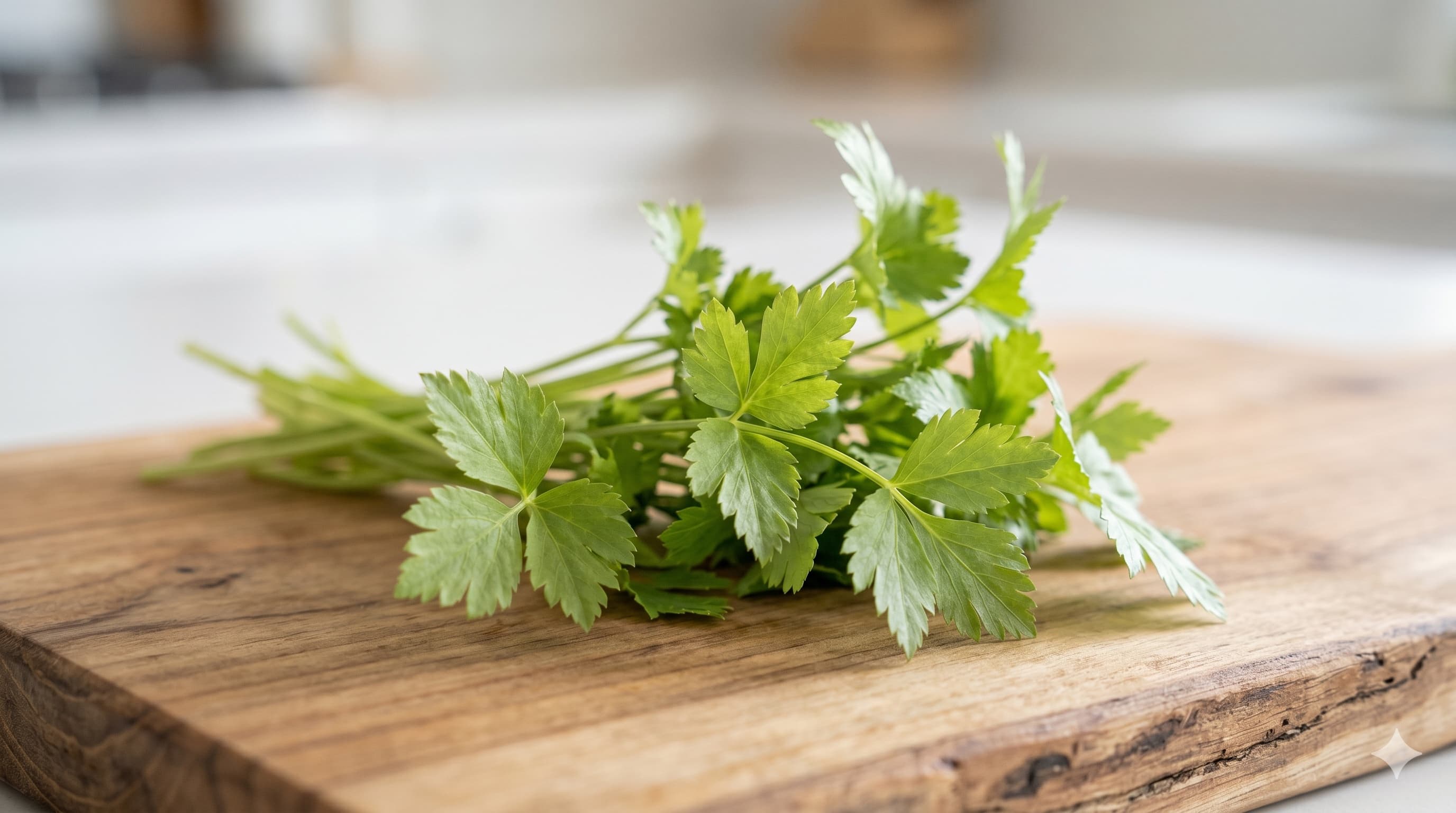
Korean Wild Parsley (Chamnamul)
Pimpinella brachycarpa
Chamnamul literally means 'true vegetable' — the Korean prefix cham denotes authenticity, genuineness, the real thing. This naming speaks to the deep reverence Korean mountain communities held for this delicate spring green. Unlike many wild greens that require blanching to remove bitterness, chamnamul is tender and mild enough to eat raw, a rare quality that made it especially prized. Buddhist monks particularly valued it for its clean, pure flavor that complemented the simplicity of temple cuisine. Its celery-parsley aroma is unique among Korean wild greens.
New to Korean Wild Parsley (Chamnamul)?
Is this edible?
Yes, and it's one of the gentlest-tasting Korean wild greens — perfect for beginners. It has a familiar parsley-celery flavor that Western palates find immediately approachable.
What does it taste like?
Imagine flat-leaf parsley crossed with celery, but softer, sweeter, and more aromatic. If you enjoy fresh herbs, you'll love chamnamul.
Where to buy
Very hard to find in the US. Check Korean grocery freezer sections or specialty online Korean food retailers. Fresh chamnamul is occasionally available at well-stocked H Mart locations in spring.
How to prepare
Wash thoroughly and trim the root ends. For saengchae (raw): cut into 2-inch lengths and toss with gochugaru, soy sauce, vinegar, sesame oil, and a pinch of sugar.
Pro tip: If you can't find chamnamul, mix equal parts Italian flat-leaf parsley and tender celery leaves for a reasonable approximation.
Traditional Medicine
Source: Donguibogam (동의보감)
Nature (性)
Cool (涼)Flavor (味)
bitter, pungent
Target Organs (歸經)
Liver (肝), Heart (心)
Benefits
- circulation
Promotes blood circulation and dissolves blood stasis
혈액 순환을 촉진하고 어혈을 풀어준다
Source: 동의보감 [탕액편] 채부
- digestion
Strengthens the spleen-stomach system and stimulates appetite
비위를 건강하게 하고 식욕을 돋운다
Source: 동의보감 [탕액편] 채부
Key Compounds
This information is based on traditional Korean medicine texts (Donguibogam) and is for cultural reference only. It does not constitute medical advice.
Seasonal Availability
Best harvested in early spring (March-April) when shoots are most tender and aromatic. Becomes tough and less flavorful by summer. Occasionally available frozen at Korean groceries.
Complementary Ingredients (궁합 재료)
Processing Methods (법제)
Chamnamul is one of the few Korean wild greens tender enough to eat raw. Simply wash, cut, and dress.
A 10-15 second dip in boiling water softens the stems while keeping the fresh, parsley-like fragrance intact.
Consumption Tips by Health Goal
Blood circulation
Eat fresh chamnamul dressed with gochugaru and vinegar (saengchae style). The pungent compounds in the raw greens are most effective for promoting circulation.
Appetite and digestion
Serve as a fresh salad-like banchan before meals. The aromatic oils stimulate gastric secretions and prepare the digestive system.
Culinary Profile
Flavor
A delicate, refreshing blend of celery and flat-leaf parsley with a distinctive herbal sweetness — lighter and more elegant than most wild greens
Texture
Thin, tender stems with soft, serrated leaves; pleasantly crisp when fresh, silky when lightly blanched
Common Uses
Western Substitutes