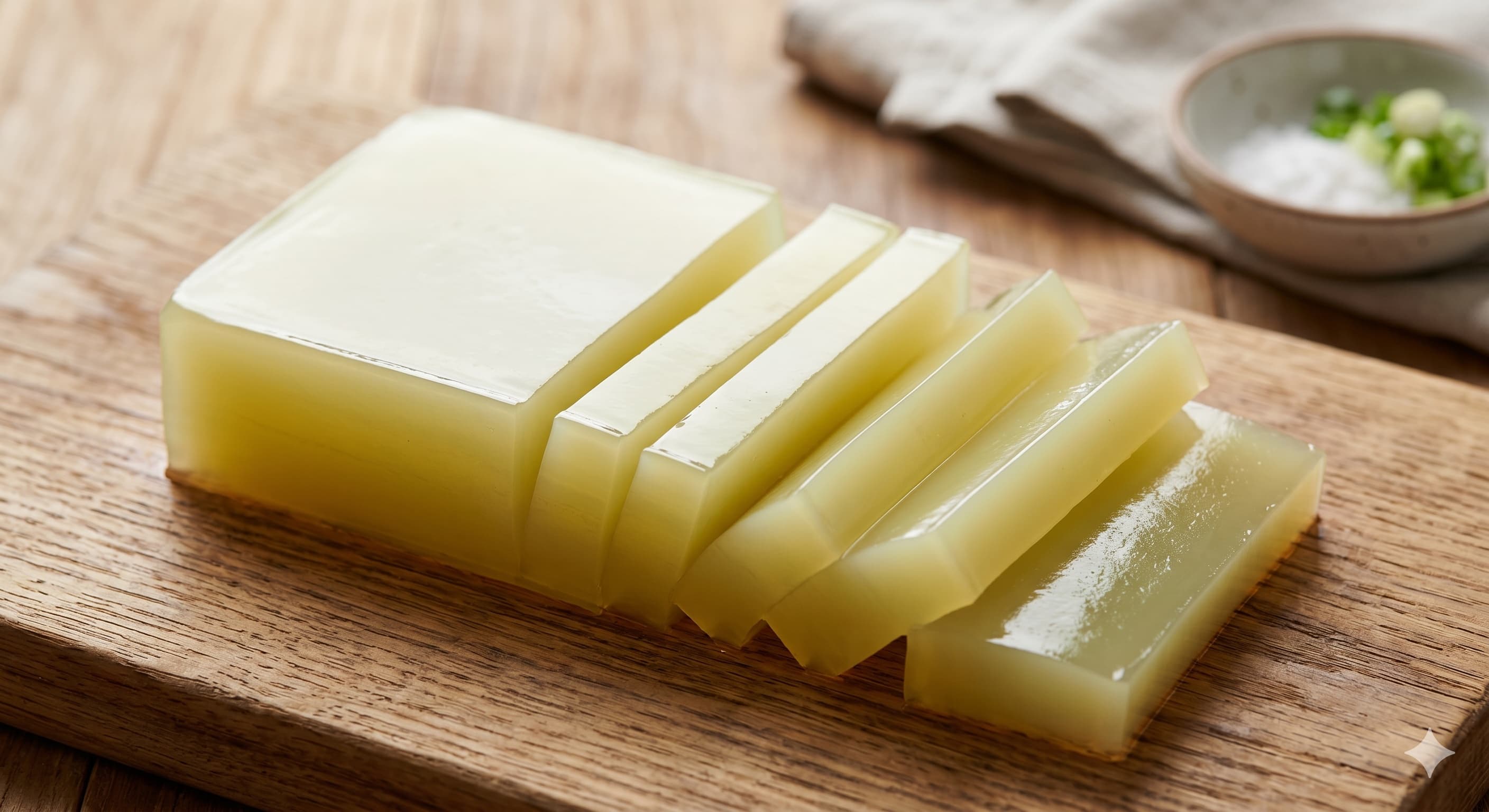
Mung Bean Jelly (Cheongpomuk)
Vigna radiata (starch jelly)
Mung bean jelly (청포묵) is a traditional Korean food made by cooking mung bean starch with water until it solidifies into a firm, translucent block. It inherits the cool, detoxifying properties of the mung bean (녹두) documented in the Donguibogam under 곡부 녹두조. Cheongpomuk was historically associated with Korean royal court cuisine and literati culture — its pale, refined appearance symbolized scholarly simplicity. The dish cheongpomuk-muchim (seasoned mung bean jelly with soy sauce, sesame, and crumbled seaweed) is a classic example of Korean cuisine's emphasis on textural contrasts — the jiggly, smooth jelly against the crispy seaweed and nutty sesame.
Traditional Medicine
Source: Donguibogam (동의보감)
Nature (性)
Cool (涼)Flavor (味)
sweet
Target Organs (歸經)
stomach, large_intestine
Benefits
- detox
Clears heat-toxins and cools the body — inherits mung bean's cooling properties
열독을 내리고 몸을 서늘하게 한다
Source: 동의보감 [탕액편] 곡부 녹두조
- digestion
Benefits the intestines and aids digestion
장을 이롭게 하고 소화를 돕는다
Source: 동의보감 [탕액편] 곡부
Key Compounds
This information is based on traditional Korean medicine texts (Donguibogam) and is for cultural reference only. It does not constitute medical advice.
Seasonal Availability
Available year-round. Traditionally made fresh at home by cooking mung bean starch with water until set. Pre-made blocks available in Korean markets.
Processing Methods (법제)
Cutting the firm jelly block into thin strips allows it to absorb dressing and provides elegant presentation.
Consumption Tips by Health Goal
Summer cooling
Serve cold as muchim (seasoned) in summer. The cool nature makes it an ideal hot-weather food that clears heat without burdening digestion.
Culinary Profile
Flavor
Very mild, almost neutral; slightly starchy; valued entirely for texture; absorbs dressing flavors
Texture
Firm, smooth, and jiggly; slightly bouncy; clean, slippery mouthfeel
Common Uses
Western Substitutes