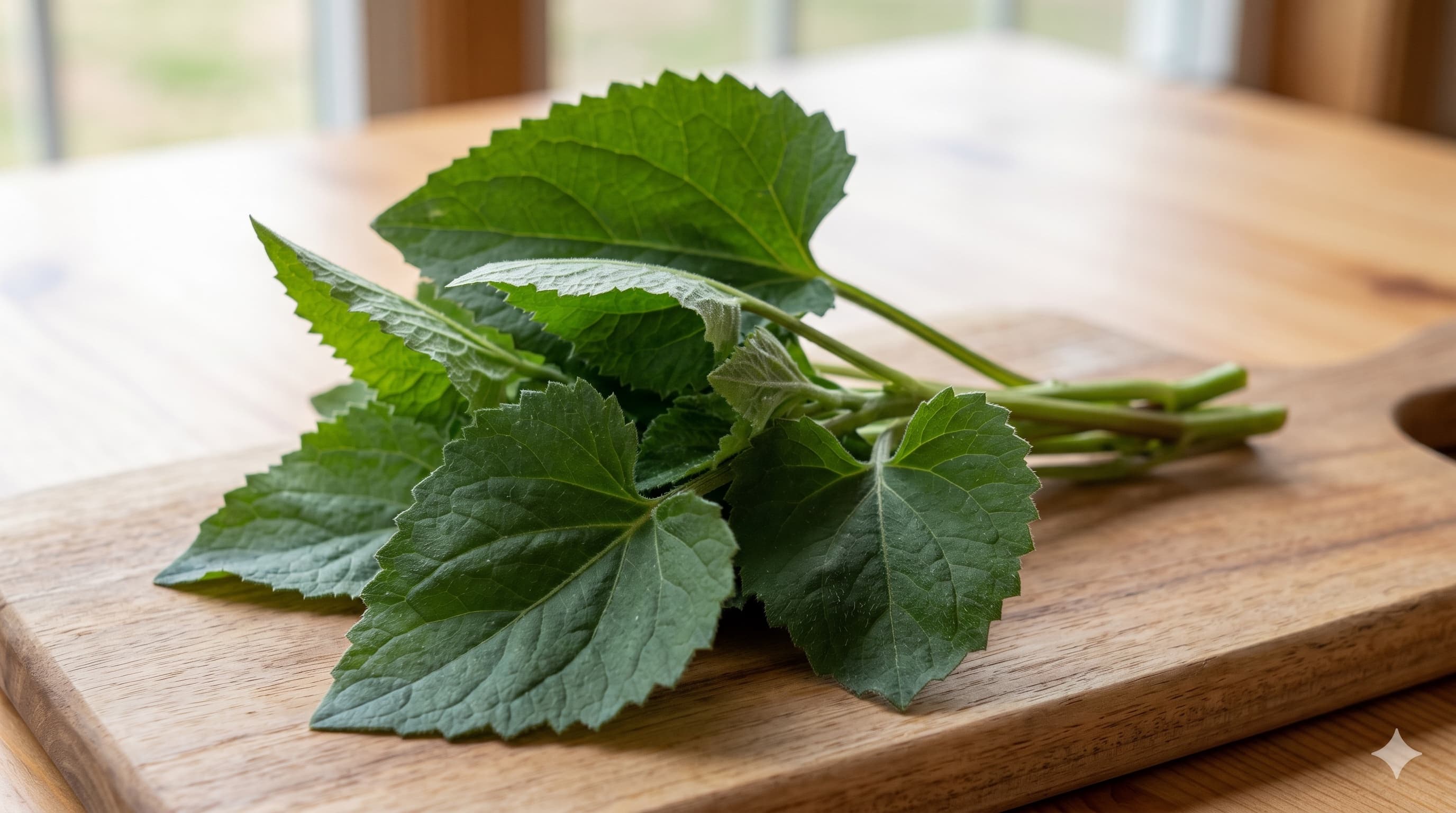
Wild Aster Greens (Chwinamul)
Aster scaber
Chwinamul is perhaps the most iconic of Korea's mountain vegetables (sannamul). The character chwi evokes the wild, untamed mountainsides where Buddhist monks and village foragers have gathered these greens for centuries. In Korea's mountainous interior, spring chwi-gathering is a cultural event — entire families head to the hills in April to collect the tender young shoots. The tradition of drying chwi for winter use is deeply tied to Korean temple food, where monks preserved wild greens harvested during brief mountain growing seasons to sustain themselves year-round. The distinctively bitter, aromatic flavor is so beloved that Koreans living abroad consider dried chwinamul an essential taste of home.
New to Wild Aster Greens (Chwinamul)?
Is this edible?
Yes! Chwinamul is one of Korea's most popular wild greens. You'll most often encounter it in dried form — dark, crinkly leaf bundles sold in plastic bags at Korean groceries.
What does it taste like?
Imagine if dandelion greens and arugula had a more aromatic, woodsy cousin. It's pleasantly bitter with a distinctive mountain herb fragrance.
Where to buy
Dried chwinamul is widely available at Korean grocery stores (H Mart, Lotte, etc.) in the dried vegetables section. Fresh is extremely rare in the US.
How to prepare
For dried chwi: soak in cold water for 4-8 hours or overnight. Boil for 20-30 minutes until tender, then drain and squeeze out water. Season with doenjang, sesame oil, minced garlic, and a pinch of sugar.
Pro tip: Don't skip the squeezing step after boiling — chwinamul holds a lot of water. Squeeze firmly in your fist until no more drips. This concentrates the flavor and prevents your namul from being watery.
Traditional Medicine
Source: Donguibogam (동의보감)
Nature (性)
Cool (涼)Flavor (味)
bitter, sweet
Target Organs (歸經)
Liver (肝), Lung (肺)
Benefits
- detox
Clears heat-toxins from the body and promotes elimination of metabolic waste
열독을 풀어주고 체내 노폐물을 배출한다
Source: 동의보감 [탕액편] 채부
- respiratory
Cools lung heat and alleviates coughs
폐열을 식히고 기침을 멎게 한다
Source: 동의보감 [탕액편] 채부
Key Compounds
This information is based on traditional Korean medicine texts (Donguibogam) and is for cultural reference only. It does not constitute medical advice.
Seasonal Availability
Tender young shoots are harvested in spring (April-May) and early summer. The leaves become tougher as summer progresses. Dried chwi is available year-round at Korean groceries and is the most common form outside Korea.
Complementary Ingredients (궁합 재료)
Processing Methods (법제)
Brief blanching softens the slightly tough leaves and mellows the bitterness while preserving the distinctive wild aroma.
Dried chwi is soaked in cold water for several hours or overnight. This concentrates flavor and makes it available year-round.
Consumption Tips by Health Goal
Detoxification
Blanch fresh or rehydrated chwi and dress with doenjang and sesame oil. Consume as a regular banchan to support the liver's detox function.
Respiratory health
Cook into a light soup or broth during spring. The bitter compounds help clear phlegm and soothe inflamed airways.
Culinary Profile
Flavor
Distinctly aromatic with a pleasant bitterness balanced by a subtle sweetness — the quintessential mountain vegetable flavor that Koreans describe as 'the taste of the mountains'
Texture
Slightly chewy, fibrous leaves with tender stems when properly blanched; dried and rehydrated versions have a pleasantly dense, meaty chewiness
Common Uses
Western Substitutes