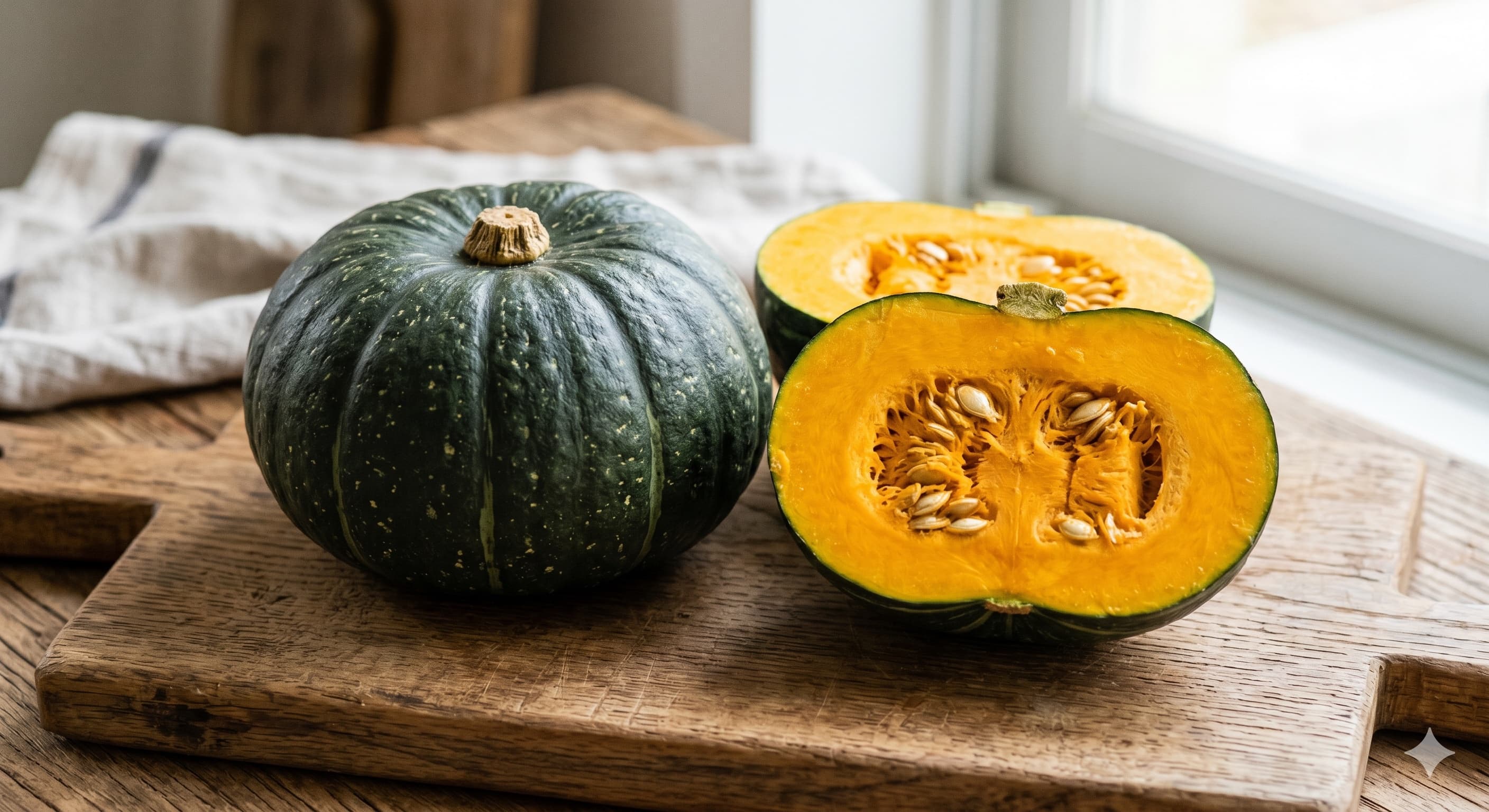
Kabocha Squash (Korean Pumpkin)
Cucurbita maxima
Korean pumpkin (danhobak) refers specifically to the kabocha-type squash with dark green skin and brilliant orange flesh that has been cultivated in Korea since pumpkins arrived from the Americas in the 16th-17th century. The Donguibogam classifies pumpkin as warm in nature and sweet in flavor, noting it tonifies the spleen and benefits qi. In Korean folk medicine, danhobak-juk (pumpkin porridge) is the quintessential recovery food given to new mothers after childbirth, as it is believed to reduce swelling, restore energy, and promote milk production. Its natural sweetness makes it beloved in temple cuisine as well, where it appears in porridges, steamed dishes, and even as a natural sweetener in rice cakes.
New to Kabocha Squash (Korean Pumpkin)?
Is this edible?
Yes! Korean pumpkin (danhobak) is a beloved comfort food ingredient used in porridges, stews, steamed dishes, and desserts. It is the same kabocha squash that is increasingly popular in Western cooking.
What does it taste like?
Very similar to kabocha squash (because it IS kabocha) — intensely sweet, dense, and starchy with a chestnut-like richness. Much sweeter and drier than American pumpkin or butternut squash.
Where to buy
Korean or Japanese grocery stores carry it labeled as kabocha or danhobak. Many regular supermarkets now stock kabocha squash, especially Whole Foods, Trader Joe's, and natural food stores. Available year-round but best in autumn.
How to prepare
Cut in half with a heavy knife (the skin is very hard — be careful). Scoop out seeds. For porridge, peel and cube. For steaming, leave the skin on — it is edible and nutritious when cooked.
Pro tip: Microwave the whole squash for 2-3 minutes before cutting to soften the rock-hard skin and make it much safer to slice. The skin is edible and delicious when steamed or roasted, so do not waste effort peeling if the recipe does not require it.
Traditional Medicine
Source: Donguibogam
Nature (性)
Warm (溫)Flavor (味)
sweet
Target Organs (歸經)
Spleen (脾), stomach
Benefits
- digestion
Strengthens the spleen and stomach, supplements qi
비위를 보하고 기를 더한다
Source: Donguibogam
- detox
Reduces edema and has detoxifying effects
부종을 빼주고 해독 작용을 한다
Key Compounds
This information is based on traditional Korean medicine texts (Donguibogam) and is for cultural reference only. It does not constitute medical advice.
Seasonal Availability
Sweetest after autumn harvest when starches convert to sugar during storage.
Culinary Profile
Flavor
Very sweet, dense, chestnut-like
Texture
Dense and creamy when cooked
Common Uses
Western Substitutes
Related Recipes
Macrobiotic Temple Food Bowl
마크로비오틱 사찰음식 한 그릇
Easy | 40 min
Sweet Vinegar Roasted Kabocha
단호박 단초 구이
Medium | 0 min
Sweet Pumpkin Porridge
호박죽
Easy | 45 min
Kabocha Squash and Green Pepper Miso Soup
단호박 피망 된장국
Easy | 20 min
Kabocha no Surinagashi (Silky Kabocha Squash Soup)
카보차 수리나가시 (단호박 퓨레 수프)
Medium | 40 min
Kabocha and Rice Dumpling Hoto-Style Stew
단호박 시라타마 호토풍
Easy | 30 min
Braised Kabocha Squash with Nuts
단호박 견과류 조림
Easy | 40 min
Kabocha no Nimono (Japanese Simmered Kabocha Squash)
카보차노 니모노 (단호박 조림)
Easy | 30 min
Kabocha Julienne Salad
단호박 채 샐러드
Medium | 0 min
Grilled Ginseng & Vegetable Salad
인삼 샐러드
Medium | 40 min
Country-Style Summer Vegetable Tofu Salad
여름 채소 시골풍 흰깨 무침
Easy | 0 min
Low-sodium Ssamjang Kabocha Walnut and Tofu Versions
단호박 호두 쌈장&두부 쌈장
Easy | 80 min