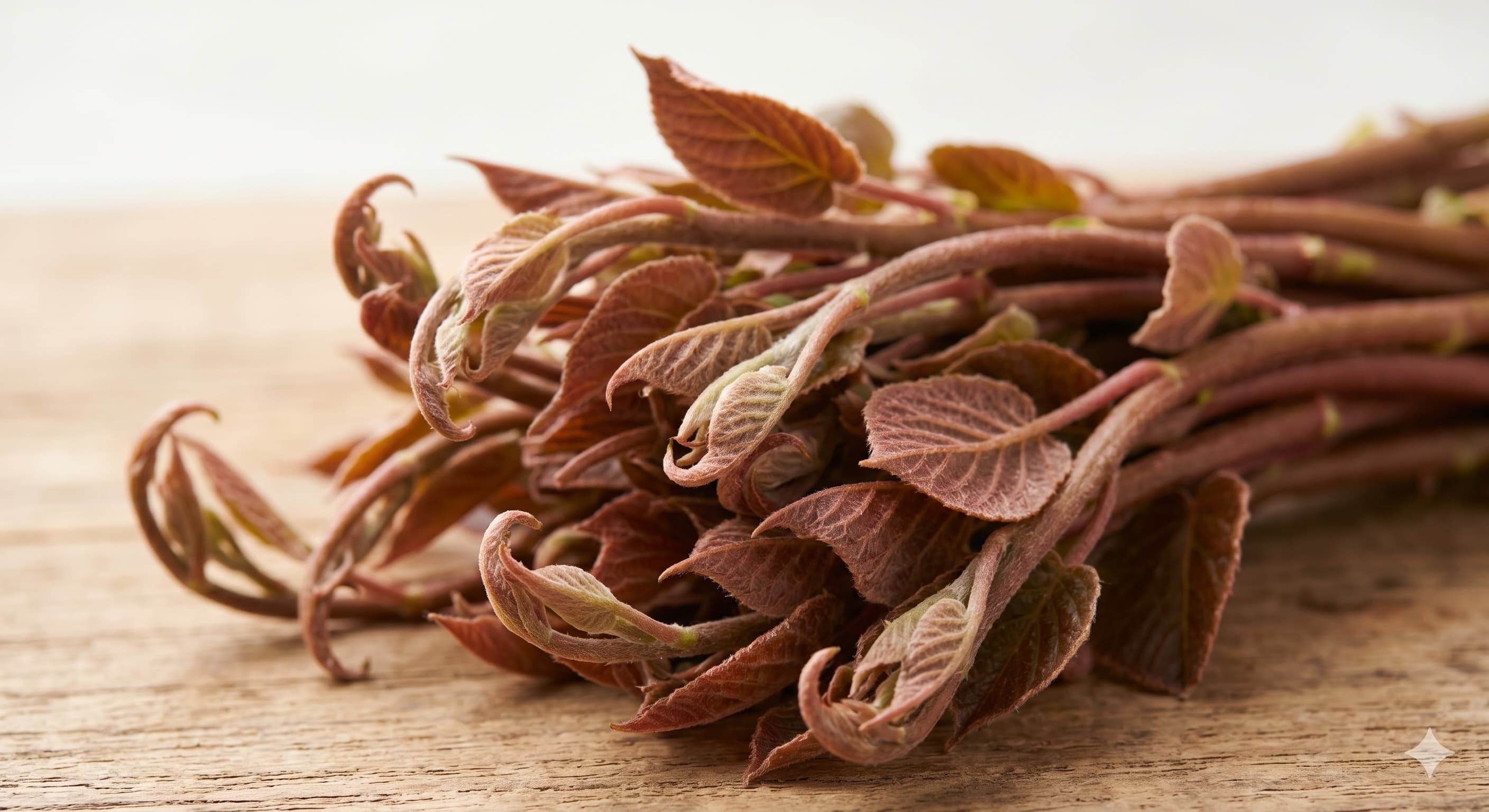
Kiwi Vine Shoots (Daraesun)
Actinidia arguta (Siebold & Zucc.) Planch. ex Miq.
Daraesun (다래순) are the young spring shoots of the hardy kiwi vine (Actinidia arguta), a plant native to Korea, Japan, and eastern Russia. While the small, grape-sized fruits (다래, darae) are sweet and delicious, it is the tender young shoots that Korean mountain communities prize as a spring delicacy. The vine grows wild in Korean mountain forests, twining through trees, and the shoots are gathered during a brief window in April and May before they become tough. In Korean temple cuisine, daraesun is considered one of the most elegant spring namul — its subtle sweetness and delicate texture embody the Buddhist ideal of appreciating what nature offers in each season. The hardy kiwi is the ancestor of the commercial kiwifruit (which was bred from a related Chinese species, A. chinensis) — so when you eat daraesun, you are tasting the wild origins of one of the world's most popular fruits.
New to Kiwi Vine Shoots (Daraesun)?
Is this edible?
Yes! These are the tender young shoots of the hardy kiwi vine. The plant that gives us those little grape-sized kiwi fruits also gives us these delicious spring greens.
What does it taste like?
Subtly sweet and mildly sour, with a fresh, green herbaceousness. Imagine the essence of kiwi fruit translated into a delicate leafy vegetable. Very mild and refined.
Where to buy
Extremely rare outside Korea. Occasionally found at specialty Korean online shops in spring. If you grow hardy kiwi vines (increasingly popular in American gardens), you can harvest the shoots yourself.
How to prepare
Blanch in boiling water for just 30-60 seconds — they are delicate and overcook easily. Rinse in cold water, gently squeeze dry, and dress simply with sesame oil and soy sauce.
Pro tip: If you grow hardy kiwi vines in your garden, pruning the young shoots in spring serves double duty — it controls the vine's vigorous growth AND gives you a gourmet Korean ingredient for free.
Traditional Medicine
Source: Korean folk medicine traditions
Nature (性)
Cool (涼)Flavor (味)
sweet, sour
Target Organs (歸經)
Kidney (腎), stomach
Benefits
- kidney health
Tonifies kidney qi and quenches thirst
신장의 기운을 보하고 갈증을 멎게 한다
Source: Korean folk medicine — 다래 kidney tonification tradition
- moistening
Generates vital fluids and moistens dryness
진액을 생성하고 건조함을 윤택하게 한다
Source: Korean folk medicine — traditional spring tonic use
Key Compounds
This information is based on traditional Korean medicine texts (Donguibogam) and is for cultural reference only. It does not constitute medical advice.
Seasonal Availability
Daraesun is available only briefly in spring (April-May) when the tender young shoots emerge from the hardy kiwi vine. It is a highly seasonal delicacy that cannot be stored or preserved well.
Complementary Ingredients (궁합 재료)
Processing Methods (법제)
Softens the shoots while preserving their delicate sweet flavor and tender texture
Consumption Tips by Health Goal
kidney_health
Eat blanched daraesun dressed with sesame oil and soy sauce in spring as a gentle kidney tonic and to welcome the new season
Culinary Profile
Flavor
Delicately sweet with a subtle sour note — reminiscent of the kiwi fruit it eventually produces, but greener and more herbaceous. Considered one of the most refined spring flavors in Korean mountain cuisine
Texture
Tender, young shoots with a gentle snap. The unfurling leaves are soft and silky. After blanching, they become supple and slightly slippery
Common Uses
Western Substitutes