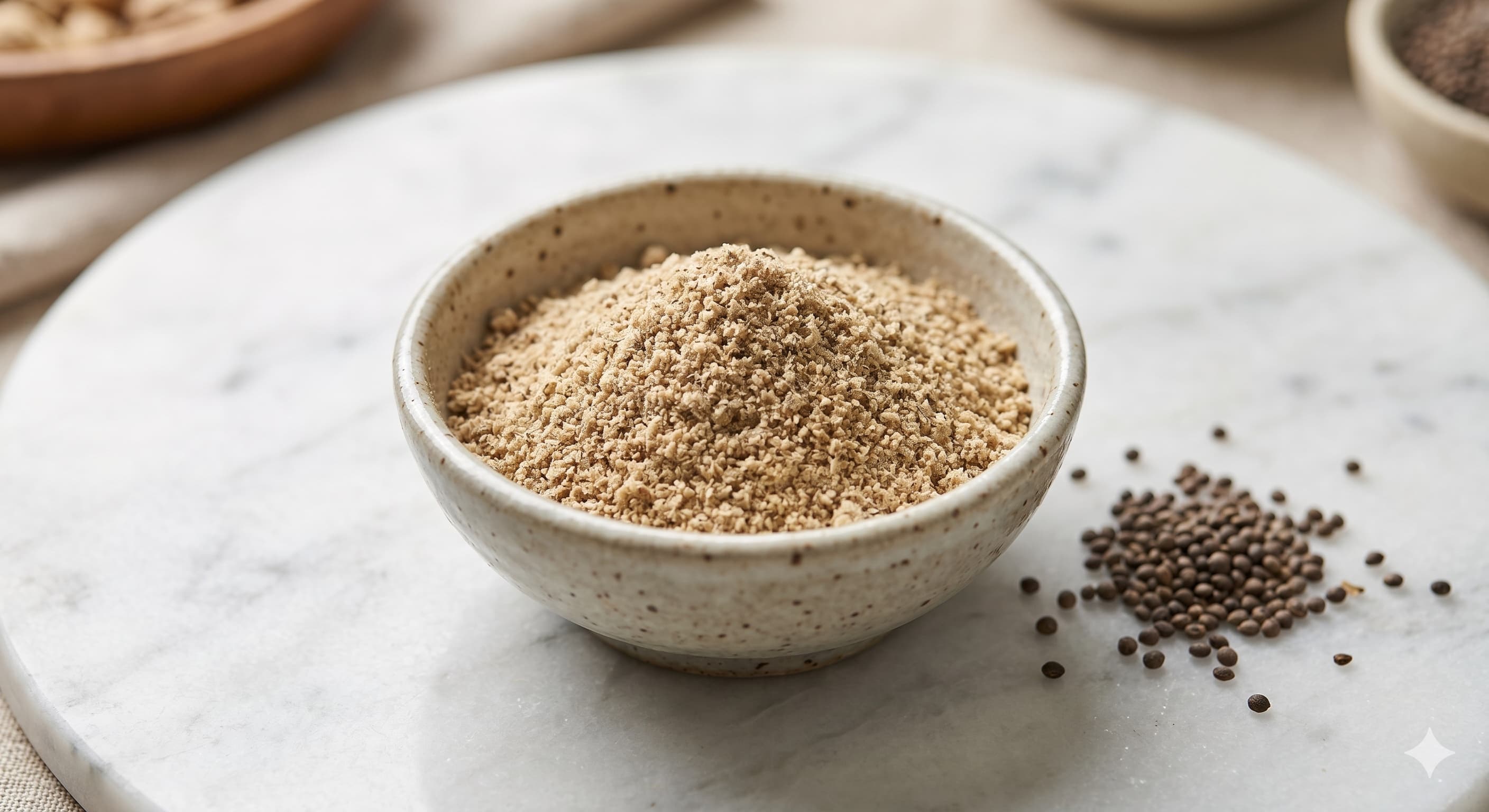
Perilla Seed Powder
Perilla frutescens
Perilla (들깨) is native to East Asia and has been cultivated in Korea since ancient times. The Donguibogam classifies it under 곡부 임자조, noting its warm nature and ability to moisten the lungs and lubricate the intestines. In Korean temple cuisine, perilla seed powder is an essential ingredient — it creates the creamy, rich mouthfeel in soups that would otherwise come from animal fats. The plant is unique in Korean cuisine because both the seeds (들깨) and the leaves (깻잎) are used extensively, each with distinct flavors and culinary applications.
Traditional Medicine
Source: Donguibogam (동의보감)
Nature (性)
Warm (溫)Flavor (味)
sweet
Target Organs (歸經)
Lung (肺), large_intestine
Benefits
- respiratory
Moistens the lungs and stops coughing
폐를 윤하게 하고 기침을 멎게 한다
Source: 동의보감 [탕액편] 곡부 임자조
- digestion
Lubricates the intestines and resolves constipation
장을 윤하게 하고 변비를 풀어준다
Source: 동의보감 [탕액편] 곡부 임자조
- energy
Supplements qi and nourishes skin and flesh
기를 보하고 살을 윤택하게 한다
Source: 동의보감 [탕액편] 곡부
Key Compounds
This information is based on traditional Korean medicine texts (Donguibogam) and is for cultural reference only. It does not constitute medical advice.
Seasonal Availability
Perilla seeds are harvested in October. Freshly ground powder has the most potent earthy, nutty aroma. Store-bought powder loses flavor quickly; grinding fresh is ideal.
Processing Methods (법제)
Roasting activates aromatic compounds; grinding releases the omega-3 rich oils for better absorption. Best used immediately after grinding.
Consumption Tips by Health Goal
Respiratory health
Add to warm soups and porridges. The warm, moistening nature of perilla powder soothes dry lungs and helps with dry coughs.
Culinary Profile
Flavor
Distinctively earthy, nutty, with a unique grassy undertone; richer and more complex than sesame
Texture
Fine, slightly oily powder; adds creamy body to soups and sauces
Common Uses
Western Substitutes
Related Recipes
Temple Kimchi (No Garlic, No Green Onion)
사찰식 김치
Medium | 40 min
Oyster Mushroom & Zucchini Stir-fry with Perilla Seeds
느타리버섯 호박 들깨볶음
Easy | 20 min
Mushrooms with Perilla Seed Powder
들깨버섯볶음
Easy | 40 min
Macrobiotic Temple Food Bowl
마크로비오틱 사찰음식 한 그릇
Easy | 40 min
King Oyster Mushrooms with Perilla Seed Sauce
한정식집 들깨소스 새송이버섯
Easy | 20 min
Butterbur Stem & Radish Stir-fry with Perilla Seeds
머위대 무들깨볶음
Easy | 20 min
Perilla Leaf Shoots Namul with Ground Perilla Seeds
깻잎순 들깨볶음
Easy | 20 min
Radish with Perilla Seed Powder
들깨 무 나물
Easy | 20 min
Cucumber & Perilla Seed Stir-fry
오이들깨볶음
Easy | 40 min
Taro Stem Stir-fry with Perilla Seeds
토란대볶음
Easy | 20 min
Perilla Seed Chive Salad
들깨부추샐러드
Easy | 15 min
Perilla Oil Soy Sauce
들기름 간장 양념장
Easy | 3 min
Temple-Style Joseon Soy Sauce Dressing
조선간장 양념장 (사찰식)
Easy | 3 min