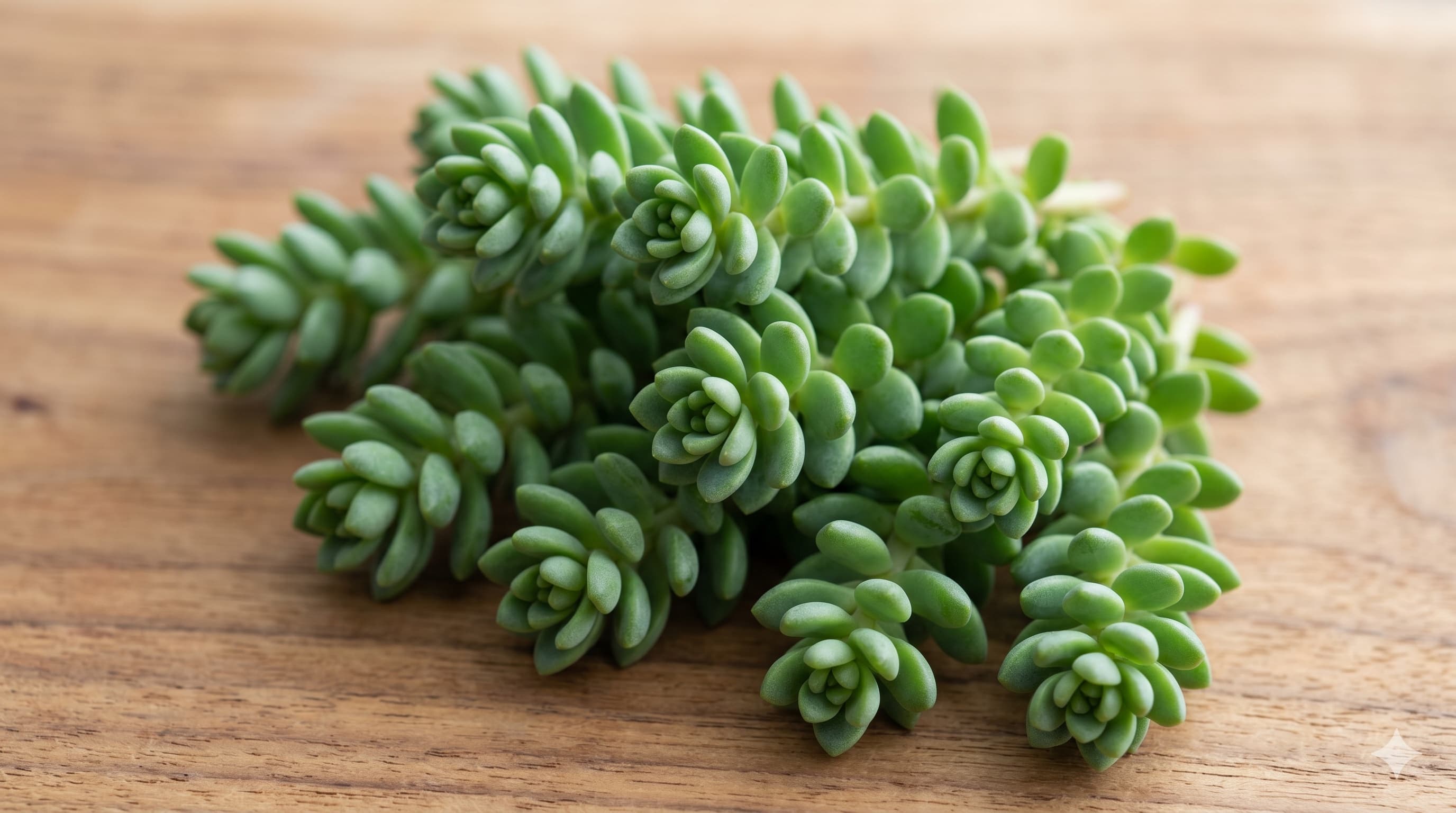
Stonecrop (Dolnamul)
Sedum sarmentosum Bunge
Dolnamul (돌나물) literally means 'stone vegetable' — named because this hardy succulent grows wild on rocks, stone walls, and gravelly hillsides throughout Korea. It is one of the most distinctive namul ingredients because it is one of the very few Korean greens traditionally eaten completely raw, without any blanching or cooking. Its juicy, sour-sweet flavor makes it a natural spring refresher. In rural Korea, children would pick dolnamul off stone walls as a snack, popping the plump leaves like tiny water balloons. The Donguibogam classifies it as a cooling herb that clears liver heat and toxins — making it an ideal spring food in traditional Korean medicine, which emphasizes cooling the liver in spring. Korean temple monks valued dolnamul for its ability to grow in the most inhospitable places, seeing in it a Buddhist lesson about thriving amid hardship. The plant is so easy to propagate — any broken stem will root and grow — that it embodies resilience and abundance.
New to Stonecrop (Dolnamul)?
Is this edible?
Yes! Dolnamul is eaten entirely raw — no cooking needed. Just wash and dress. It is a succulent plant with plump, juicy little leaves.
What does it taste like?
Imagine biting into a tiny, slightly sour grape that is also a leaf. It is juicy, refreshing, mildly tart, and subtly sweet. Very unique and addictive.
Where to buy
Very rare outside Korea. Some Korean grocery stores carry it in spring. Your best bet is to grow it yourself — it is an incredibly easy succulent to propagate from cuttings.
How to prepare
Simply wash thoroughly, drain, and toss with chogochujang (mix gochujang + vinegar + sugar). That is it — no cooking, no blanching, no peeling.
Pro tip: If you cannot find dolnamul, try making the same chogochujang dressing with purslane — it is the closest Western equivalent in terms of juicy, succulent texture.
Traditional Medicine
Source: Donguibogam (동의보감)
Nature (性)
Cool (涼)Flavor (味)
sour, sweet
Target Organs (歸經)
Liver (肝), gallbladder
Benefits
- detox
Clears heat-toxins, reduces swelling, and cools liver heat
열독을 풀고 부종을 가라앉히며 간의 열을 내린다
Source: 동의보감 [탕액편] 초부 경천초조
- liver health
Purifies liver qi and is effective for jaundice conditions
간의 기운을 맑게 하고 황달에 효과가 있다
Source: 동의보감 [탕액편] 초부 경천초조
Key Compounds
This information is based on traditional Korean medicine texts (Donguibogam) and is for cultural reference only. It does not constitute medical advice.
Seasonal Availability
Dolnamul is best from April to July when the succulent leaves are plump and juicy. It grows wild on rocky hillsides and stone walls throughout Korea. Occasionally available at Korean groceries in spring.
Complementary Ingredients (궁합 재료)
Processing Methods (법제)
Preserves the juicy, sour-sweet flavor and cooling properties — one of the few namul eaten entirely raw
Consumption Tips by Health Goal
liver_health
Eat fresh dolnamul dressed with chogochujang (vinegar-gochujang) in spring to cool liver heat after winter's heavy foods
Culinary Profile
Flavor
Juicy, mildly sour, and slightly sweet — refreshingly succulent. The flavor is clean and bright, like a cross between purslane and green grape, with a satisfying pop when you bite into the leaves
Texture
Plump, succulent leaves that burst with juice when bitten. Crisp, tender stems. The whole plant has the satisfying crunch of a well-hydrated succulent
Common Uses
Western Substitutes