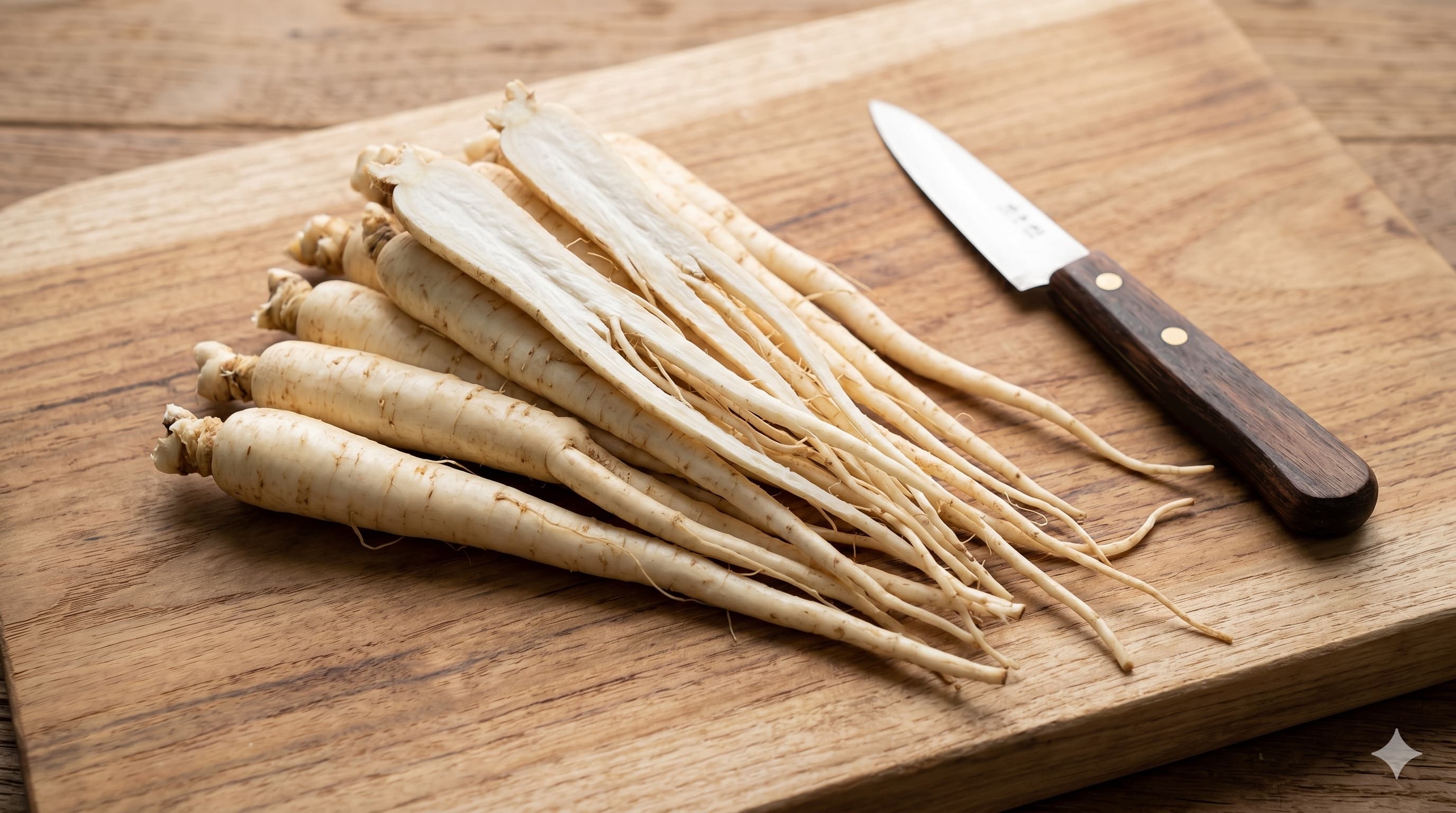
Bellflower Root (Doraji)
Platycodon grandiflorus
Bellflower root (길경/桔梗) is one of the most important herbs in the Donguibogam, receiving detailed coverage under 초부 길경조. It is classified as neutral with bitter-spicy flavor, primarily targeting the lungs. Korean folk tradition holds that wild doraji from mountain slopes, grown for many years, has the strongest medicinal potency — giving rise to the famous Korean folk song 'Doraji' about gathering the roots on mountainsides. In Korean cuisine, doraji bridges the gap between food and medicine more visibly than almost any other ingredient — it is eaten as a delicious namul while simultaneously being prescribed for respiratory ailments.
New to Bellflower Root (Doraji)?
Is this edible?
Yes! Bellflower root is a traditional Korean vegetable eaten for centuries, widely available in Korean markets. It is especially popular in namul dishes and as a medicinal food for lung health.
What does it taste like?
Mildly bitter with an earthy, slightly sweet, almost ginseng-like flavor. The texture is uniquely crunchy and fibrous — somewhat like a cross between a parsnip and a very firm celery root.
Where to buy
Korean grocery stores (H Mart, Lotte) in the fresh produce or refrigerated section, sometimes pre-shredded and soaked. Dried doraji is also available and needs rehydration. Not typically found in regular supermarkets.
How to prepare
Fresh doraji must be peeled, split lengthwise, and then rubbed vigorously with coarse salt and rinsed several times to remove bitterness. Soak in cold water for at least 30 minutes, changing the water once or twice. Pre-prepped doraji from Korean stores saves significant effort.
Pro tip: Do not skip the salt-rubbing step — it is essential for removing the bitter compounds. If using dried doraji, soak overnight in cold water before proceeding with the salt rub.
Traditional Medicine
Source: Donguibogam (동의보감)
Nature (性)
Neutral (平)Flavor (味)
bitter, pungent
Target Organs (歸經)
Lung (肺)
Benefits
- respiratory
Opens the lungs, expels phlegm, and stops coughing
폐를 열어 담을 배출하고 기침을 멎게 한다
Source: 동의보감 [탕액편] 초부 길경조
- immunity
Treats throat pain and reduces swelling/abscesses
인후의 통증을 다스리고 종기를 삭인다
Source: 동의보감 [탕액편] 초부 길경조
- detox
Drains pus and resolves toxins, particularly in the upper body
고름을 배출하고 독을 풀어준다
Source: 동의보감 [탕액편] 초부 길경조
Key Compounds
This information is based on traditional Korean medicine texts (Donguibogam) and is for cultural reference only. It does not constitute medical advice.
Seasonal Availability
Wild doraji harvested in autumn after 3+ years of growth is most prized medicinally. Cultivated doraji is available year-round. Spring shoots are also edible.
Processing Methods (법제)
Soaking torn doraji strips in salt water removes harsh bitterness while preserving beneficial saponins. Multiple water changes reduce bitterness further.
Consumption Tips by Health Goal
Respiratory health
Tear into strips, soak to remove bitterness, then season as namul with sesame oil. Regular consumption supports lung health and helps clear phlegm.
Culinary Profile
Flavor
Distinctive bitter-sweet flavor with slight spiciness; pleasantly crunchy; the bitterness mellows significantly with proper preparation
Texture
Firm, crunchy, and slightly fibrous; satisfying snap when fresh
Common Uses
Western Substitutes