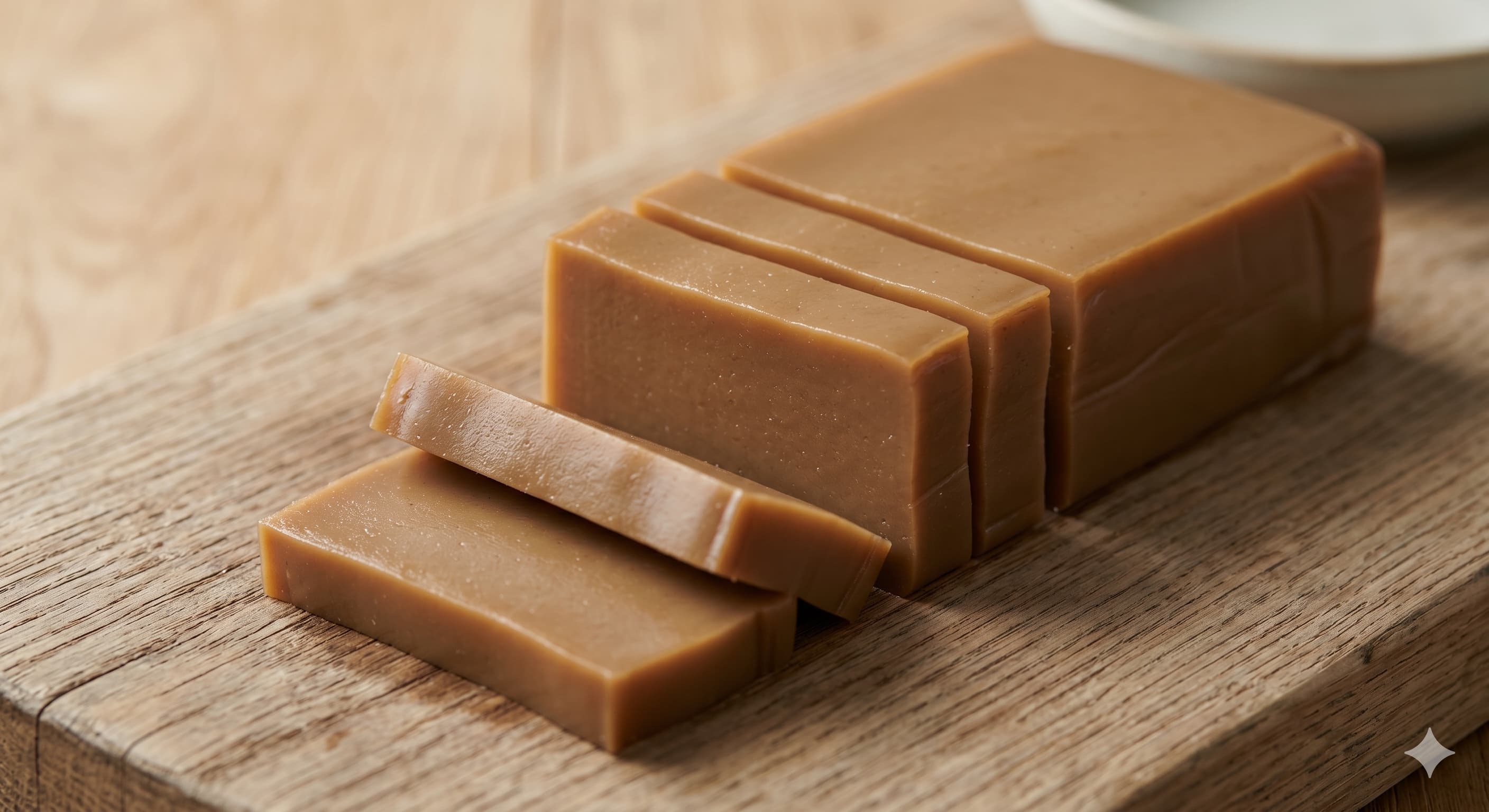
Acorn Jelly
Quercus spp. (processed)
Acorn jelly (dotorimuk) represents one of Korean cuisine's most resourceful traditions — transforming the bitter, tannic acorns of oak trees into a silky, nutritious food through patient processing. The Donguibogam classifies acorn as cool in nature and astringent in flavor, noting it benefits the intestines and stops diarrhea. During the numerous famines that punctuated Korean history, dotorimuk was a critical survival food that sustained entire communities when grain harvests failed. The laborious process of leaching out the bitter tannins by repeatedly soaking ground acorn starch in fresh water is a testament to Korean ancestral ingenuity. Today, dotorimuk-muchim (acorn jelly salad) is a beloved banchan enjoyed for its subtle nutty flavor and distinctive bouncy texture.
Traditional Medicine
Source: Donguibogam
Nature (性)
Neutral (平)Flavor (味)
bitter, bitter
Target Organs (歸經)
Spleen (脾), stomach, large_intestine
Benefits
- digestion
Astringes the intestines and stops diarrhea
장위를 수렴하고 설사를 멈춘다
Source: Donguibogam
- detox
Expels toxins from the body and reduces swelling
체내 독소를 배출하고 부종을 줄인다
Key Compounds
This information is based on traditional Korean medicine texts (Donguibogam) and is for cultural reference only. It does not constitute medical advice.
Seasonal Availability
Acorns are foraged in autumn; the jelly is available year-round at Korean markets.
Culinary Profile
Flavor
Earthy, mildly nutty, slightly astringent
Texture
Firm and bouncy, jelly-like
Common Uses
Western Substitutes