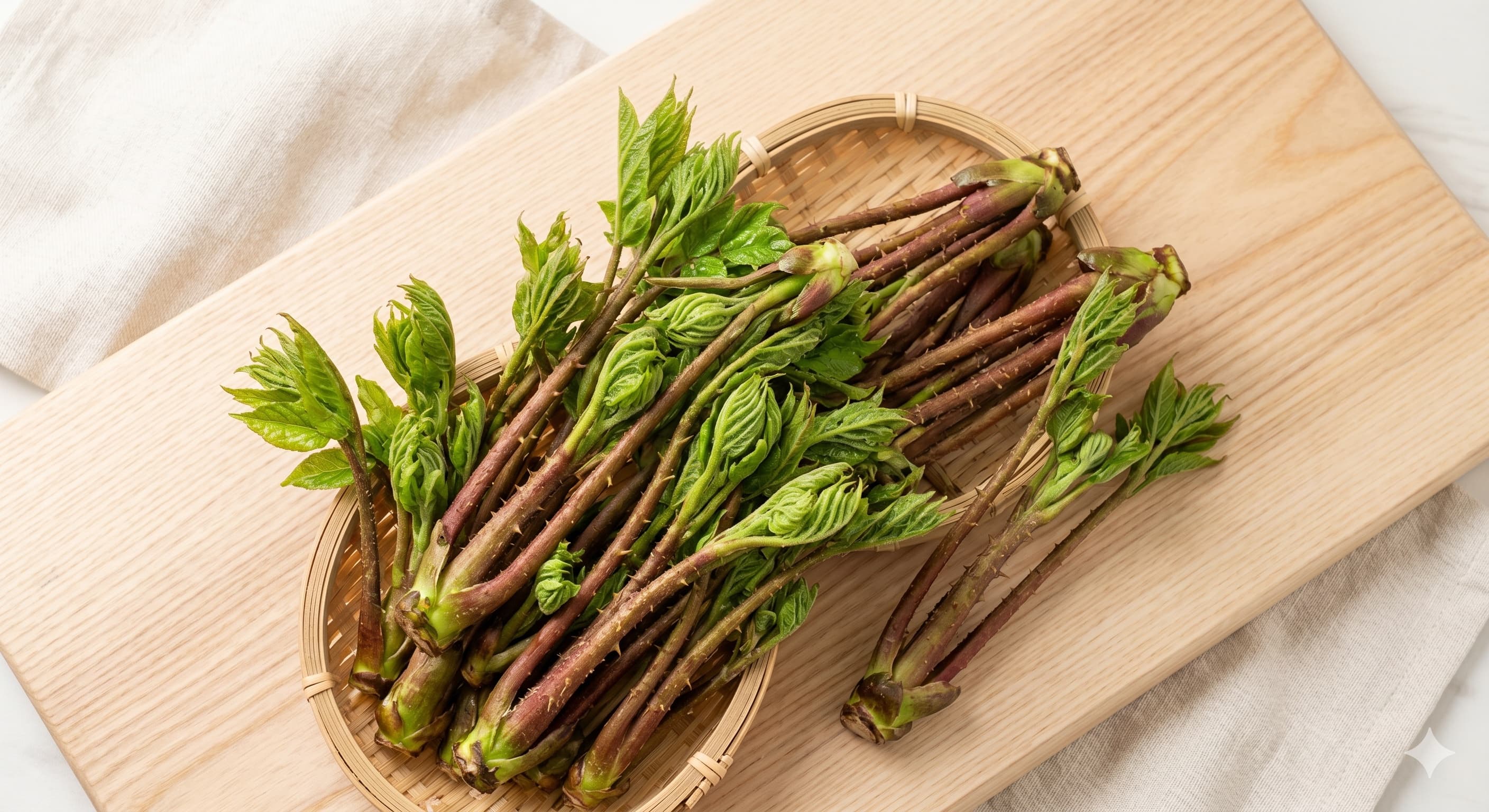
Aralia Shoots
Aralia elata
Aralia shoots (dureup) are a prized spring delicacy harvested from the Aralia elata tree, foraged from Korean mountains during a brief window in April-May. The Donguibogam classifies dureup (楤木/총목) as warm in nature and slightly bitter in flavor, noting it tonifies the kidneys and dispels wind-dampness. Dureup is considered one of the finest mountain vegetables (산나물) in Korean cuisine, valued for its distinctive slightly bitter, nutty flavor with hints of asparagus and walnut. It is typically prepared simply — blanched and served as namul with sesame oil and soy sauce, or battered and fried as dureup-jeon (aralia shoot pancakes) — to preserve its delicate wild character. Its brief seasonal availability makes it a cherished harbinger of spring.
New to Aralia Shoots?
Is this edible?
Yes! Aralia shoots are a prized spring delicacy in Korean mountain cuisine (san-namul), harvested from thorny aralia trees for just a few weeks each spring. They are considered one of the finest wild vegetables in Korea.
What does it taste like?
A unique combination of asparagus, walnut, and mild bitterness — nutty, slightly resinous, and wonderfully aromatic. The tender tips are the most delicate and flavorful part.
Where to buy
Korean grocery stores (H Mart) carry them fresh in spring (April-May). They are very seasonal. Blanched and frozen dureup may be available year-round at some Korean stores. Not available in regular Western supermarkets.
How to prepare
Trim the woody base of the stem. Blanch in boiling salted water for 1-2 minutes until tender-crisp, then transfer to ice water. Drain well and season as namul, or dip in batter for dureup-jeon (pancakes).
Pro tip: Dureup is at its best when the shoots are still tightly closed — once the leaves unfurl, the shoots become bitter and tough. Choose tight, compact buds with no open leaves.
Traditional Medicine
Source: Donguibogam
Nature (性)
Warm (溫)Flavor (味)
bitter, pungent
Target Organs (歸經)
Kidney (腎), stomach
Benefits
- circulation
Dispels wind-dampness and benefits the joints
풍습을 제거하고 관절을 이롭게 한다
Source: Donguibogam
Key Compounds
This information is based on traditional Korean medicine texts (Donguibogam) and is for cultural reference only. It does not constitute medical advice.
Seasonal Availability
Brief spring harvest window (April). Prized as a luxury wild vegetable.
Culinary Profile
Flavor
Mildly bitter with a fresh, nutty aftertaste
Texture
Crisp and succulent when blanched
Common Uses
Western Substitutes