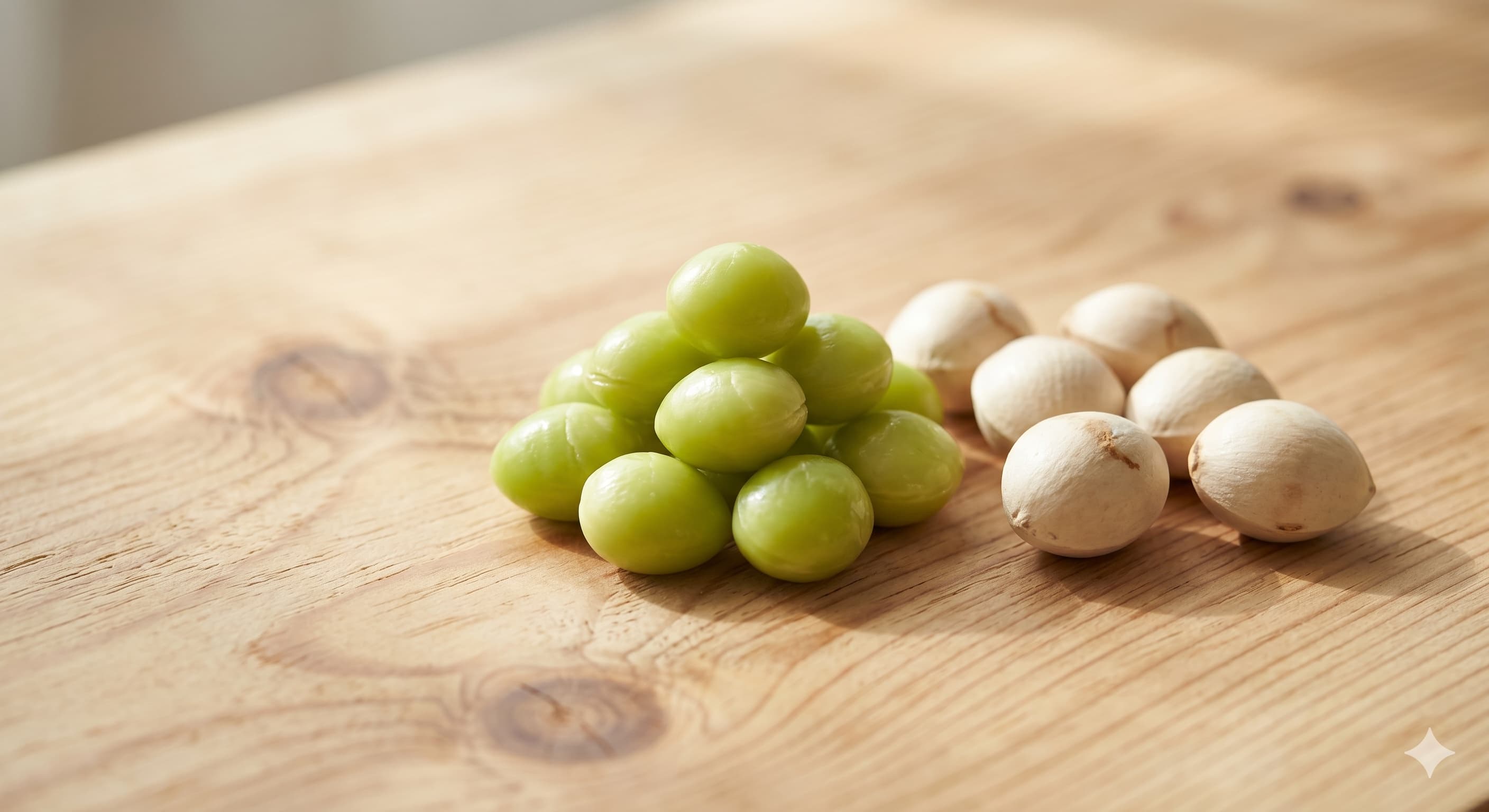
Ginkgo Nut
Ginkgo biloba
Ginkgo nuts come from the Ginkgo biloba tree, one of the oldest living tree species on earth — a 'living fossil' that has existed for over 200 million years. The Donguibogam classifies ginkgo nut (은행/銀杏, literally 'silver apricot') as having a neutral nature with slight toxicity, noting it benefits the lungs and stops wheezing. In Korean temple cuisine, ginkgo nuts are treasured as golden jewels threaded onto pine needles for the exquisite dish eunhaeng-kkochi (ginkgo skewers). They are also essential in royal court cuisine, adding their unique buttery texture and jade-green color to festive dishes like japchae and savory pancakes.
Traditional Medicine
Source: Donguibogam
Nature (性)
Neutral (平)Flavor (味)
sweet, bitter
Target Organs (歸經)
Lung (肺), Kidney (腎)
Benefits
- immunity
Strengthens the lungs and stops coughing
폐를 보하고 기침을 멈추게 한다
Source: Donguibogam
- detox
Promotes urination and clears turbidity
소변을 이롭게 하고 탁한 것을 맑게 한다
Key Compounds
This information is based on traditional Korean medicine texts (Donguibogam) and is for cultural reference only. It does not constitute medical advice.
Seasonal Availability
Harvested in October-November when the outer fruit falls.
Consumption Tips by Health Goal
Safety
Always cook before eating. Do not eat more than 5-10 per day — raw or excessive consumption can cause toxicity.
Culinary Profile
Flavor
Mildly bitter, nutty, slightly sweet
Texture
Firm and slightly waxy
Common Uses
Western Substitutes