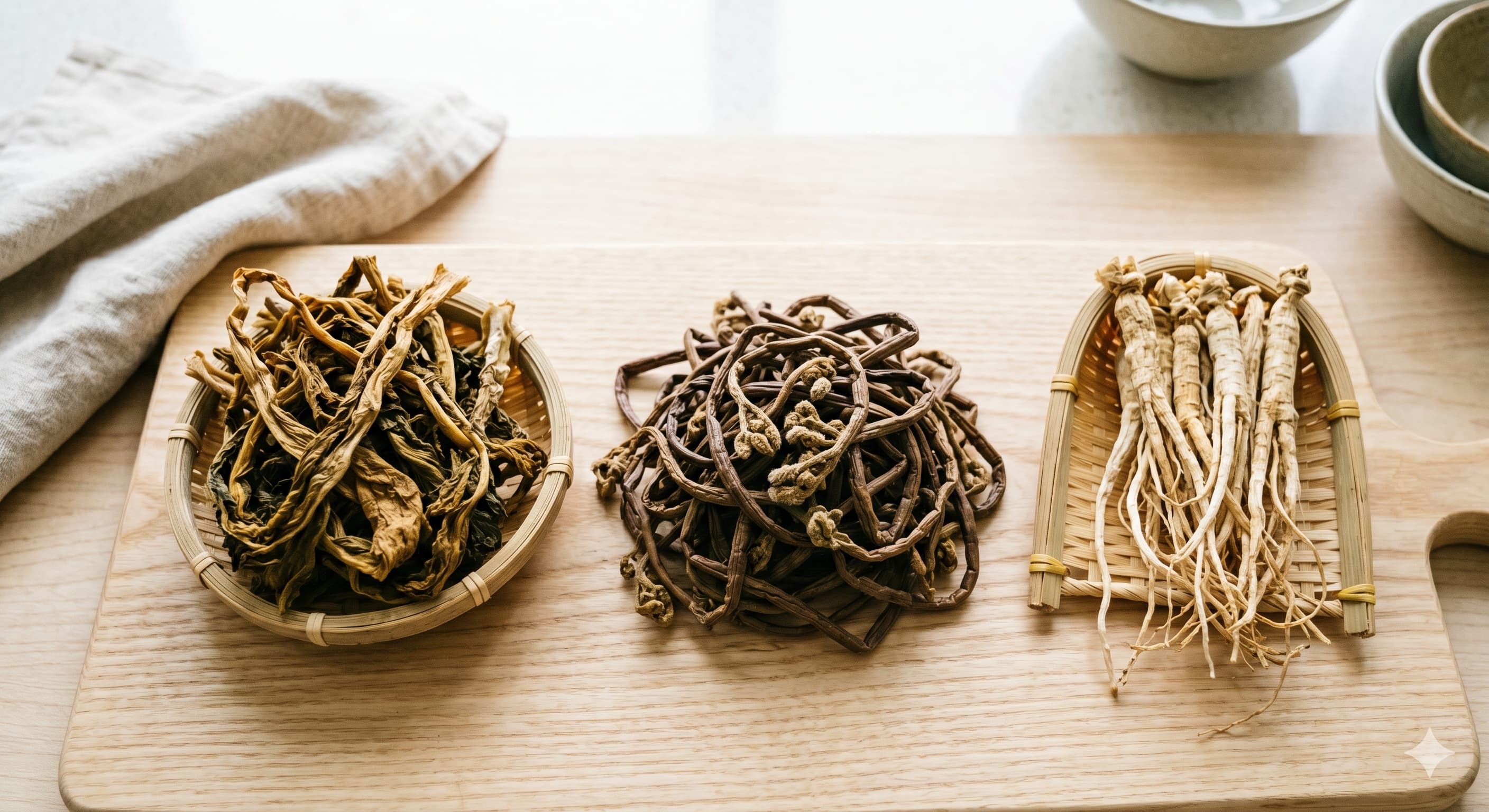
Dried Vegetables (Assorted)
Various (dried)
Dried vegetables (geonnamul) represent one of the most ingenious aspects of Korean food preservation — the practice of drying seasonal vegetables in summer and autumn to create a pantry of ingredients that sustains families through the long Korean winter. The Donguibogam discusses the principle that drying concentrates both the nutritional and medicinal properties of vegetables, and Korean grandmothers have practiced this art for generations. Common geonnamul include dried zucchini (hobak-goji), dried eggplant (gaji-goji), dried gourd (bak-goji), and dried taro stems (torandae). When rehydrated and cooked, these vegetables develop a chewy, concentrated flavor and texture entirely different from their fresh form. Geonnamul-bap (dried vegetable rice) and geonnamul-namul (rehydrated seasoned vegetables) are beloved winter comfort foods that carry the taste of summer's abundance into the cold months.
New to Dried Vegetables (Assorted)?
Is this edible?
Yes! Dried vegetables are a traditional Korean pantry staple representing centuries of preservation wisdom. They are simply seasonal vegetables (zucchini, eggplant, radish greens, taro stems) that have been sun-dried for winter storage.
What does it taste like?
Drying concentrates and transforms flavors — dried zucchini becomes intensely sweet, dried eggplant turns deeply savory, and dried taro stems develop a unique earthy chewiness. They taste quite different from their fresh counterparts.
Where to buy
Korean grocery stores (H Mart, Lotte) carry assorted dried vegetables in the dried goods aisle — look for packages labeled 건나물 or specific varieties like 호박고지 (dried zucchini), 가지고지 (dried eggplant), or 토란대 (dried taro stem).
How to prepare
Soak in warm water for 30 minutes to 2 hours depending on thickness (taro stems need longer). Boil briefly until tender, then drain and squeeze out excess water. Season and stir-fry with sesame oil.
Pro tip: Buy a mixed dried vegetable pack (모둠 건나물) for your first try — it lets you taste several varieties at once. These are perfect for geonnamul-bap (dried vegetable mixed rice), which is a complete meal in one pot.
Traditional Medicine
Source: Donguibogam
Nature (性)
Neutral (平)Flavor (味)
sweet
Target Organs (歸經)
Spleen (脾), stomach
Benefits
- digestion
Eases the spleen-stomach and replenishes vitality
비위를 편안하게 하고 기운을 돋운다
Source: Donguibogam
Key Compounds
This information is based on traditional Korean medicine texts (Donguibogam) and is for cultural reference only. It does not constitute medical advice.
Seasonal Availability
Prepared in autumn, consumed throughout winter. A cornerstone of traditional Korean food preservation.
Culinary Profile
Flavor
Concentrated, earthy, deeply savory after soaking and cooking
Texture
Chewy and satisfying after proper rehydration
Common Uses
Western Substitutes