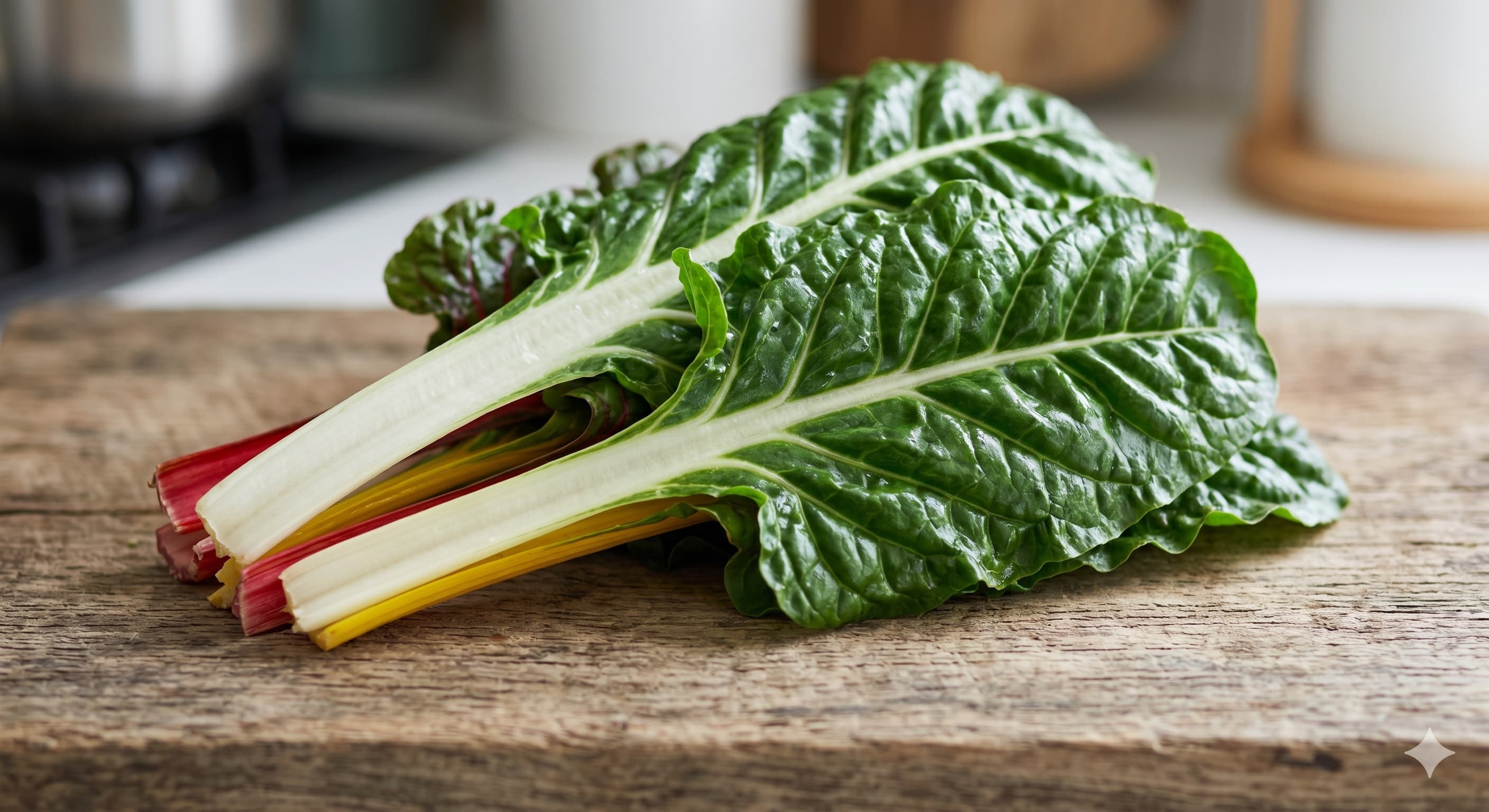
Swiss Chard (Geundae)
Beta vulgaris var. cicla L.
Geundae (근대) is one of the delightful surprises of Korean cuisine for Western audiences: it is Swiss chard, a vegetable already sitting in their local grocery store. Beta vulgaris var. cicla has been cultivated in Korea for centuries, brought via the Silk Road and China. While Westerners typically saute chard with olive oil and garlic, Koreans blanch it and dress it with doenjang (fermented soybean paste), creating a namul with deep umami earthiness that complements the green's natural mineral sweetness. The Donguibogam records 菾菜 (cheolchae) as a cooling vegetable that moistens the intestines and clears internal heat. For Americans exploring Korean cooking, geundae-namul is the perfect gateway dish — you already know the ingredient, and the Korean preparation transforms it into something excitingly new. Simply blanch chard, squeeze dry, and dress with doenjang, sesame oil, and garlic for an authentic Korean side dish using an ingredient from any American supermarket.
New to Swiss Chard (Geundae)?
Is this edible?
You already know this one! Geundae is Swiss chard — the same big-leafed green with colorful stems you see at every grocery store. In Korean cooking, it gets dressed up with doenjang and sesame oil.
What does it taste like?
Mildly sweet and earthy — exactly like the Swiss chard you may already know. The Korean doenjang dressing brings out a rich, savory umami dimension you might not have experienced before.
Where to buy
Any grocery store! This is one of the easiest Korean ingredients to find because it is just Swiss chard. Look for bunches with firm stems and unblemished leaves.
How to prepare
Separate stems from leaves (stems take longer to cook). Blanch stems for 1 minute, add leaves and blanch 30 seconds more. Squeeze dry and dress with doenjang, sesame oil, and minced garlic.
Pro tip: This is the ultimate 'Korean cooking with American ingredients' dish. Try it as your first-ever namul — you will be amazed how Korean seasoning transforms a familiar vegetable.
Traditional Medicine
Source: Donguibogam (동의보감)
Nature (性)
Cool (涼)Flavor (味)
sweet, bland
Target Organs (歸經)
Spleen (脾), stomach, large_intestine
Benefits
- digestion
Clears heat, moistens the intestines, and relieves constipation
열을 내리고 장을 윤택하게 하여 변비를 풀어준다
Source: 동의보감 [탕액편] 채부 첨채조
- detox
Clears heat-toxins from the five organs and harmonizes qi and blood
오장의 열독을 풀고 기혈을 고르게 한다
Source: 동의보감 [탕액편] 채부 첨채조
Key Compounds
This information is based on traditional Korean medicine texts (Donguibogam) and is for cultural reference only. It does not constitute medical advice.
Seasonal Availability
Geundae is available from spring through autumn in Korea, with the tenderest leaves in spring. In Western countries, Swiss chard is available year-round at most grocery stores.
Complementary Ingredients (궁합 재료)
Processing Methods (법제)
Wilts the large leaves and removes the slight mineral bitterness common to beet-family greens
Consumption Tips by Health Goal
digestion
Eat geundae-namul dressed with doenjang regularly to support digestive function and prevent constipation
Culinary Profile
Flavor
Mildly sweet and earthy with a slight mineral undertone — familiar and approachable for Western palates. The stems are sweeter and milder than the leaves, which have a gentle bitterness
Texture
Large, crinkled leaves become silky and tender after blanching. The thick, juicy stems retain a pleasant crunch even when cooked
Common Uses
Western Substitutes