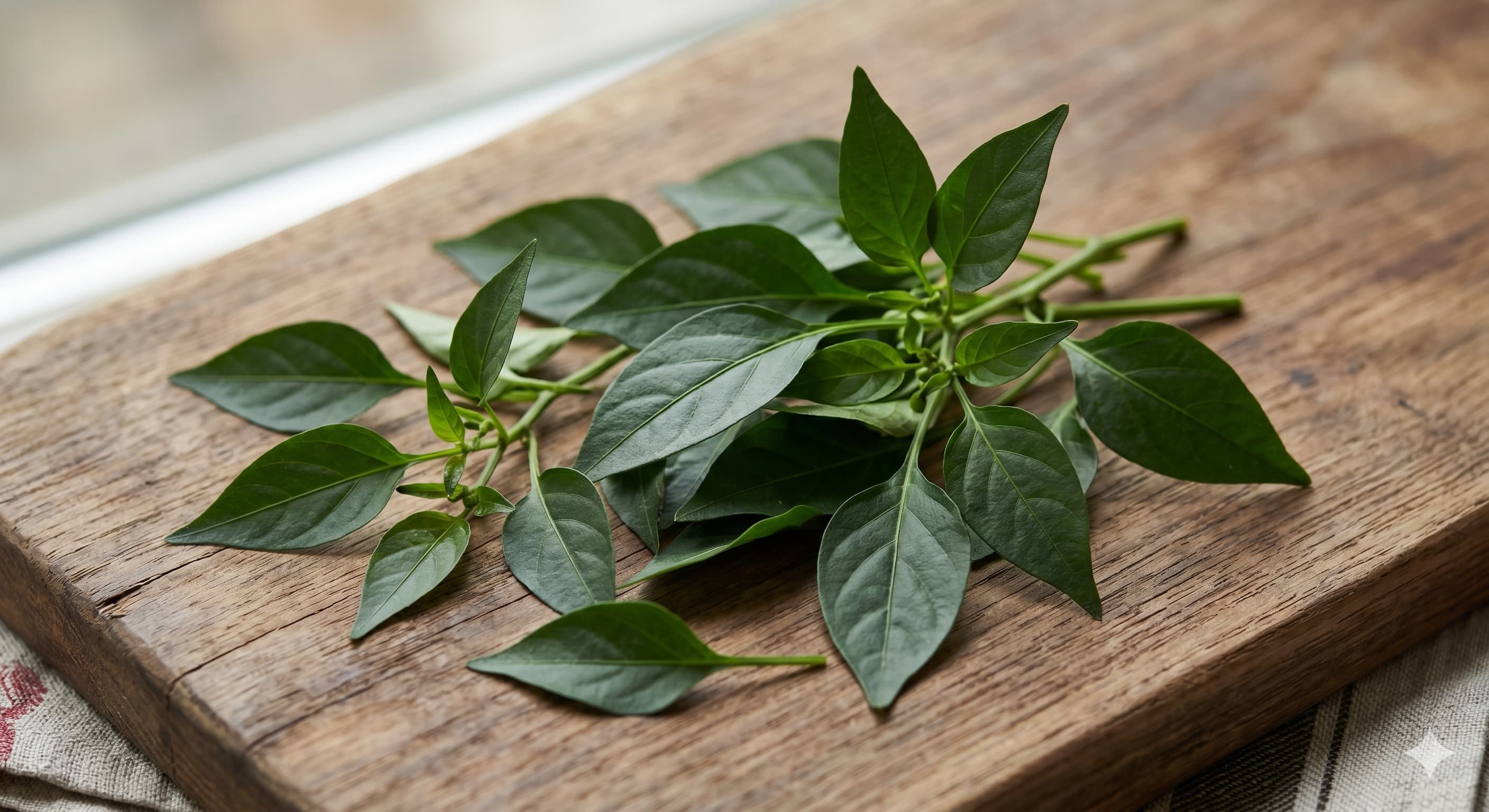
Chili Pepper Leaves (Gochuyip)
Capsicum annuum
Gochuyip represents a beautiful example of Korean culinary frugality — the philosophy of wasting nothing edible. When Korean home gardeners tend their chili pepper plants throughout summer, they prune leaves to help the peppers grow larger. Rather than discarding these leaves, they became a beloved food in their own right. Gochuyip-jangajji (pickled pepper leaves) is one of Korea's most comforting preserved foods, eaten alongside a simple bowl of rice. The mildly bitter, peppery flavor of the leaves is considered a perfect rice accompaniment.
New to Chili Pepper Leaves (Gochuyip)?
Is this edible?
Yes! If you grow chili peppers at home (any variety — jalapeno, serrano, Thai, etc.), the leaves are edible. Filipino cuisine also uses pepper leaves in soup.
What does it taste like?
Mildly bitter and very subtly peppery — nothing like eating the actual pepper. The pickled version tastes savory, almost like soy-braised greens.
Where to buy
Grow your own (harvest leaves from any pepper plant). Korean groceries sometimes carry frozen gochuyip. The pickled version is sold jarred at Korean markets.
How to prepare
For namul: blanch leaves in boiling water for 1 minute, shock in cold water, squeeze dry, and season with doenjang, sesame oil, and garlic. For jangajji: pack raw leaves in a jar, pour boiling soy sauce brine over them.
Pro tip: If you grow peppers at home, harvest the leaves in late summer when the plant is lush — it actually helps the plant redirect energy to fruit production. You get free greens AND bigger peppers.
Traditional Medicine
Source: Donguibogam (동의보감)
Nature (性)
Warm (溫)Flavor (味)
bitter, pungent
Target Organs (歸經)
Spleen (脾), stomach
Benefits
- digestion
Warms the spleen-stomach and stimulates appetite — the mild pungency activates digestive function without intense heat
비위를 따뜻하게 하고 식욕을 촉진한다
Source: 동의보감 [탕액편] 채부 蕃椒
- circulation
Promotes qi and blood circulation and expels cold — gentler than consuming the chili pepper itself
기혈 순환을 돕고 한기를 몰아낸다
Source: 동의보감 [탕액편] 채부 蕃椒
Key Compounds
This information is based on traditional Korean medicine texts (Donguibogam) and is for cultural reference only. It does not constitute medical advice.
Seasonal Availability
Leaves harvested throughout the growing season (June-October), typically during pepper plant pruning. Late summer to early autumn leaves are most abundant. Available dried or frozen at Korean groceries.
Complementary Ingredients (궁합 재료)
Processing Methods (법제)
Blanching softens the slightly tough leaves and mellows any residual peppery bitterness. Blanch for about 1 minute.
Pickling in soy sauce brine preserves the leaves for months and transforms the bitter flavor into a savory, umami-rich condiment.
Consumption Tips by Health Goal
Digestive warming
Blanch gochuyip and dress with doenjang and sesame oil. Eat as a regular banchan during cooler months to gently warm the digestive system.
Appetite stimulation
Serve gochuyip-jangajji alongside rice. The savory, slightly pungent flavor stimulates appetite.
Culinary Profile
Flavor
Mildly bitter and subtly peppery without real heat — tastes like a gentler, greener echo of the chili pepper itself
Texture
Thin, slightly papery leaves that become tender and silky when blanched; pickled leaves develop a pleasantly chewy texture
Common Uses
Western Substitutes