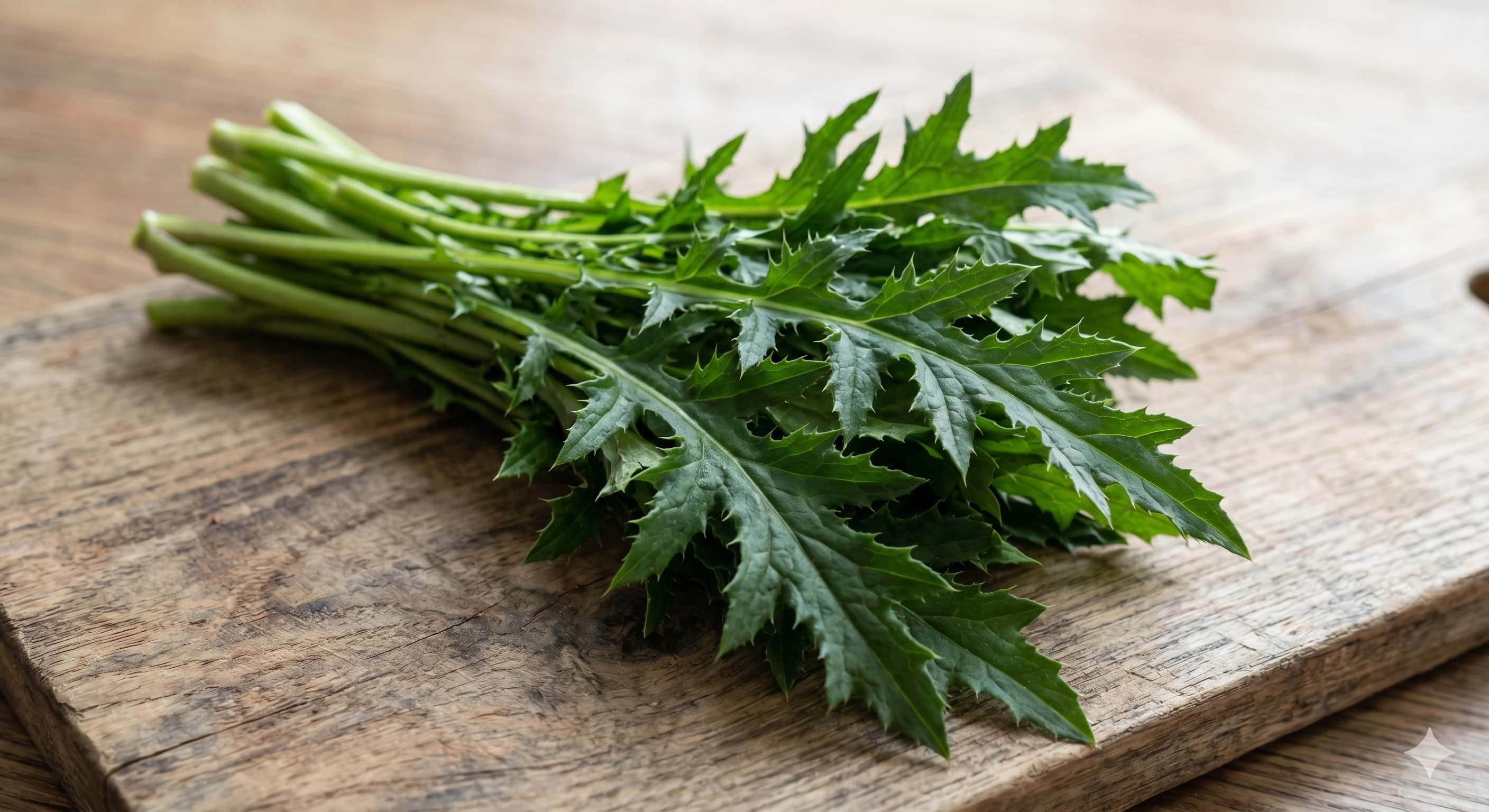
Korean Thistle (Gondre)
Cirsium setidens
Gondre comes from the Gangwon Province mountain region of eastern Korea, where it grows wild in alpine meadows. The name reportedly derives from a folk expression — gondremaendre, meaning 'swaying loosely' like someone happily drunk — describing how the thistle sways in mountain breezes. Gondre-bap originated as a famine food: during lean times, mountain villagers stretched precious rice by cooking it with abundant free-growing thistle greens. What began as a survival dish became a beloved comfort food now served in restaurants across Korea. The Jeongseon area of Gangwon Province is most famous for gondre-bap and holds an annual gondre festival.
New to Korean Thistle (Gondre)?
Is this edible?
Yes! Despite being a thistle, gondre is one of the mildest, most pleasant Korean wild greens. The young leaves used for cooking are soft and completely spine-free.
What does it taste like?
Think of it as nature's comfort food — very mild, slightly sweet, with a gentle nuttiness. If you dislike bitter greens, gondre is your entry point into Korean wild vegetables.
Where to buy
Dried gondre is available at Korean grocery stores in the dried vegetables section. Some online Korean food retailers carry it as well.
How to prepare
Soak dried gondre in cold water overnight (8+ hours). Drain, then boil for 20-30 minutes until very tender. Squeeze out water. To make gondre-bap: layer the cooked gondre over rinsed rice in a pot, cook as normal, then mix and season.
Pro tip: The yangnyeomjang (seasoning sauce) makes or breaks gondre-bap. Mix soy sauce, sesame oil, chopped scallions, minced garlic, and a touch of gochugaru. Drizzle generously over the rice before mixing.
Traditional Medicine
Source: Donguibogam (동의보감)
Nature (性)
Cool (涼)Flavor (味)
bland, sweet
Target Organs (歸經)
Liver (肝), Spleen (脾)
Benefits
- hemostatic
Stops bleeding and cools the blood — traditionally used for nosebleeds, heavy menstruation, and blood in urine
출혈을 멈추게 하고 혈액을 서늘하게 한다
Source: 동의보감 [탕액편] 채부
- detox
Clears heat-toxins and reduces swelling from abscesses and boils
열독을 풀고 종기를 삭인다
Source: 동의보감 [탕액편] 채부
Key Compounds
This information is based on traditional Korean medicine texts (Donguibogam) and is for cultural reference only. It does not constitute medical advice.
Seasonal Availability
Young leaves harvested in spring (May-June) before the plant flowers and becomes prickly. Dried gondre is widely available year-round and is actually the preferred form for the famous gondre-bap.
Complementary Ingredients (궁합 재료)
Processing Methods (법제)
Dried gondre is soaked overnight in cold water, then boiled until tender. Drying concentrates the subtle sweetness and gives it the distinctive chewy texture prized in gondre-bap.
Fresh gondre leaves are briefly blanched to remove any prickly texture and soften the fibers.
Consumption Tips by Health Goal
Blood health
Cook dried gondre with rice (gondre-bap) and season with soy sauce-based yangnyeomjang. Regular consumption supports healthy blood and circulation.
Digestive health
The high fiber content of gondre promotes intestinal health. Eat gondre-bap regularly as a gentle, easily digestible meal.
Culinary Profile
Flavor
Remarkably mild and gentle — subtly sweet with almost no bitterness, making it one of the most approachable wild greens
Texture
Soft and slightly chewy when properly rehydrated and cooked; the leaves almost melt into rice, creating a cohesive, comforting texture
Common Uses
Western Substitutes