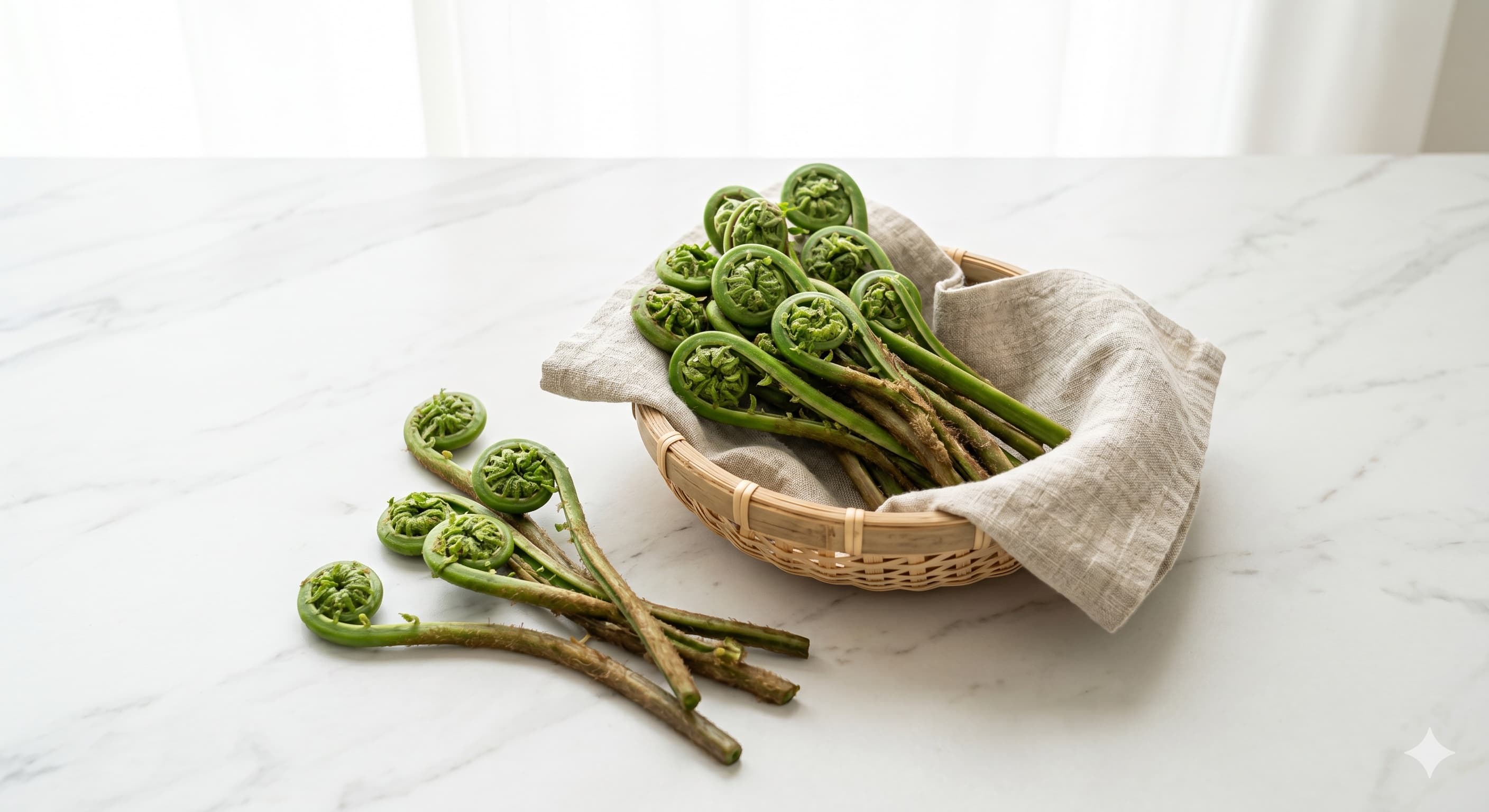
Fernbrake (Gosari)
Pteridium aquilinum var. latiusculum
Fernbrake (궐/蕨) is recorded in the Donguibogam under 채부 궐조, classified as cool with sweet flavor. It is one of Korea's most beloved wild mountain vegetables (산나물), foraged in spring when the tightly curled fronds first emerge from the forest floor. Gosari gathering is a cherished spring activity in rural Korea, and dried gosari is essential for traditional bibimbap, particularly the temple-style sanchae bibimbap. In Korean Buddhist temple cuisine, gosari is a primary protein-substitute with its satisfying, meaty texture. The fern must always be thoroughly cooked to neutralize naturally occurring ptaquiloside — the traditional drying and extended boiling process accomplishes this safely.
New to Fernbrake (Gosari)?
Is this edible?
Yes! Fernbrake (gosari) is one of the most important wild mountain vegetables (sanna-mul) in Korean cuisine, eaten for centuries across the peninsula. It is a key ingredient in bibimbap and temple food, and is completely safe when properly prepared.
What does it taste like?
Earthy and nutty with a unique chewy, almost meaty texture — somewhat like a cross between asparagus and a very tender mushroom stem. It absorbs seasonings beautifully.
Where to buy
Korean grocery stores (H Mart, Lotte) sell dried gosari in the dried goods section. Pre-soaked/rehydrated gosari is sometimes available in the refrigerated section. Not found in regular Western supermarkets.
How to prepare
Dried gosari requires overnight soaking in water, then boiling for 30-40 minutes until tender, followed by another soak in fresh cold water for several hours. This multi-step process removes natural tannins and tenderizes the tough fibers. Pre-soaked gosari from Korean stores saves a full day of prep.
Pro tip: Buy pre-soaked gosari from the Korean grocery store for your first attempt — preparing it from dried takes over 24 hours of soaking and boiling. Once rehydrated, stir-fry it with sesame oil, soy sauce, and garlic for the classic bibimbap topping.
Traditional Medicine
Source: Donguibogam (동의보감)
Nature (性)
Cool (涼)Flavor (味)
sweet
Target Organs (歸經)
Liver (肝), stomach
Benefits
- detox
Clears heat and eliminates dampness from the body
열을 내리고 습을 제거한다
Source: 동의보감 [탕액편] 채부 궐조
- digestion
Benefits the intestines and aids digestion
장을 이롭게 하고 소화를 돕는다
Source: 동의보감 [탕액편] 채부 궐조
Key Compounds
This information is based on traditional Korean medicine texts (Donguibogam) and is for cultural reference only. It does not constitute medical advice.
Seasonal Availability
Wild gosari is foraged in spring (April-May) when fronds are tightly curled. Dried gosari is available year-round and must be soaked and boiled before use. Mountain-grown wild gosari is most prized.
Processing Methods (법제)
Dried gosari must be soaked overnight then boiled for 30+ minutes to rehydrate and remove natural toxins (ptaquiloside). This processing is essential for safe consumption.
Consumption Tips by Health Goal
Digestion
After proper rehydration and cooking, season with sesame oil and soy sauce as namul. The cool nature and fiber content aid sluggish digestion. Always cook thoroughly — never eat raw.
Culinary Profile
Flavor
Earthy, slightly nutty, with a distinctive 'mountain' flavor; rich and savory when properly seasoned
Texture
Pleasantly chewy with a slight crunch in the stem; silky fronds
Common Uses
Western Substitutes