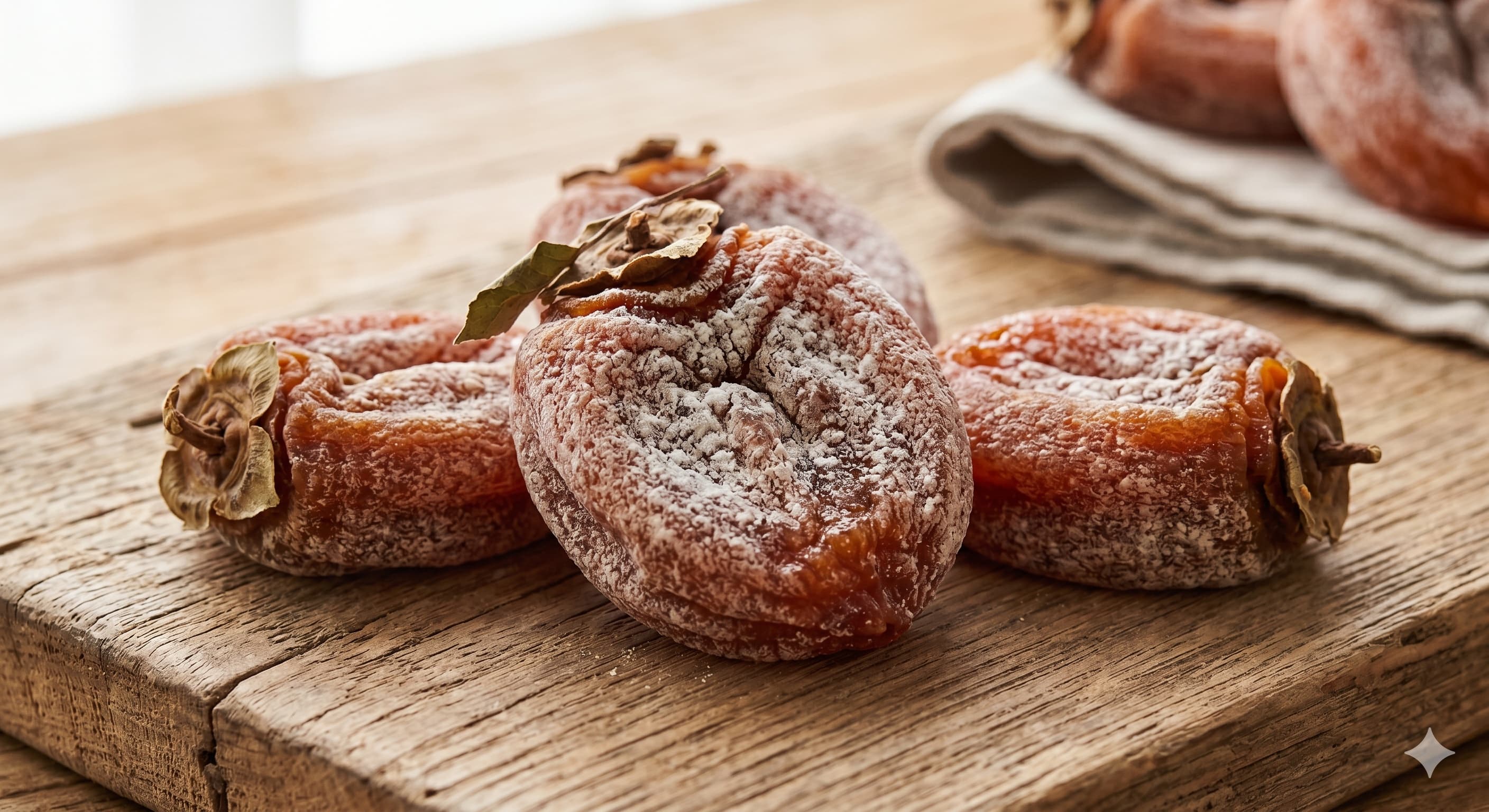
Dried Persimmon
Diospyros kaki
Dried persimmon (gotgam) is one of Korea's oldest and most cherished preserved fruits, with a tradition stretching back over a thousand years. The Donguibogam classifies persimmon as cool in nature and sweet in flavor, noting that it clears heat, moistens the lungs, and stops coughing. The process of making gotgam is an art: ripe persimmons are carefully peeled and hung on strings under the eaves of farmhouses during the dry, cold autumn-winter months, where they slowly dehydrate over 4-6 weeks while developing a natural white sugar bloom (시상/柿霜) on their surface. This powdery coating was itself used as a medicine in traditional Korean pharmacy. Gotgam holds a famous place in Korean folklore — in the tale of the tiger and the dried persimmon, a crying baby stops wailing at the mere mention of gotgam, demonstrating that even tigers should fear the power of this irresistible treat.
Traditional Medicine
Source: Donguibogam
Nature (性)
Cool (涼)Flavor (味)
sweet
Target Organs (歸經)
Heart (心), Lung (肺), large_intestine
Benefits
- immunity
Moistens the lungs and stops coughing
폐를 윤택하게 하고 기침을 멈춘다
Source: Donguibogam
- circulation
Quenches thirst and clears heat
갈증을 멎게 하고 열을 내린다
Key Compounds
This information is based on traditional Korean medicine texts (Donguibogam) and is for cultural reference only. It does not constitute medical advice.
Seasonal Availability
Made in late autumn from fully ripe persimmons, hung to dry through winter.
Culinary Profile
Flavor
Intensely sweet, caramel-like, honeyed
Texture
Soft, chewy, slightly sticky
Common Uses
Western Substitutes