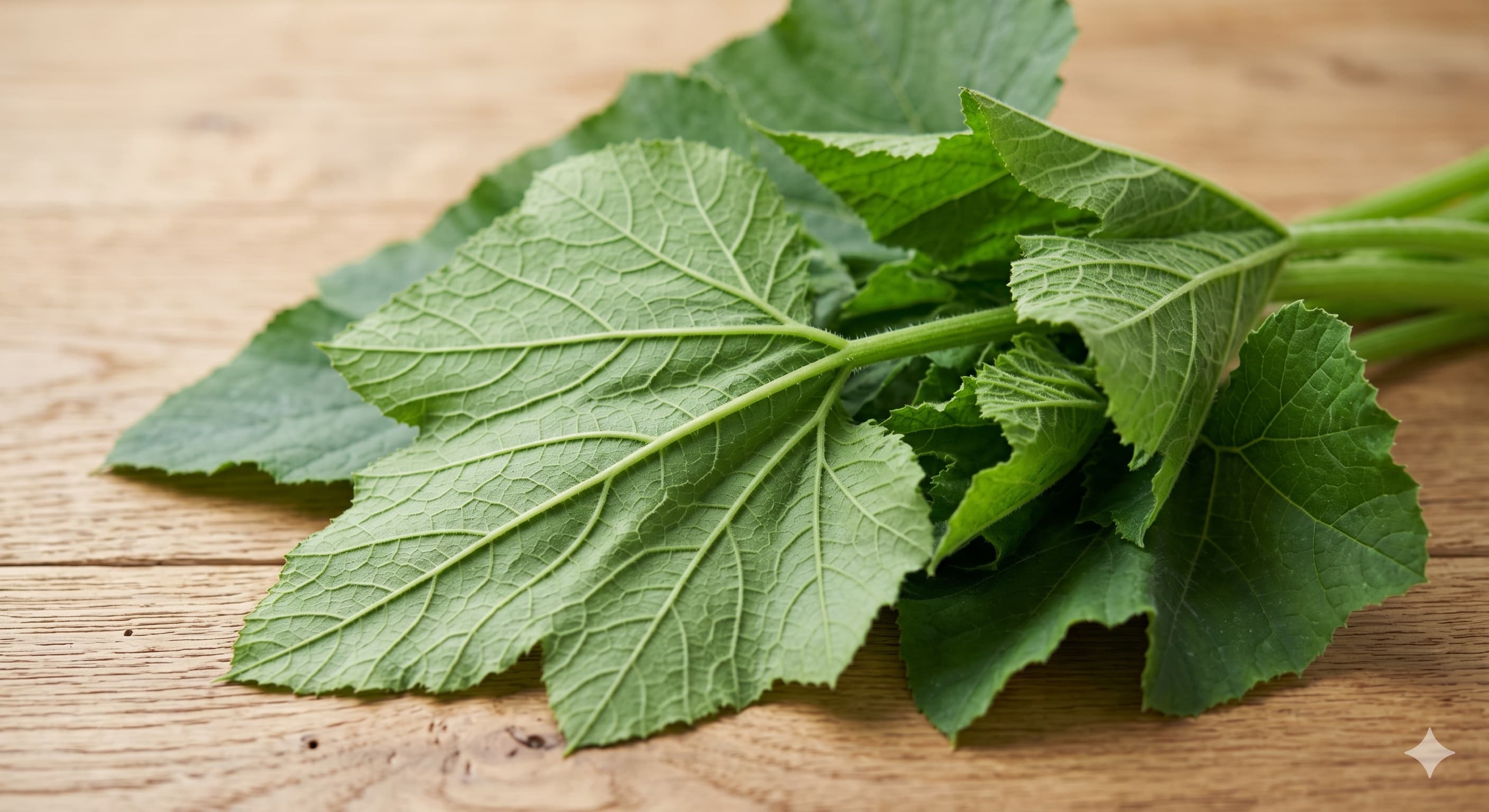
Squash Leaves (Hobak-ip)
Cucurbita moschata
Hobakip — squash leaves — embodies the Korean principle of total-plant utilization. When Korean gardeners grow hobak in their home gardens, the vigorous vines produce enormous leaves far in excess of what the plant needs for photosynthesis. Rather than wasting this abundance, Korean cuisine turned the leaves into one of summer's most distinctive foods. The preparation requires a specific skill: peeling the fuzzy, slightly prickly skin from the underside of each leaf, a meditative task that Korean grandmothers have passed down through generations. Hobakip-ssam is a quintessential Korean summer home-cooking dish, rarely found in restaurants but beloved at family dinner tables.
New to Squash Leaves (Hobak-ip)?
Is this edible?
Yes! Many cuisines eat squash and pumpkin leaves — they're common in African, Southeast Asian, and Korean cooking.
What does it taste like?
Very mild — almost like a soft, edible napkin that subtly tastes of squash. The flavor is intentionally neutral because the leaf serves as a wrapper.
Where to buy
Korean grocery stores in summer, or grow your own. Some Korean groceries carry frozen pre-peeled hobakip. If you grow zucchini or butternut squash, those leaves work too.
How to prepare
The peeling step is critical: hold the stem, and use it to peel the fuzzy fibrous skin from the back of each leaf, pulling toward the edges. Steam the peeled leaves for 5-7 minutes until very soft. Serve with rice and ssamjang.
Pro tip: Peeling is the make-or-break skill for hobakip. If you skip peeling, the leaves will be unpleasantly scratchy on the tongue. Watch a Korean cooking video for the technique — it's much easier to learn by watching.
Traditional Medicine
Source: Donguibogam (동의보감)
Nature (性)
Neutral (平)Flavor (味)
bland, sweet
Target Organs (歸經)
Spleen (脾), stomach
Benefits
- digestion
Tonifies the spleen-stomach and boosts qi — a gentle, nourishing food that strengthens digestive function
비위를 보하고 기를 돋운다
Source: 동의보감 [탕액편] 채부
- detox
Provides detoxifying action and reduces swelling — the mild diuretic effect helps eliminate excess fluid
해독 작용을 하고 부기를 빼준다
Source: 동의보감 [탕액편] 채부
Key Compounds
This information is based on traditional Korean medicine texts (Donguibogam) and is for cultural reference only. It does not constitute medical advice.
Seasonal Availability
Abundant during summer squash-growing season (July-September). The large, velvety leaves are harvested as the squash vines grow vigorously. Available at Korean groceries in summer, sometimes frozen.
Complementary Ingredients (궁합 재료)
Processing Methods (법제)
ESSENTIAL: The leaves have a fuzzy, prickly surface that must be peeled off before cooking. Grab the stem and peel the fibrous skin away from the underside of the leaf. Then steam until tender.
Consumption Tips by Health Goal
Digestive strengthening
Steam peeled hobakip and use as ssam wraps with rice and doenjang. The neutral, gentle nature makes them ideal for people with weak digestion.
Summer nutrition
Include hobakip in summer meals regularly. Their bland, nourishing quality helps sustain energy during hot weather when appetite is poor.
Culinary Profile
Flavor
Very mild, gently sweet with an earthy, green squash undertone — the flavor is subtle, almost neutral, making it an excellent wrapper for more flavorful fillings
Texture
After peeling and steaming: soft, velvety, and slightly chewy with a pleasant, cloth-like suppleness perfect for wrapping
Common Uses
Western Substitutes