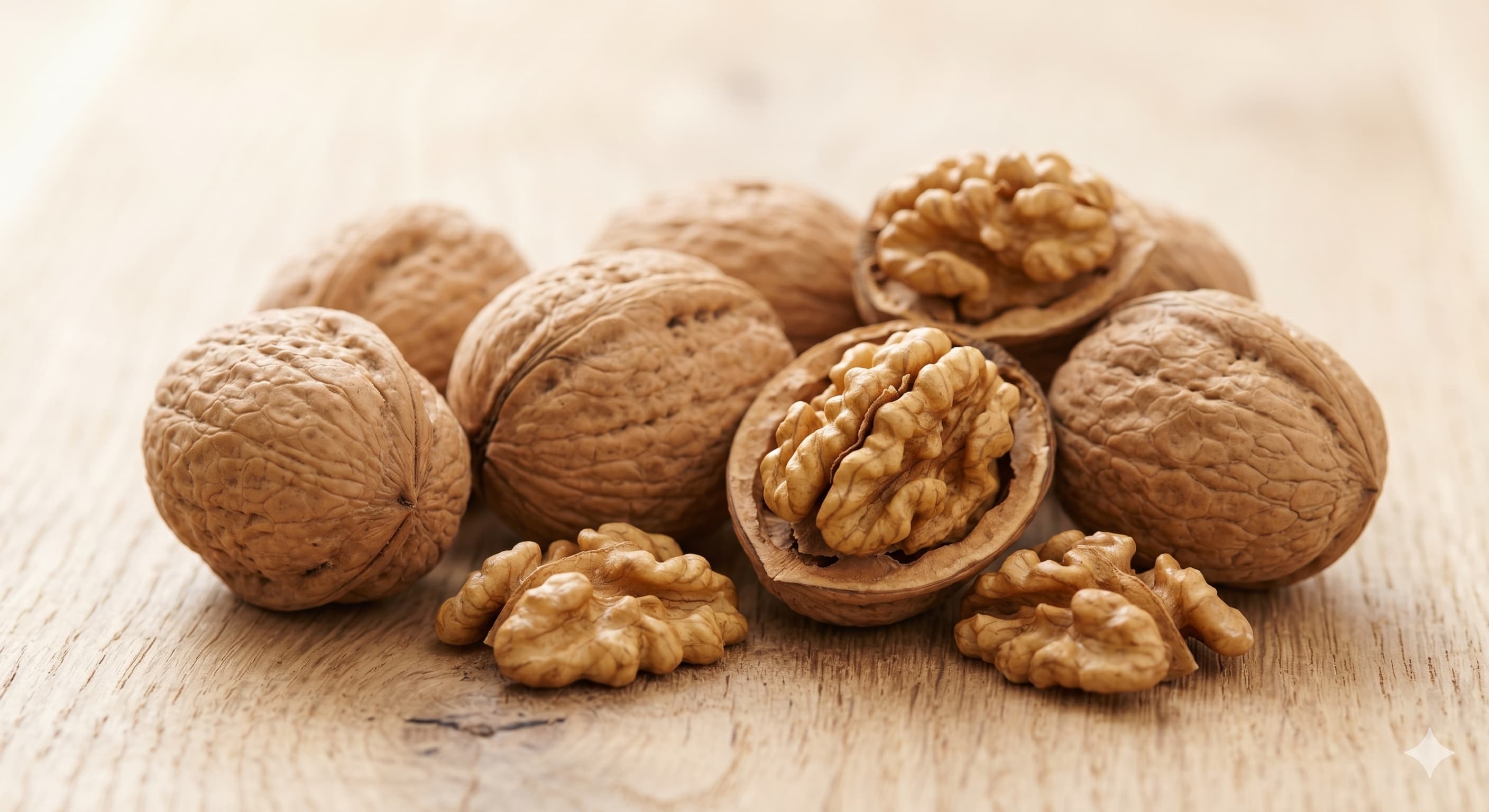
Walnut
Juglans regia
Walnuts have been cultivated in Korea since they were introduced from China during the Goryeo Dynasty (918-1392), and the city of Cheonan became so renowned for its walnut confection (hodu-gwaja) that it remains the city's signature food to this day. The Donguibogam classifies walnut as warm in nature and sweet in flavor, noting it tonifies the kidneys, strengthens the brain, and moistens the lungs. Korean traditional medicine valued walnut's brain-like shape as a signature from nature indicating its ability to nourish the brain — a concept shared across many ancient medical traditions. In Korean cuisine, walnuts appear in ceremonial rice cakes, temple food desserts, and as a garnish for festive dishes, prized for their rich, buttery crunch.
Traditional Medicine
Source: Donguibogam
Nature (性)
Warm (溫)Flavor (味)
sweet
Target Organs (歸經)
Kidney (腎), Lung (肺)
Benefits
- brain health
Nourishes the brain and improves memory. Tonifies the kidneys to strengthen the lower back and knees
뇌를 보하고 기억력을 높인다. 신장을 보하여 허리와 무릎을 튼튼하게 한다
Source: Donguibogam
- immunity
Warms the lungs and stops coughing
폐를 따뜻하게 하고 기침을 멎게 한다
Key Compounds
This information is based on traditional Korean medicine texts (Donguibogam) and is for cultural reference only. It does not constitute medical advice.
Seasonal Availability
Culinary Profile
Flavor
Rich, buttery, mildly bitter
Texture
Crunchy, crumbly
Common Uses
Western Substitutes
Related Recipes
Herb-infused Eggplant Stir-fry
허브 가지볶음
Easy | 20 min
Hotteok (Sweet Filled Jeon)
호떡
Medium | 105 min
Soy Milk Chocolate Chip Cookies
두유 초코칩 쿠키
Easy | 80 min
Walnut & Brown Sugar Steamed Rice Cake
호두흑설탕썰기떡을
Easy | 80 min
Whole Wheat Bread with Dried Fruit and Walnuts
통밀 건과일 호두 빵
Easy | 120 min
Broccoli and Shiitake Mushroom Soup
브로콜리 표고버섯 수프
Easy | 80 min
Yukiwari Mushroom Walnut Salad
유키와리버섯 호두 무침
Medium | 0 min
Low-sodium Ssamjang Kabocha Walnut and Tofu Versions
단호박 호두 쌈장&두부 쌈장
Easy | 80 min