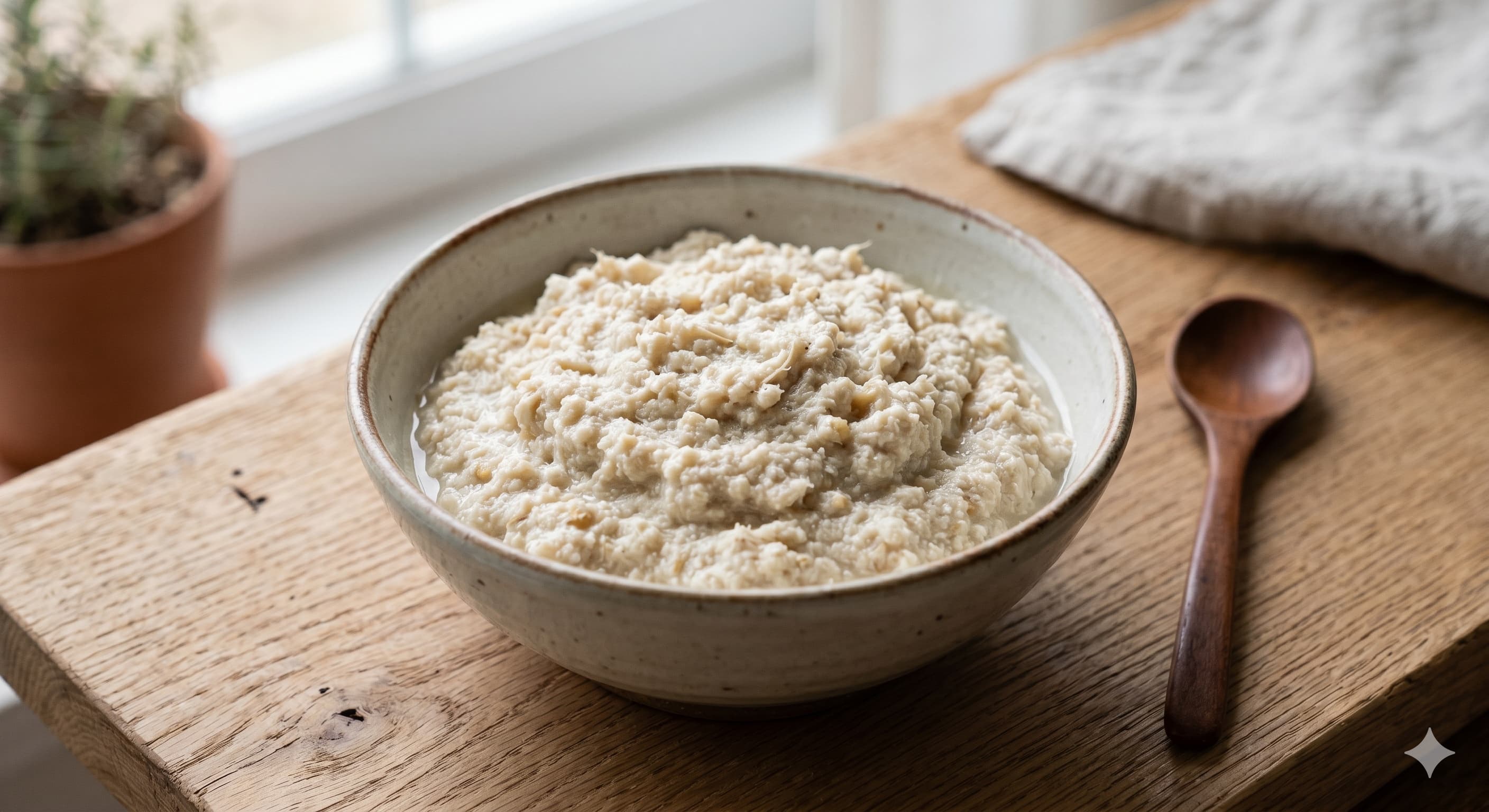
Soybean Pulp
Glycine max (by-product)
Kongbiji (soybean pulp) is the fiber-rich residue left after straining soy milk during tofu production — what many cultures discard, Koreans transform into a hearty, nourishing dish. The Donguibogam, while primarily discussing soybeans under the grain section, recognizes the whole soybean's ability to harmonize the five organs and generate vital fluids. Kongbiji-jjigae (soybean pulp stew) was historically a food of frugal wisdom, turning what would be waste into a thick, porridge-like stew that sustained farming families through harsh winters. In Korean temple cuisine, where nothing is wasted, kongbiji is especially valued as a protein-rich, satisfying dish that embodies the Buddhist principle of respecting all food.
Traditional Medicine
Source: Donguibogam
Nature (性)
Neutral (平)Flavor (味)
sweet
Target Organs (歸經)
Spleen (脾), large_intestine
Benefits
- digestion
Moistens the intestines and relieves constipation
장을 윤택하게 하고 변비를 풀어준다
Source: Donguibogam
- detox
Detoxifies and reduces swelling
해독하고 부종을 빼준다
Key Compounds
This information is based on traditional Korean medicine texts (Donguibogam) and is for cultural reference only. It does not constitute medical advice.
Seasonal Availability
Culinary Profile
Flavor
Mild, beany, slightly grainy
Texture
Thick and grainy, porridge-like
Common Uses
Western Substitutes