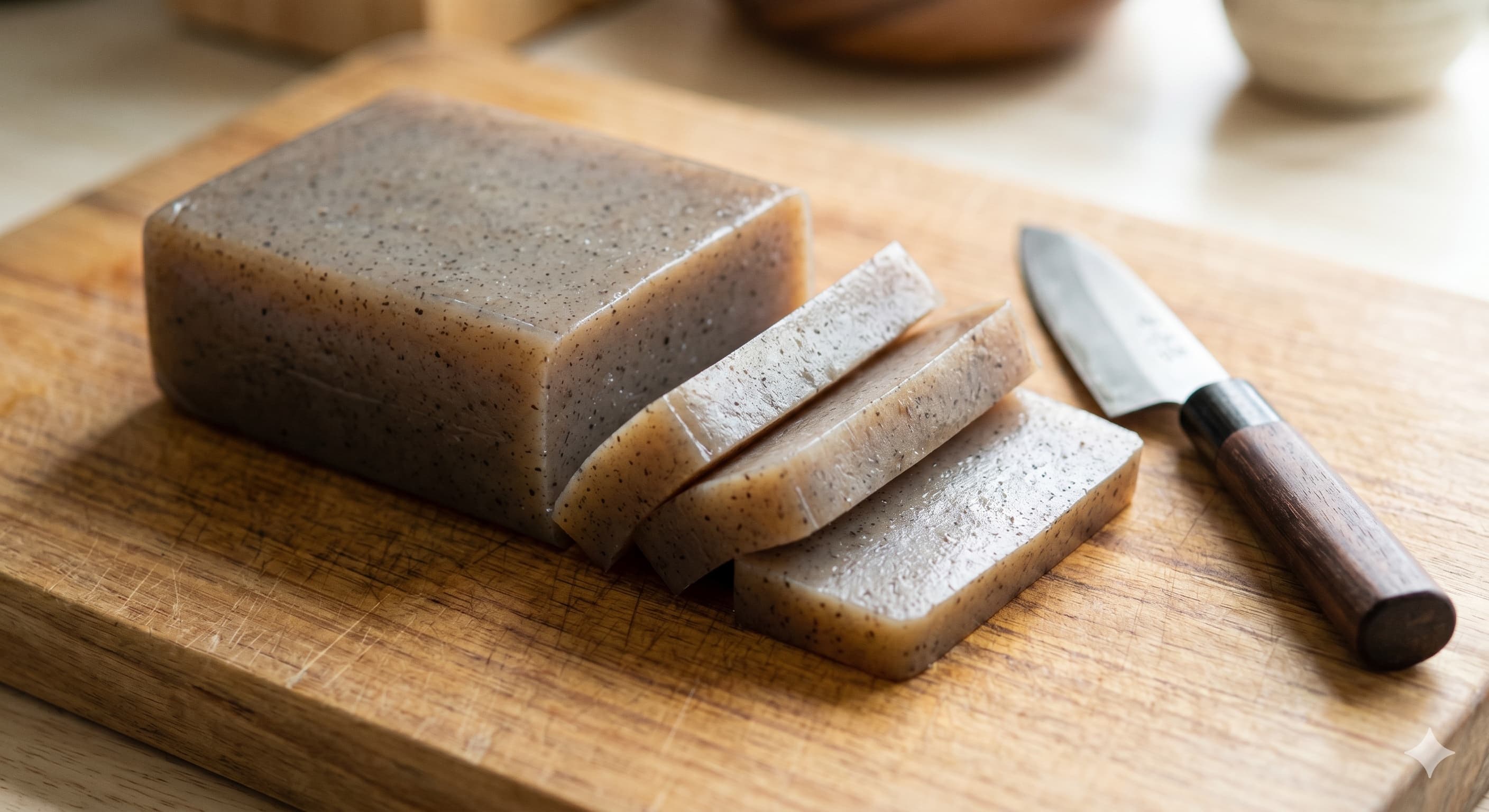
Konnyaku (Konjac)
Amorphophallus konjac
Konnyaku has been a cornerstone of Japanese Buddhist temple cuisine since the Kamakura period (13th century). Made by mixing konjac corm flour with water and calcium hydroxide, the resulting grey-speckled jelly block is almost zero-calorie yet deeply satisfying. Zen monks valued it as 'sand sweeper of the stomach' for its ability to cleanse the digestive tract. In shojin ryori, konnyaku is a master of disguise — it can be torn, sliced, or formed into noodles, each preparation creating a different textural experience. The grey speckled variety includes hijiki seaweed for color, while pure white konnyaku is made from refined flour. In Korea, 곤약 is gaining popularity as a diet food, but its temple cuisine heritage runs much deeper.
New to Konnyaku (Konjac)?
Is this edible?
Yes! Konjac (konnyaku) is a root vegetable product eaten widely across Korea and Japan, valued for its unique bouncy-jelly texture and near-zero calories. It has been consumed in East Asian cuisine for over a thousand years.
What does it taste like?
Nearly flavorless on its own — the appeal is entirely textural. It has a unique springy, chewy, almost rubbery bounce that absorbs surrounding flavors beautifully. Think of it as a flavor sponge with a fun texture.
Where to buy
Korean or Japanese grocery stores (H Mart, Uwajimaya) sell it in blocks, noodle form (shirataki), or sheets in the refrigerated section. Shirataki noodles are increasingly available at regular supermarkets like Whole Foods and Trader Joe's.
How to prepare
Rinse well and boil for 2-3 minutes to remove any residual odor. Tear or cut into pieces. Dry-fry in a pan before adding to other dishes — this removes excess moisture and helps it absorb sauce.
Pro tip: Score the surface with a crosshatch pattern before braising — this dramatically increases the surface area and lets it absorb much more sauce and flavor. Without scoring, the slippery surface sheds seasonings.
Traditional Medicine
Source: Traditional East Asian Medicine
Nature (性)
Cold (寒)Flavor (味)
pungent
Target Organs (歸經)
stomach, Liver (肝)
Benefits
- digestion
Rich in dietary fiber, it promotes intestinal movement and prevents constipation
식이섬유가 풍부하여 장운동을 촉진하고 변비를 예방한다
Source: Traditional East Asian Medicine
- detox
Absorbs and helps expel waste products from the body
체내 노폐물을 흡착하여 배출을 돕는다
Source: Traditional East Asian Medicine
Key Compounds
This information is based on traditional Korean medicine texts (Donguibogam) and is for cultural reference only. It does not constitute medical advice.
Seasonal Availability
Available year-round in block, noodle (shirataki), or sheet form at Asian grocery stores. Fresh konjac corms are harvested in autumn.
Culinary Profile
Flavor
Essentially flavorless — a neutral canvas that absorbs surrounding flavors from broths and sauces
Texture
Firm, bouncy, and jelly-like with a distinctive chewy snap — unlike any Western food
Common Uses
Western Substitutes
Related Recipes
Sweet Soy-Glazed Konnyaku Kinpira
곤약 킨피라
Easy | 10 min
Sweet and Spicy Celery-Konnyaku Stir-Fry
셀러리 곤약 볶음
Easy | 20 min
Classic Tofu Dressed Vegetables (Shira-Ae)
기본 시라아에
Easy | 60 min
Light Konjac Curry Rice
곤약카레라이스
Easy | 40 min
Kenchin-jiru (Temple Vegetable Soup)
켄친지루 (사찰 채소국)
Easy | 45 min
Easy Temple Vegetable Soup
건진국 간편식
Hard | 0 min
Summer Temple Tomato Soup
여름 정진 토마토국
Hard | 0 min
Konnyaku Iridaki (Braised Konjac)
곤약 이리다키 (곤약 조림)
Easy | 20 min
Temple-Style Simmered Vegetables
정진 조림
Medium | 0 min
Mountain Burdock with Sake Lees
산우엉 주박 무침
Easy | 0 min