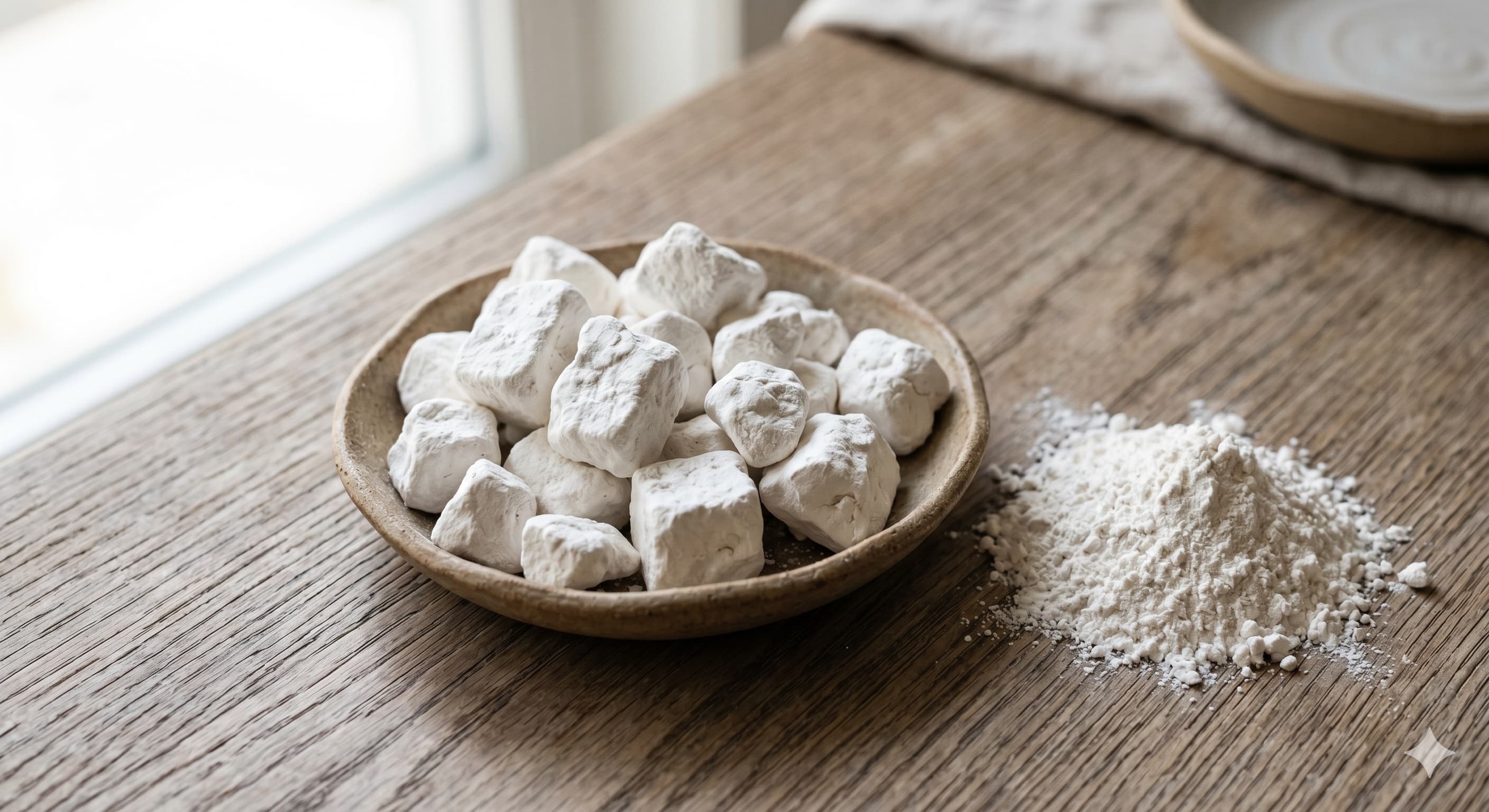
Kuzu (Kudzu Starch)
Pueraria montana var. lobata
Kudzu (칡, 葛根) holds a dual identity in East Asia — it is both a powerful medicinal herb and a refined culinary starch. In Donguibogam, galgeun (葛根) is one of the most frequently cited herbs, prescribed for fevers, alcohol detoxification, and thirst. The starch extracted from its massive roots has been used in Japanese temple cuisine for centuries as the most elegant thickener available. Unlike cornstarch, kuzu creates a perfectly transparent, silky gel that enhances rather than masks the appearance of dishes. Japanese kuzu from Yoshino (吉野葛) is considered the finest quality. In Korea, 칡차 (kudzu tea) and 칡즙 (kudzu juice) are beloved health drinks, and the root is a common folk remedy for hangovers — a use that aligns precisely with Donguibogam's prescription for clearing alcohol toxicity.
Traditional Medicine
Source: Donguibogam (동의보감)
Nature (性)
Cool (涼)Flavor (味)
sweet, pungent
Target Organs (歸經)
Spleen (脾), stomach
Benefits
- stomach health
Kudzu root clears heat from the spleen and stomach, generates fluids, and quenches thirst
갈근은 비위의 열을 내리고 진액을 생성하여 갈증을 멎게 한다
Source: 동의보감 [탕액편] 초부 갈근조
- detox
Clears alcohol toxicity and alleviates headache and fever
술독을 풀고 두통과 번열을 다스린다
Source: 동의보감 [탕액편] 초부 갈근조
- circulation
Promotes fluid circulation and relieves muscle cramps and stiffness
진액을 통하게 하여 근육의 경련을 풀어준다
Source: 동의보감 [탕액편]
Key Compounds
This information is based on traditional Korean medicine texts (Donguibogam) and is for cultural reference only. It does not constitute medical advice.
Seasonal Availability
Kudzu roots are harvested in late autumn and winter when starch content is highest. The dried starch powder is available year-round at Asian and health food stores.
Culinary Profile
Flavor
Nearly flavorless with a clean, neutral taste — prized as a thickener for its pure, transparent finish
Texture
When dissolved and heated, forms a silky, glossy, slightly elastic gel — far more elegant than cornstarch
Common Uses
Western Substitutes