Lotus Root
Nelumbo nucifera
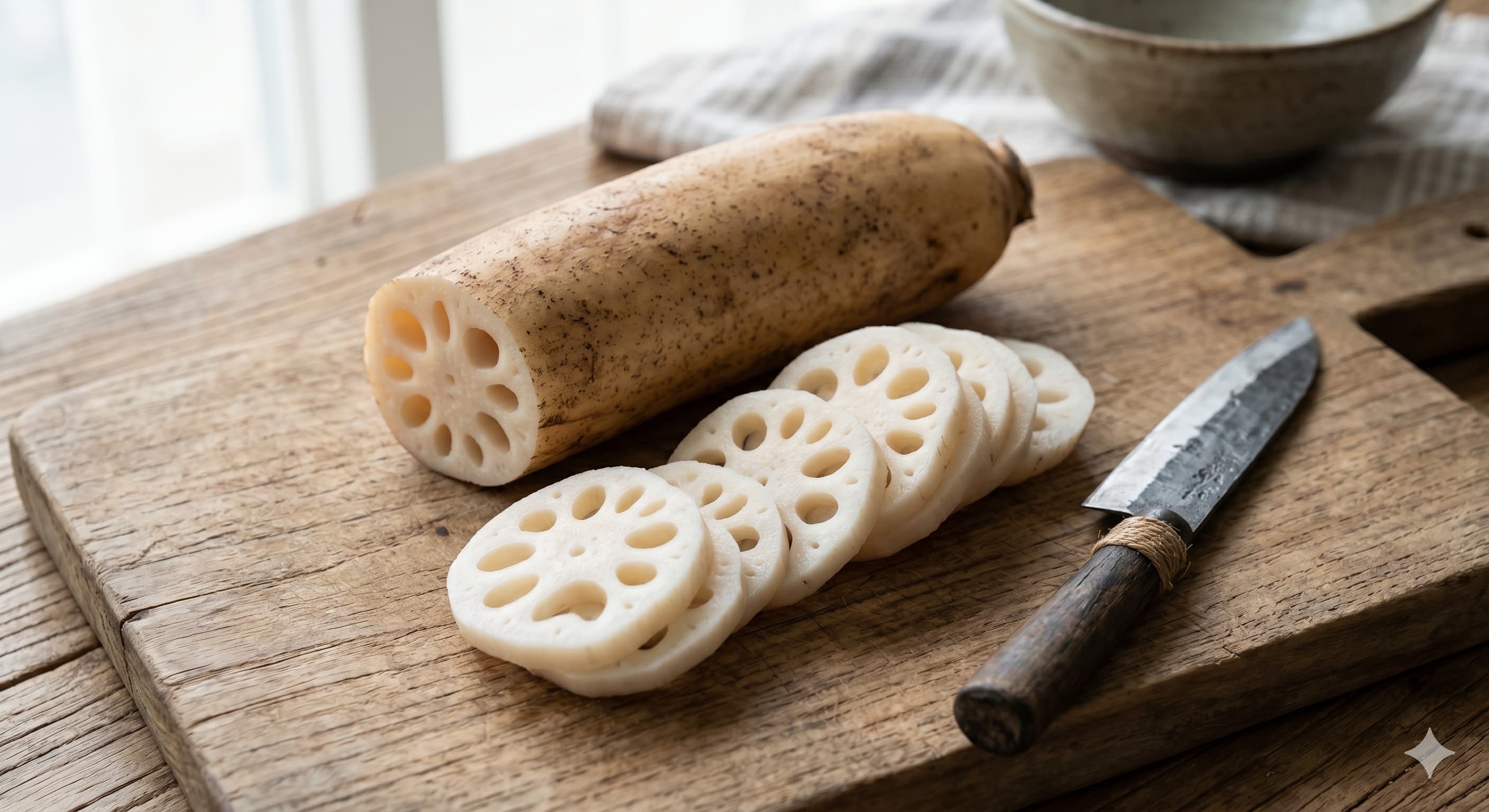
The lotus has been sacred across Asian cultures for millennia, but in Korea, it holds a special dual identity — spiritual symbol and beloved ingredient. Every part of the lotus is used in Korean cuisine: the root, leaves, seeds, stems, and even the flower petals. Lotus root's most enchanting quality is its cross-section: slicing it reveals a mesmerizing lace-like pattern of air channels that the plant uses to breathe underwater, connecting the submerged root to the leaves above the water's surface. This pattern has made lotus root a naturally photogenic ingredient that looks like edible art. Buddhist monks, who revere the lotus for growing pure from muddy water, incorporated lotus root into temple cuisine as both nourishment and spiritual metaphor. The Donguibogam makes a fascinating distinction: raw lotus root is cooling and disperses stagnant blood, while cooked lotus root becomes warming and nourishes blood — the same ingredient with opposite effects depending on preparation. Buyeo, the ancient capital of the Baekje Kingdom in Korea, is famous for its lotus ponds and remains the nation's premier lotus root growing region, hosting a lotus festival each summer.
New to Lotus Root?
Is this edible?
Yes! Lotus root is widely eaten across Korea, China, and Japan, and is prized for its beautiful lace-like cross-section and satisfying crunch. It is a beloved ingredient in both everyday and festive cooking.
What does it taste like?
Similar to a water chestnut or jicama — mildly sweet, clean, and starchy with a crisp crunch that persists even after cooking. When braised in sweet soy sauce, it becomes almost candy-like.
Where to buy
Korean or Asian grocery stores (H Mart, 99 Ranch) sell fresh lotus root in the produce section. Frozen pre-sliced lotus root is available in the freezer aisle and works perfectly for most recipes.
How to prepare
Peel the brown skin with a vegetable peeler, then slice into rounds. Immediately soak slices in water with a splash of vinegar to prevent browning. Rinse well before cooking.
Pro tip: Slice it thin (about 5mm) for stir-fries and braising — this ensures even cooking and lets the beautiful hole pattern show. The vinegar soak is not optional; without it, the slices turn an unappealing brown.
Traditional Medicine
Source: Donguibogam (동의보감)
Nature (性)
Cool (涼)Flavor (味)
sweet
Target Organs (歸經)
Heart (心), Spleen (脾)
Benefits
- circulation
Dissolves blood stasis to promote circulation, and paradoxically also stops bleeding — raw lotus root cools and moves blood, while cooked lotus root warms and builds blood
어혈을 풀어 혈행을 돕고 출혈을 멎게 한다
Source: 동의보감 [탕액편] 채부
- digestion
Tonifies the spleen and stomach, aiding digestion and stimulating appetite
비위를 보하여 소화를 돕고 식욕을 증진시킨다
Source: 동의보감 [탕액편] 채부
- mental calm
Calms the heart and settles the spirit, helping to ease restlessness and anxiety
심을 안정시키고 정신을 편안하게 한다
Source: 동의보감 [내경편] 신문
Key Compounds
This information is based on traditional Korean medicine texts (Donguibogam) and is for cultural reference only. It does not constitute medical advice.
Seasonal Availability
Fresh lotus root is harvested from late September through December in Korea, when the roots are at their crunchiest and sweetest. The major Korean growing region is Buyeo in South Chungcheong Province. Frozen and vacuum-packed slices are available year-round at Asian grocery stores.
Complementary Ingredients (궁합 재료)
The crisp lotus root and chewy shiitake create perfect textural contrast in braised temple dishes
A drizzle of perilla oil over lotus root stir-fry adds herbaceous warmth that complements the root's clean sweetness
Toasted sesame seeds sprinkled over braised lotus root add nuttiness and visual appeal to the glossy glaze
Processing Methods (법제)
Soaking sliced lotus root in vinegared water immediately after cutting prevents oxidation (browning) and keeps the flesh crisp and white for a beautiful presentation.
Braising transforms the nature from cool to warm and creates translucent, candy-like slices. The long, slow cooking changes both the medicinal properties and flavor profile.
Consumption Tips by Health Goal
Circulation
Juice raw lotus root and drink fresh. Raw lotus root is cooling and especially effective at dispersing blood stasis. The Donguibogam specifically notes that raw and cooked lotus root have opposite thermal natures.
Digestion
Braise or stir-fry lotus root and eat as a regular side dish. Cooking warms its nature and makes it more suitable for nourishing the spleen long-term.
Mental calm
Make lotus root tea by simmering thin slices in water for 15-20 minutes. Drink warm before bedtime to calm the heart and promote restful sleep.
Culinary Profile
Flavor
Mildly sweet and starchy with a clean, almost floral freshness; when braised in soy-sweet sauce, it develops a caramel-like richness
Texture
Distinctively crunchy and crisp when fresh or lightly cooked; becomes pleasantly chewy and almost translucent when braised long — retains structure beautifully even after prolonged cooking
Common Uses
Western Substitutes
Related Recipes
Macrobiotic Temple Food Bowl
마크로비오틱 사찰음식 한 그릇
Easy | 40 min
Vinegar-Pickled Lotus Root (Su-Renkon)
초연근
Easy | 20 min
Colorful Sushi
알록달록 꽃김밥
Medium | 80 min
Miso-Style Temple Vegetable Soup
된장풍 건진국
Medium | 0 min
Temple-style Three Dishes (Burdock, Lotus Root & Bomdong Jeon)
사찰식 우엉 연근 봄동 전
Easy | 40 min
Beet and Lotus Root Jeon
연근전
Easy | 40 min
Lotus Root and Spinach Jeon with Nuts
연근 시금치 전
Easy | 80 min
Shojin Age (Temple-Style Vegetable Tempura)
정진아게 (사찰 채소 튀김)
Medium | 35 min
Sweet Soy-glazed Lotus Root
연근조림
Easy | 30 min
Sweet Braised Lotus Root
아삭하면서 쫀득한 연근조림
Easy | 80 min
Classic Simmered Hijiki Seaweed
톳 조림
Easy | 30 min
Temple-style Lotus Root Hand-torn Noodle Soup
선재스님의 통밀 연근 수제비
Easy | 40 min
Lotus Root with Mustard Potato Filling
연근 겨자감자무침
Medium | 40 min