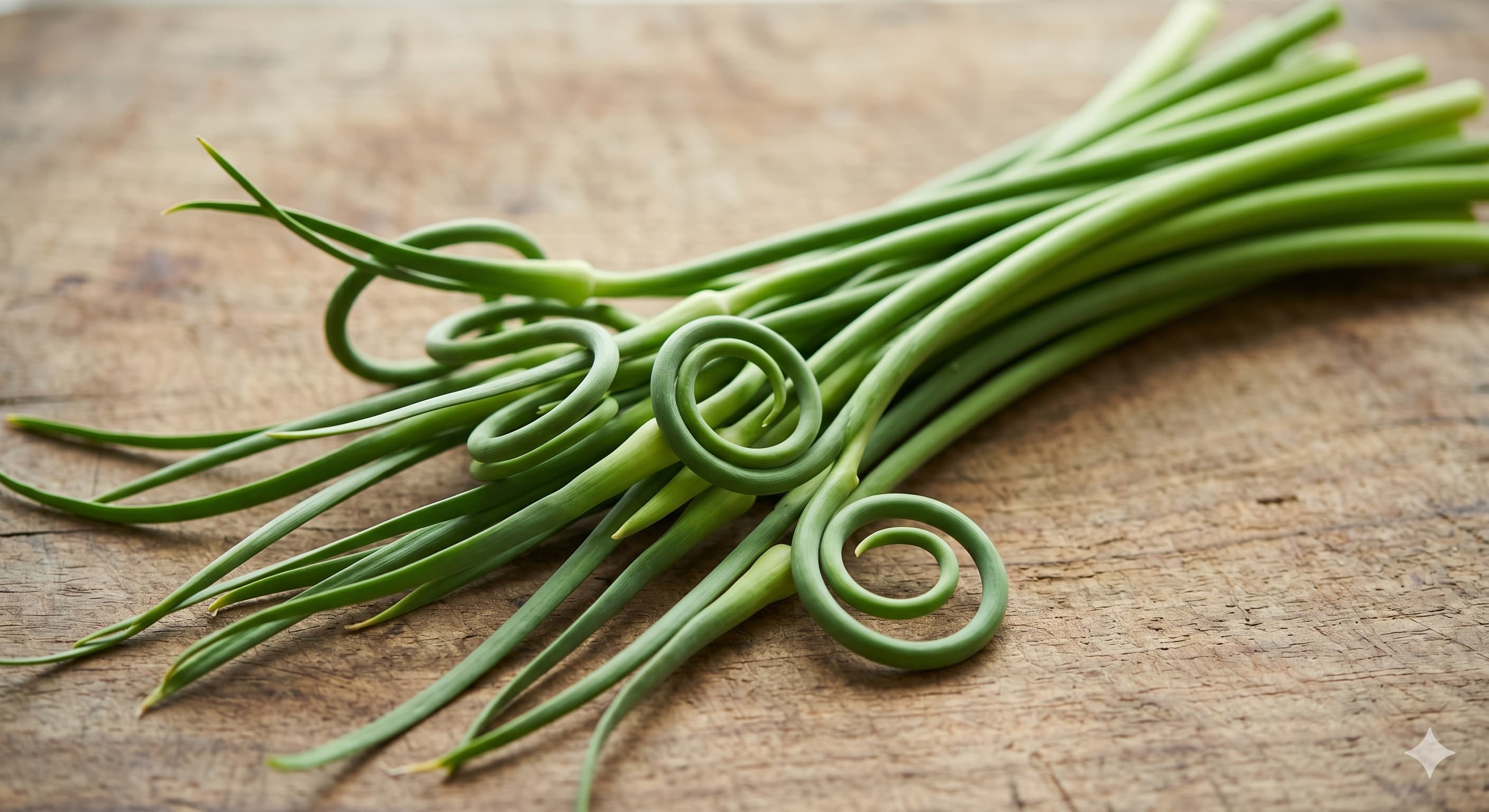
Garlic Scapes (Maneul-jjong)
Allium sativum L.
Garlic scapes (마늘쫑, maneul-jjong) are the curly green flower stalks that garlic plants send up in late spring. Farmers have traditionally snapped these off to force the plant's energy into growing a bigger bulb underground — and rather than discarding them, Korean cooks turned this agricultural byproduct into a beloved ingredient in its own right. Stir-fried garlic scapes and garlic scape jangajji (pickles) are among the most common banchan in Korean households. The Donguibogam discusses garlic (大蒜, daessan) extensively as a warming food that aids digestion and promotes circulation. Garlic scapes share these properties in a milder, more approachable form. For Americans, garlic scapes represent a wonderful convergence: they are increasingly popular at US farmers markets (June is garlic scape season), and Korean preparations are among the best ways to cook them. If you see those curly green stalks at your local market, try the Korean stir-fry — it may become your favorite way to enjoy them.
New to Garlic Scapes (Maneul-jjong)?
Is this edible?
Yes! Garlic scapes are the curly green flower stalks of garlic plants. They are a real ingredient, increasingly popular in American cooking. Everything except the very tip of the flower bud is edible.
What does it taste like?
Mild, sweet garlic flavor with green bean-like freshness. Much gentler than garlic cloves — you can eat handfuls without garlic breath consequences. Snappy and satisfying to eat.
Where to buy
Farmers markets in June are your best bet in the US — many garlic farmers sell them. Also available at Korean, Chinese, and some specialty grocery stores in late spring/early summer.
How to prepare
Trim off the tough bottom end and the very tip of the flower bud. Cut into 2-inch pieces. Stir-fry with soy sauce and sesame oil over high heat for 3-4 minutes. Done.
Pro tip: When you see garlic scapes at the farmers market, buy extra and make jangajji (Korean soy pickles): pack in a jar, pour over a boiled-and-cooled mix of soy sauce, vinegar, sugar, and water. Ready in a week, lasts for months.
Traditional Medicine
Source: Donguibogam (동의보감)
Nature (性)
Warm (溫)Flavor (味)
pungent
Target Organs (歸經)
Spleen (脾), stomach, Lung (肺)
Benefits
- digestion
Warms the spleen and stomach and aids digestion
비위를 따뜻하게 하고 소화를 돕는다
Source: 동의보감 [탕액편] 채부 대산조
- circulation
Promotes qi and blood circulation and dispels internal cold
기혈 순환을 촉진하고 체내 냉기를 없앤다
Source: 동의보감 [탕액편] 채부 대산조
Key Compounds
This information is based on traditional Korean medicine texts (Donguibogam) and is for cultural reference only. It does not constitute medical advice.
Seasonal Availability
Garlic scapes appear in late spring to early summer (May-July) when garlic plants send up their flower stalks. They are removed by farmers to direct the plant's energy into the bulb. Pickled garlic scapes (maneul-jjong jangajji) are available year-round.
Complementary Ingredients (궁합 재료)
Processing Methods (법제)
Cooking mellows the raw garlic pungency into a sweet, mild garlic flavor while maintaining the satisfying crunch
Consumption Tips by Health Goal
digestion
Eat stir-fried garlic scapes or garlic scape jangajji (pickles) alongside rich or heavy meals to aid digestion and warm the stomach
Culinary Profile
Flavor
Mild, sweet garlic flavor — much gentler than garlic cloves. Think of green beans crossed with garlic, with a pleasant sweetness that intensifies when cooked. The curly tips are sweeter than the straight stem portions
Texture
Firm, snappy, and crunchy — similar to green beans or asparagus. They retain their satisfying crunch even after stir-frying. The curly flower bud end is slightly tender
Common Uses
Western Substitutes