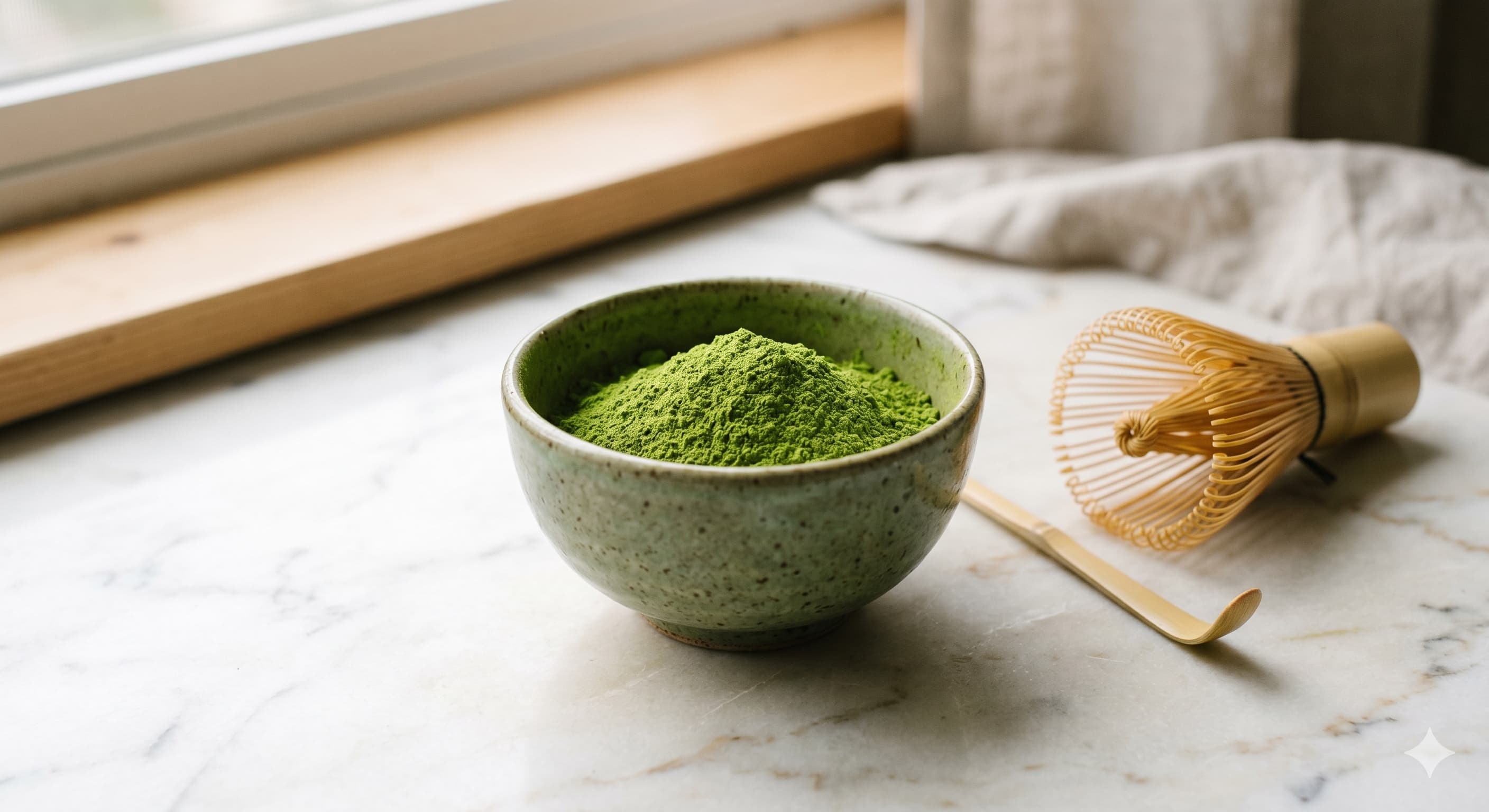
Matcha (Powdered Green Tea)
Camellia sinensis L. (shade-grown, stone-ground)
Matcha's story is inseparable from Zen Buddhism. The practice of drinking powdered tea originated in Song Dynasty China, but it was the Japanese Zen monk Eisai who brought tea seeds and the powdered tea method to Japan in 1191, writing 'Kissa Yojoki' (喫茶養生記, Drinking Tea for Health). He advocated tea as medicine for the heart and a tool for meditation. The tea ceremony (chanoyu) that later developed under Sen no Rikyu became one of Japan's most profound cultural expressions — a practice of mindfulness, aesthetics, and humble hospitality rooted in Zen principles. Matcha is made by shade-growing tea plants for 20-30 days before harvest, which boosts chlorophyll and L-theanine, then stone-grinding the dried leaves into powder. In shojin ryori, matcha appears both as the meditative drink that accompanies meals and as a culinary ingredient lending its vivid green to desserts and savory preparations.
Traditional Medicine
Source: Traditional East Asian Medicine
Nature (性)
Cool (涼)Flavor (味)
bitter, sweet
Target Organs (歸經)
Heart (心), Lung (肺), stomach
Benefits
- mental calm
Clears the mind, enhances concentration, and calms the spirit
정신을 맑게 하고 집중력을 높이며 마음을 안정시킨다
Source: Traditional East Asian Medicine — Zen Buddhist tea practice
- anti aging
Powerful antioxidant compounds slow cellular aging
강력한 항산화 성분이 세포 노화를 늦춘다
Source: Traditional East Asian Medicine
- detox
The cool nature of tea clears internal heat-toxins and detoxifies
차의 서늘한 성질이 체내 열독을 내리고 해독한다
Source: Traditional East Asian Medicine
Key Compounds
This information is based on traditional Korean medicine texts (Donguibogam) and is for cultural reference only. It does not constitute medical advice.
Seasonal Availability
First harvest (shincha/ichibancha) in late April to May yields the sweetest, most prized leaves. Matcha powder is available year-round, but ceremonial-grade spring harvest is the finest.
Culinary Profile
Flavor
Vibrant, vegetal, and complex — a balance of pleasant bitterness, marine sweetness, and creamy umami. Ceremonial grade is smooth and sweet; culinary grade is more robust and bitter
Texture
Ultra-fine powder that whisks into a frothy, smooth suspension — when used in cooking, adds vivid green color
Common Uses
Western Substitutes