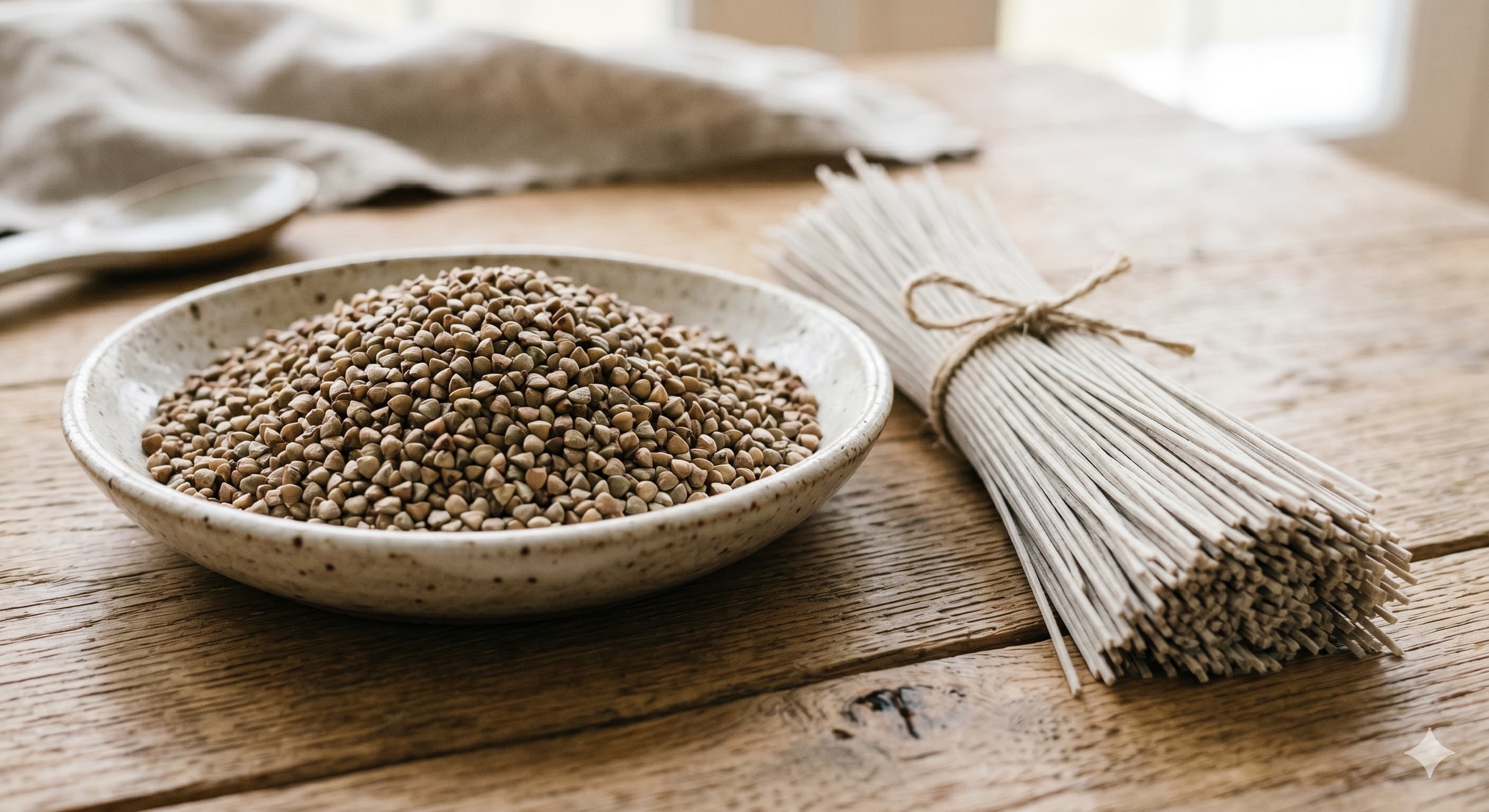
Buckwheat
Fagopyrum esculentum
Buckwheat (memil) holds a special place in Korean cuisine despite not being a true grain — it is actually a seed related to rhubarb. The Donguibogam classifies buckwheat as cool in nature and sweet in flavor, noting it clears dampness-heat and benefits the intestines. Buckwheat is the essential ingredient in naengmyeon (cold noodles), one of Korea's most iconic dishes, originally from the northern provinces (modern North Korea) where buckwheat thrived in the cold mountain climate. The chewy, slightly grayish buckwheat noodles served in an icy beef broth became synonymous with summer refreshment. Buckwheat is also used to make memil-jeon (buckwheat crepes), a traditional Gangwon Province specialty, and soba-style noodles eaten with a dipping sauce.
Traditional Medicine
Source: Donguibogam
Nature (性)
Cool (涼)Flavor (味)
sweet
Target Organs (歸經)
Spleen (脾), stomach, large_intestine
Benefits
- digestion
Clears food stagnation in the intestines and descends qi
장위의 적체를 풀어주고 기를 내린다
Source: Donguibogam
- circulation
Invigorates blood vessels and clears heat
혈맥을 활발하게 하고 열을 내린다
Key Compounds
This information is based on traditional Korean medicine texts (Donguibogam) and is for cultural reference only. It does not constitute medical advice.
Seasonal Availability
Culinary Profile
Flavor
Earthy, nutty, slightly bitter
Texture
Chewy and springy (noodles)
Common Uses
Western Substitutes
Related Recipes
Royal Court Cold Noodles
궁중 냉면
Medium | 40 min
Makguksu (Buckwheat Cold Noodles)
막국수
Easy | 20 min
Bibim Naengmyeon (Spicy Cold Noodles)
비빔냉면
Easy | 25 min
Jaengban Makguksu (Sharing Platter Cold Noodles)
쟁반막국수
Medium | 35 min
Zaru Soba (Cold Buckwheat Noodles with Dipping Sauce)
자루 소바 (냉모밀)
Easy | 20 min
Kake Soba (Hot Buckwheat Noodles in Broth)
카케 소바 (따뜻한 메밀국수)
Easy | 25 min
Buckwheat Greens with Doenjang Dressing
메밀나물된장무침
Easy | 20 min