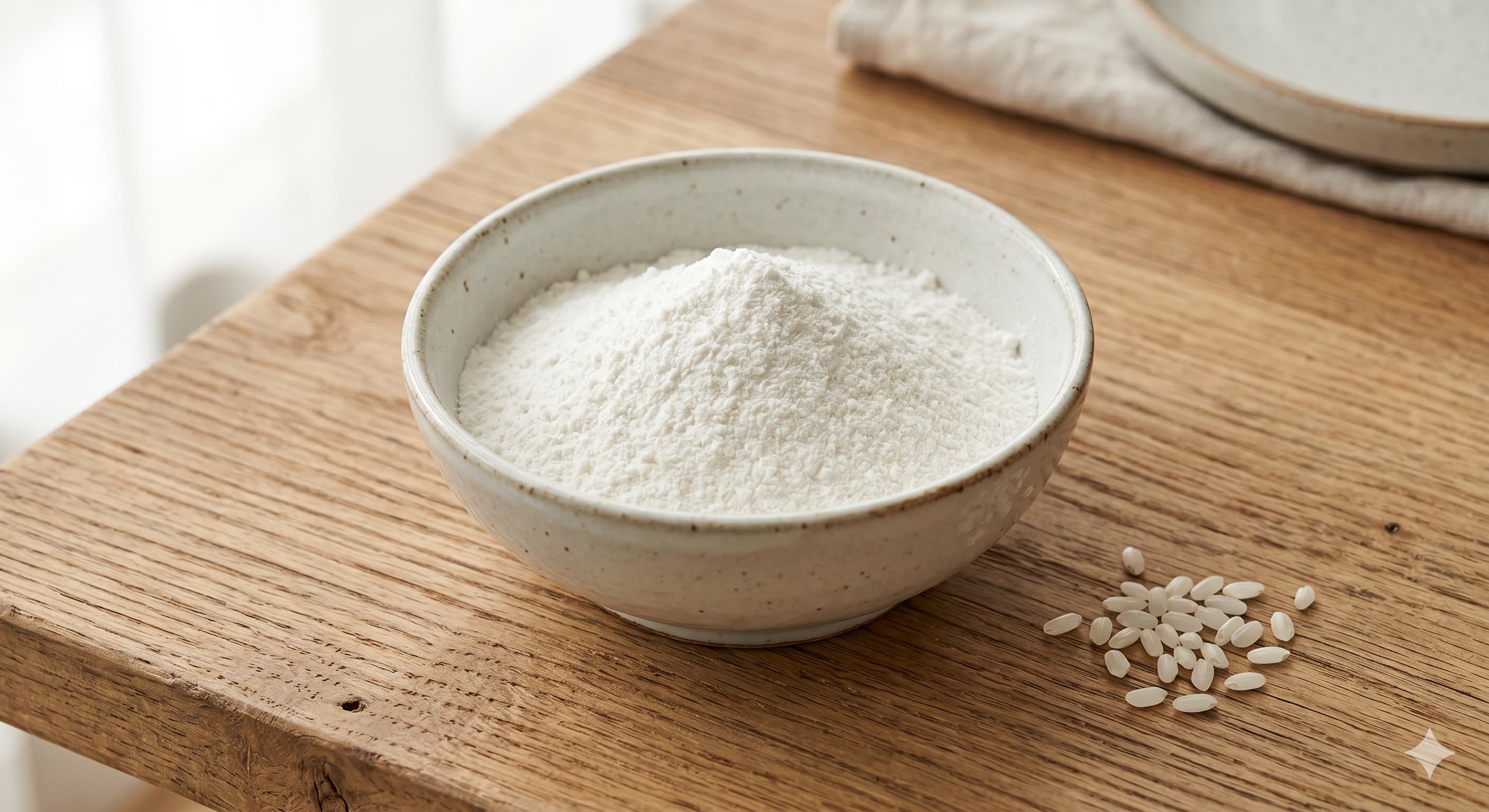
Short-Grain Rice Flour (non-glutinous)
Oryza sativa L.
In Korea, rice flour is the soul of tteok (rice cake) culture, which spans thousands of years. Unlike glutinous rice flour which makes chewy mochi-like cakes, regular rice flour creates firmer, more delicate textures — the kind found in sirutteok and baekseolgi. Every village once had a communal rice mill (방앗간) where families brought their soaked rice to be ground before celebrations.
Traditional Medicine
Source: Donguibogam (동의보감)
Nature (性)
Neutral (平)Flavor (味)
sweet
Target Organs (歸經)
Spleen (脾), Lung (肺)
Benefits
- digestion
Tonifies the spleen and stomach, boosts energy, and stops diarrhea
비위를 보하고 기운을 돋우며 설사를 그치게 한다
Source: 동의보감 [탕액편] 곡부 갱미조
- energy
Harmonizes the energy of all five organs and promotes blood circulation
오장의 기운을 고루 편하게 하고 혈맥을 통하게 한다
Source: 동의보감 [탕액편]
Key Compounds
This information is based on traditional Korean medicine texts (Donguibogam) and is for cultural reference only. It does not constitute medical advice.
Seasonal Availability
New crop rice (sinmi) harvested in autumn has the best flavor and stickiness for tteok. Rice flour is available year-round.
Culinary Profile
Flavor
Clean, mild, slightly sweet — the neutral canvas for Korean rice cakes
Texture
When steamed, yields a firm yet tender crumb unlike the chewiness of glutinous rice
Common Uses
Western Substitutes
Related Recipes
Walnut & Brown Sugar Steamed Rice Cake
호두흑설탕썰기떡을
Easy | 80 min
Songpyeon (Half-Moon Rice Cakes)
송편
Medium | 80 min
Sirutteok (Layered Red Bean Rice Cake)
시루떡
Medium | 80 min
Jeungpyeon (Fermented Rice Cake)
증편
Hard | 60 min
Jeolpyeon (Pressed & Patterned Rice Cake)
절편
Medium | 60 min
Ssuktteok (Mugwort Rice Cake)
쑥떡
Medium | 65 min
Mujigaetteok (Rainbow Rice Cake)
무지개떡
Hard | 95 min