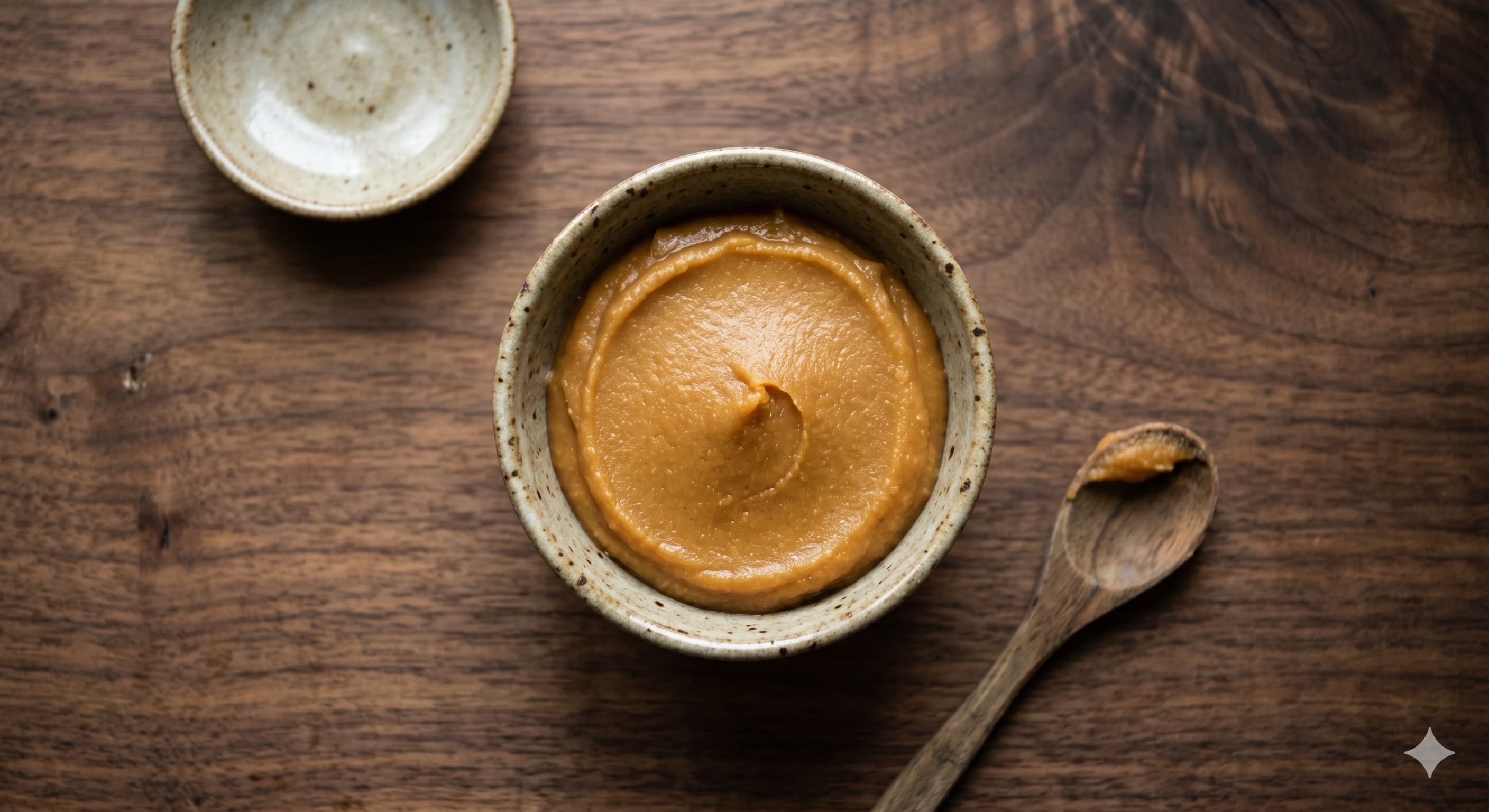
Miso (Fermented Soybean Paste)
N/A (fermented Glycine max paste)
Miso is the soul of Japanese cuisine, with origins tracing back to Chinese fermented bean paste (jiang) that arrived in Japan around the 7th century. Buddhist monks played a central role in refining miso-making during the Kamakura period, as it provided essential protein in their meat-free shojin ryori diet. The Korean cousin, doenjang, shares the same ancient Chinese ancestor but diverged in technique — Korean doenjang uses meju (fermented soybean blocks) while Japanese miso relies on koji (Aspergillus oryzae) inoculated rice or barley. Each region of Japan developed its own style: Kyoto's delicate shiro miso, Nagoya's intense hatcho miso, Sendai's robust aka miso. In temple cuisine, miso soup is served at virtually every meal, providing warmth, nourishment, and the meditative simplicity that defines shojin cooking.
Traditional Medicine
Source: Traditional East Asian Medicine
Nature (性)
Warm (溫)Flavor (味)
salty, sweet
Target Organs (歸經)
Spleen (脾), stomach, Kidney (腎)
Benefits
- digestion
Fermented soybean components tonify the spleen and stomach and promote digestion
발효 콩 성분이 비위를 보하고 소화를 촉진한다
Source: Traditional East Asian fermentation medicine
- immunity
Beneficial bacteria improve gut flora and strengthen immune function
유익균이 장내 환경을 개선하고 면역력을 높인다
Source: Traditional East Asian fermentation medicine
- detox
Enzymes produced during fermentation aid the body in expelling toxins
발효 과정에서 생성된 효소가 체내 독소 배출을 돕는다
Source: Traditional East Asian fermentation medicine
Key Compounds
This information is based on traditional Korean medicine texts (Donguibogam) and is for cultural reference only. It does not constitute medical advice.
Seasonal Availability
Available year-round. Traditionally brewed in winter and aged through spring and summer. Darker varieties (hatcho, aka miso) are aged longer; white miso (shiro) is aged only weeks.
Culinary Profile
Flavor
Deep, savory umami with complex salty-sweet undertones — white miso is mild and sweet, red miso is intense and earthy, hatcho miso is profoundly rich and bitter
Texture
Thick, smooth paste that dissolves easily in warm liquid
Common Uses
Western Substitutes
Related Recipes
Miso Dengaku (Miso-Glazed Tofu and Vegetable Skewers)
미소 뎅가쿠 (된장 꼬치구이)
Easy | 30 min
Nasu Dengaku (Miso-Glazed Eggplant)
나스 뎅가쿠 (가지 된장구이)
Easy | 25 min
Yasai Miso Shiru (Vegetable Miso Soup)
야사이 미소시루 (채소 된장국)
Easy | 25 min
Tonyu Nabe (Soy Milk Hot Pot)
도뉴나베 (두유 전골)
Easy | 35 min
Yasai Ramen (Vegetable Ramen)
야사이 라멘 (채소 라멘)
Medium | 55 min
Doenjang Mushroom Pasta
가을 버섯 된장 파스타
Easy | 20 min