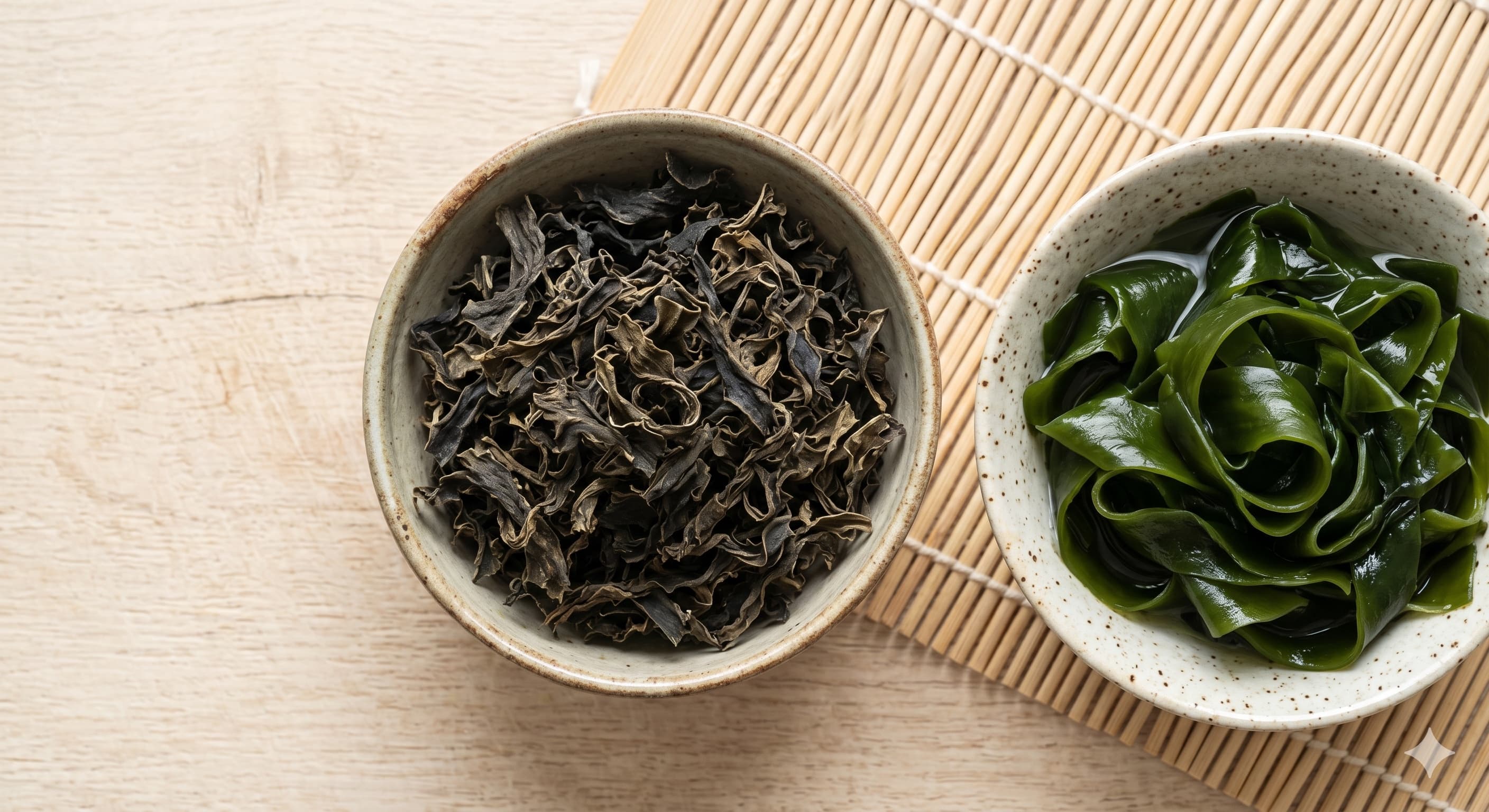
Dried Seaweed (Miyeok)
Undaria pinnatifida
Miyeokguk (seaweed soup) is Korea's birthday soup — mothers eat it after childbirth for its rich minerals, and every Korean eats it on their birthday to honor their mother.
New to Dried Seaweed (Miyeok)?
Is this edible?
Yes! Dried seaweed (miyeok) is a deeply loved ingredient in Korean cuisine, most famous for miyeok-guk (seaweed soup), the traditional soup served to new mothers after childbirth and eaten on birthdays throughout life to honor your mother.
What does it taste like?
Mild, slightly sweet, and subtly oceanic — much more delicate and pleasant than you might expect from seaweed. The texture when rehydrated is silky, slippery, and pleasantly chewy. Think of it as a savory sea vegetable rather than 'fishy seaweed.'
Where to buy
Korean grocery stores (H Mart, Lotte) sell dried miyeok in bags. Also available at any Asian grocery store. Look for 'wakame' at Japanese stores — it is the same species. Regular supermarkets may carry it in the Asian food aisle.
How to prepare
Soak dried miyeok in cold water for 10-15 minutes. It expands dramatically — a small handful becomes a large bowl of seaweed. Drain, squeeze out excess water, and cut into bite-sized pieces if the strands are long.
Pro tip: Use far less dried miyeok than you think — it expands 10-15 times its dry volume. A piece the size of your fist will make enough soup for a family. For the richest birthday soup, stir-fry the soaked miyeok in sesame oil before adding stock.
Traditional Medicine
Source: Donguibogam
Nature (性)
Cold (寒)Flavor (味)
salty
Target Organs (歸經)
Kidney (腎), Liver (肝)
Benefits
- detox
Clears heat, dissolves phlegm, and promotes urination
열을 내리고 담(痰)을 삭이며 소변을 잘 나오게 한다
Source: Donguibogam
- circulation
Relieves blood stasis and aids postpartum recovery
어혈을 풀어주고 산후 조리에 좋다
Key Compounds
This information is based on traditional Korean medicine texts (Donguibogam) and is for cultural reference only. It does not constitute medical advice.
Seasonal Availability
Spring miyeok is the tenderest. Traditionally harvested from February to April.
Culinary Profile
Flavor
Mild oceanic, slightly sweet
Texture
Silky and tender when rehydrated
Common Uses
Western Substitutes
Related Recipes
Macrobiotic Temple Food Bowl
마크로비오틱 사찰음식 한 그릇
Easy | 40 min
Stir-Fried Seaweed Stems
미역줄기볶음
Easy | 20 min
Temple-style Seaweed Soup
사찰식 미역국
Easy | 50 min
Chilled Cucumber Seaweed Soup
새콤달콤 오이냉국
Easy | 15 min
Pea Shoot Miso Soup
두묘 된장국
Easy | 10 min
Japanese-Style Cilantro Salad
고수 일본풍 샐러드
Easy | 0 min
Sweet and Sour Seaweed Muchim
미역초무침
Easy | 10 min