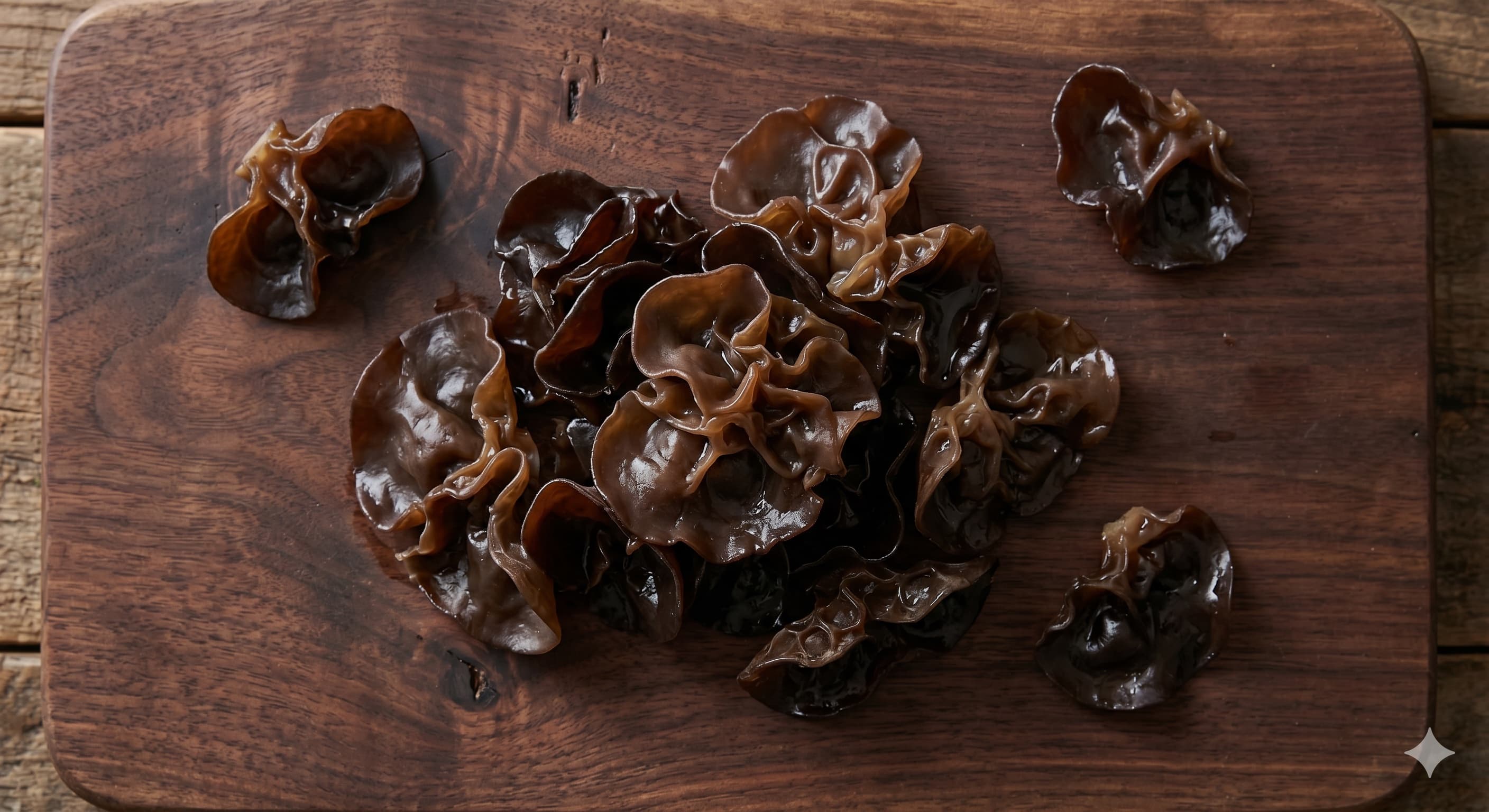
Wood Ear Mushroom
Auricularia auricula-judae
Wood ear mushroom (목이/木耳) is recorded in the Donguibogam under 채부 목이조, classified as neutral with sweet flavor. The name literally means 'tree ear,' perfectly describing its shape and habitat. In Korean cuisine, wood ear is valued primarily for its unique crunchy-gelatinous texture rather than flavor — it adds a distinctive bounce to stir-fries and noodle dishes. In traditional medicine, it is particularly noted for blood-nourishing and intestine-lubricating properties. The dark color associates it with the kidney in five-element theory.
New to Wood Ear Mushroom?
Is this edible?
Yes! Wood ear mushrooms (also called cloud ear or tree ear mushrooms) have been eaten in Korean and Chinese cuisine for centuries. They are prized for their unique crunchy-slippery texture and are used in stir-fries, soups, and japchae.
What does it taste like?
Nearly flavorless on its own — the appeal is entirely textural. Wood ear has a unique crunchy-yet-silky texture, like a cross between a jelly and a chip. It absorbs the flavors of whatever it is cooked with.
Where to buy
Korean or Asian grocery stores (H Mart, 99 Ranch) sell dried wood ear mushrooms in the dried goods aisle. They are inexpensive and shelf-stable for years. Some stores carry fresh wood ear in the produce section.
How to prepare
Soak dried wood ear in warm water for 20-30 minutes — they expand dramatically (5-10x their dried size). Trim any hard, woody spots at the base. Rinse well. Cut into bite-sized pieces if they are large.
Pro tip: Start with a much smaller amount than you think you need — dried wood ear expands enormously when soaked. A small handful of dried pieces will fill a large bowl once rehydrated.
Traditional Medicine
Source: Donguibogam (동의보감)
Nature (性)
Neutral (平)Flavor (味)
sweet
Target Organs (歸經)
Liver (肝), stomach, large_intestine
Benefits
- circulation
Nourishes blood and dissolves blood stasis
혈을 보하고 어혈을 풀어준다
Source: 동의보감 [탕액편] 채부 목이조
- digestion
Lubricates the intestines and resolves constipation
장을 윤하게 하고 변비를 풀어준다
Source: 동의보감 [탕액편] 채부 목이조
Key Compounds
This information is based on traditional Korean medicine texts (Donguibogam) and is for cultural reference only. It does not constitute medical advice.
Seasonal Availability
Wild wood ear grows on dead trees in humid conditions (summer-autumn). Dried form available year-round and is most common in Korean cooking.
Processing Methods (법제)
Dried wood ear must be soaked until fully expanded and pliable. Cold water preserves texture better than hot water.
Consumption Tips by Health Goal
Blood health
Eat regularly in stir-fries and soups. Rich in iron, it supports blood production. The neutral nature makes it safe for most constitutions.
Culinary Profile
Flavor
Very mild, almost flavorless; prized for texture rather than taste; absorbs surrounding flavors
Texture
Distinctively crunchy and bouncy with a gelatinous snap; unlike any other mushroom
Common Uses
Western Substitutes