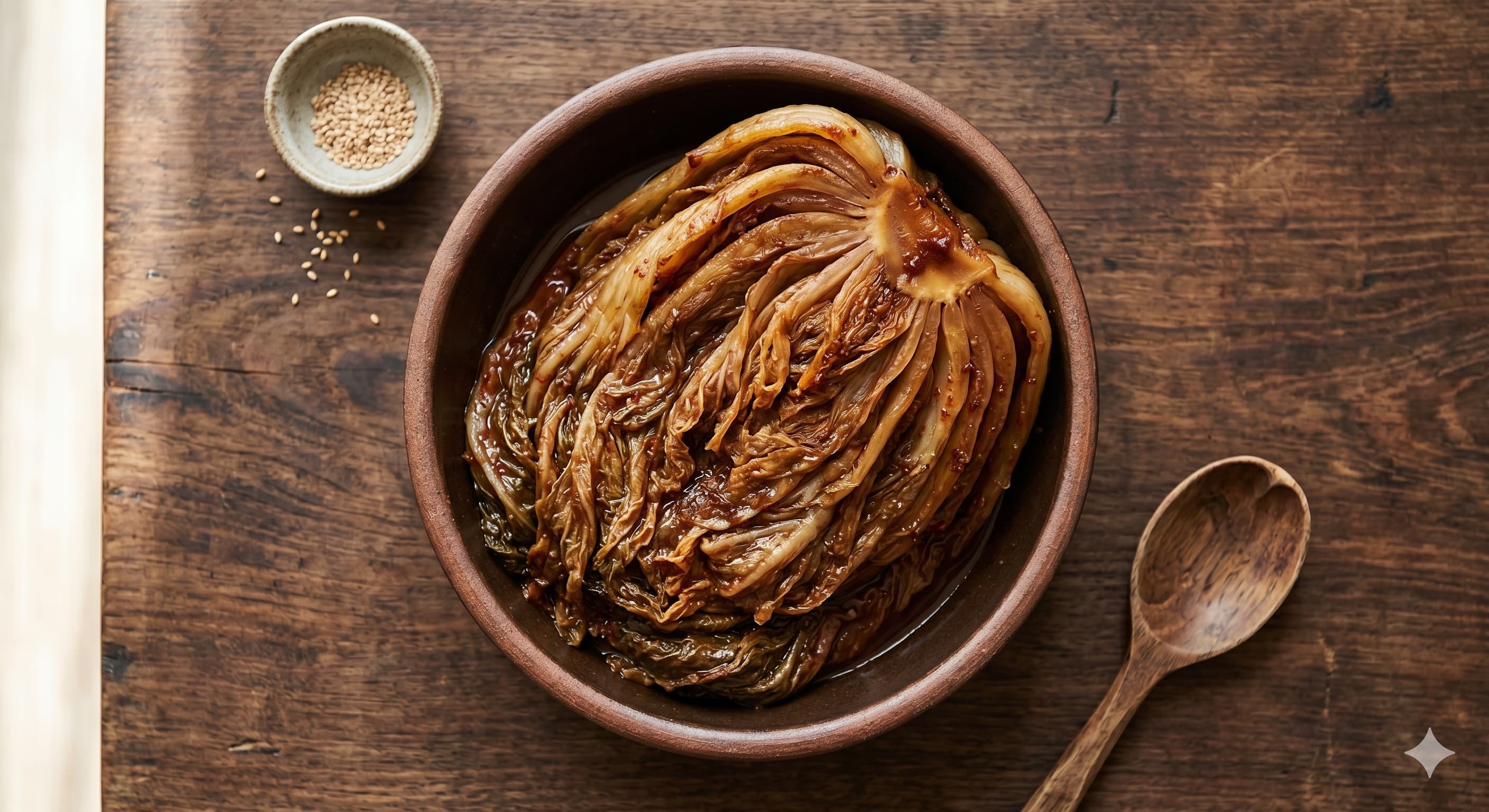
Well-fermented Kimchi
Brassica rapa var. pekinensis (fermented)
Mukeunji (well-fermented kimchi, aged 1-3+ years) represents the pinnacle of Korea's fermentation culture. While fresh kimchi is consumed within weeks, mukeunji is intentionally aged for a year or more until it develops an intensely sour, deeply complex flavor profile that fresh kimchi cannot achieve. The Donguibogam discusses fermented vegetables under the principle that controlled fermentation transforms food's nature, generating beneficial organisms and concentrated medicinal compounds. Mukeunji occupies a special emotional place in Korean culture — it connects to memories of grandmothers' earthenware jars (onggi) buried in the backyard, slowly fermenting through the seasons. Its powerful sourness makes it ideal for jjigae (stews) and stir-fries where it contributes a depth of flavor that only time can create.
Traditional Medicine
Source: Donguibogam
Nature (性)
Warm (溫)Flavor (味)
sour, pungent
Target Organs (歸經)
Spleen (脾), stomach
Benefits
- digestion
Lactic acid bacteria promote gut health and aid digestion
유산균이 장건강을 돕고 소화를 촉진한다
- immunity
Beneficial bacteria produced during fermentation boost immunity
발효 과정에서 생성된 유익균이 면역력을 높인다
Key Compounds
This information is based on traditional Korean medicine texts (Donguibogam) and is for cultural reference only. It does not constitute medical advice.
Seasonal Availability
Made from previous year's kimjang kimchi; the longer it ages, the more sour and complex.
Culinary Profile
Flavor
Deeply sour, funky, complex umami
Texture
Very soft, almost melting
Common Uses
Western Substitutes