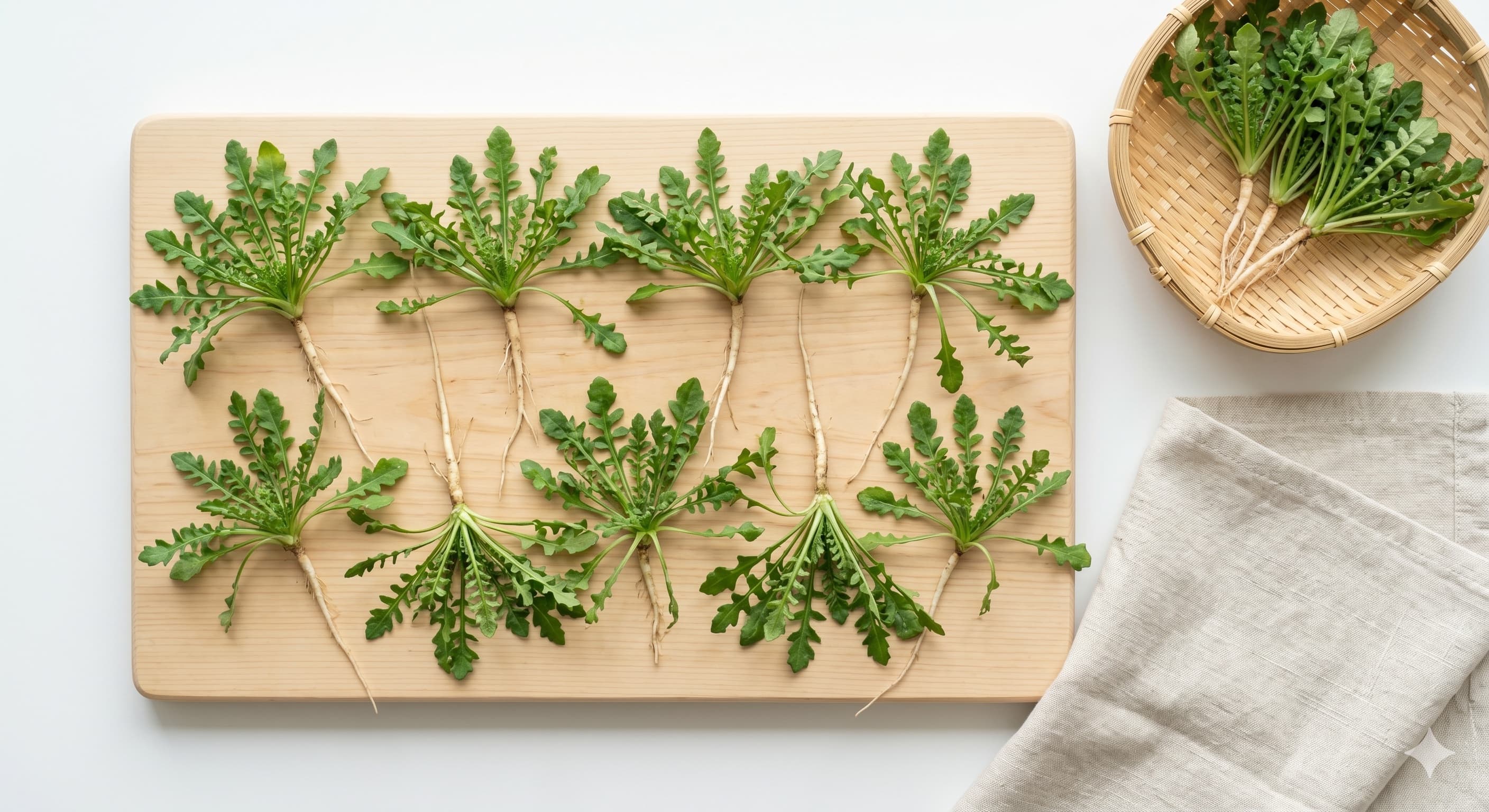
Shepherd's Purse
Capsella bursa-pastoris
Shepherd's purse (naengi) is one of Korea's most beloved spring wild greens, eagerly foraged as one of the first signs that winter is ending. The Donguibogam classifies naengi (薺/제) as neutral in nature and sweet in flavor, noting it brightens the eyes, benefits the liver, and harmonizes the five organs. Its appearance in early spring markets is a cultural event — Koreans say 'naengi has a fragrance that even makes the bird forget to fly home.' Naengi-doenjang-guk (shepherd's purse soybean paste soup) is one of the quintessential spring soups, its delicate, slightly peppery herbaceousness perfectly capturing the taste of the season. Foraging naengi from fields and hillsides remains a beloved spring activity, connecting urban Koreans to their agricultural heritage.
New to Shepherd's Purse?
Is this edible?
Yes! Shepherd's purse is a beloved spring green eaten across Korea, treasured for its delicate, peppery flavor. It has been foraged and eaten in Korea for centuries and is one of the first signs of spring in Korean markets.
What does it taste like?
Mildly peppery and herbaceous with a faint mustard-like bite — similar to arugula but more delicate and earthy. The flavor is subtle and distinctive, often described as 'the taste of spring' in Korea.
Where to buy
Korean grocery stores (H Mart) carry fresh naengi in early spring (February-April). Frozen naengi is available year-round in the frozen section. It is not found in regular Western supermarkets. Arugula mixed with watercress is a very rough substitute.
How to prepare
Trim the root ends and remove any yellowed leaves. Wash very thoroughly in several changes of water — naengi grows close to the ground and traps dirt. Use whole (roots and all) in soups, or blanch briefly for namul.
Pro tip: Buy frozen naengi if you cannot find it fresh — it retains its flavor very well. For naengi-doenjang-guk (the classic soup), add the greens at the very end of cooking to preserve their delicate flavor and bright green color.
Traditional Medicine
Source: Donguibogam
Nature (性)
Neutral (平)Flavor (味)
sweet
Target Organs (歸經)
Liver (肝), Spleen (脾)
Benefits
- digestion
Eases the spleen and benefits the five organs
비위를 편안하게 하고 오장을 이롭게 한다
Source: Donguibogam
- detox
Clears liver heat and brightens the eyes
간의 열을 내리고 눈을 밝게 한다
Source: Donguibogam
Key Compounds
This information is based on traditional Korean medicine texts (Donguibogam) and is for cultural reference only. It does not constitute medical advice.
Seasonal Availability
Best harvested in early spring (March-April) when leaves are young and tender.
Culinary Profile
Flavor
Mildly bitter, earthy, with a fresh green aroma
Texture
Tender leaves, slightly fibrous stems
Common Uses
Western Substitutes