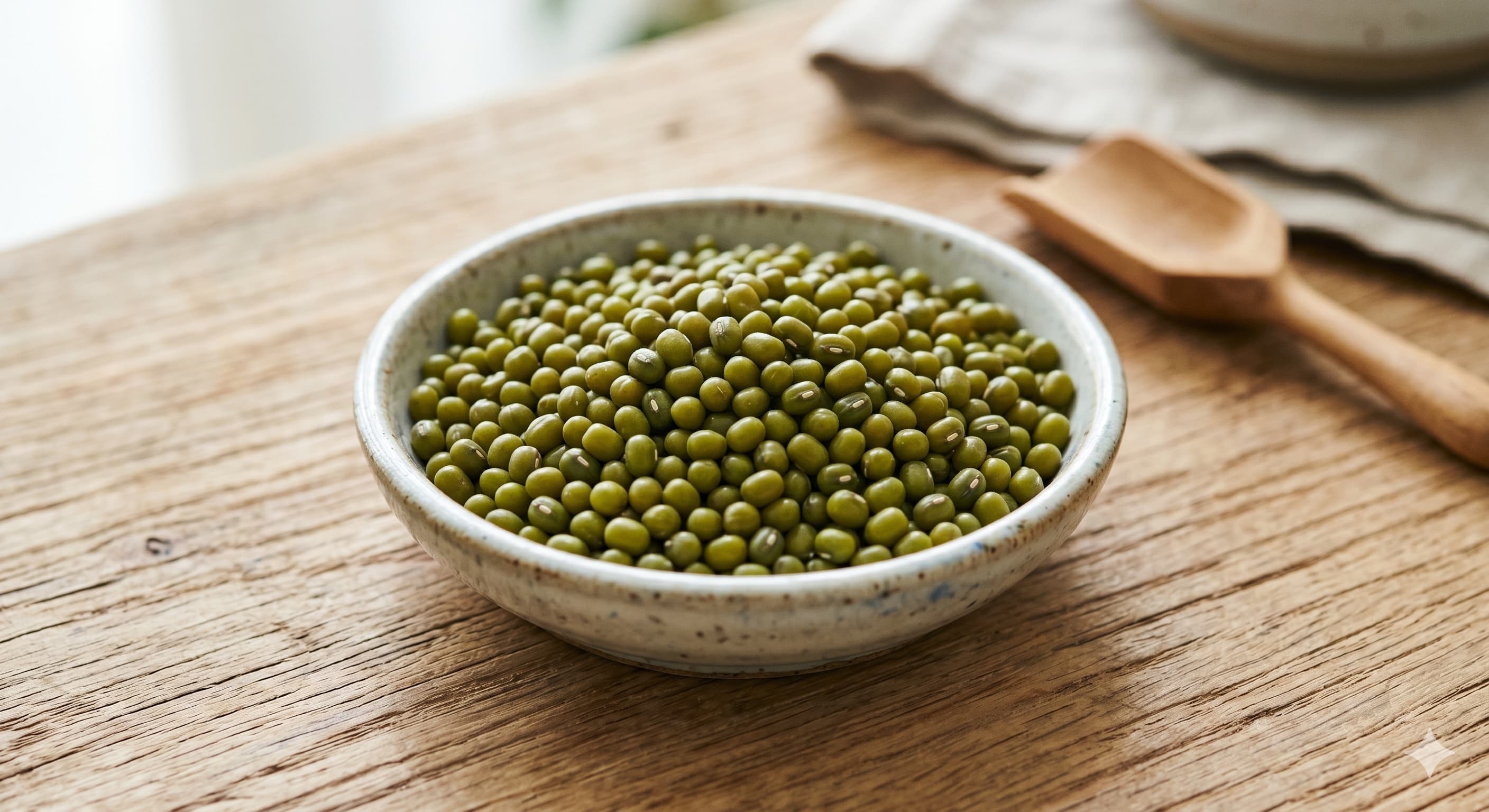
Mung Beans
Vigna radiata (L.) R.Wilczek
Mung beans have been cultivated in Korea for centuries and hold a special place in traditional detox culture. Donguibogam specifically notes their power to 'resolve all poisons' — farmers would drink mung bean soup after handling pesticides, and it was given to patients recovering from illness. In Korean cuisine, mung beans appear in remarkably diverse forms: as jelly (cheongpomuk), pancakes (bindaetteok), sprouts (sukjunamul), and the elegant filling inside gaepitteok rice cakes.
Traditional Medicine
Source: Donguibogam (동의보감)
Nature (性)
Cool (涼)Flavor (味)
sweet
Target Organs (歸經)
Heart (心), Liver (肝)
Benefits
- detox
Clears heat toxins, reduces swelling, and detoxifies all types of poisoning
열독을 풀어주고 부종을 내리며 모든 약물 중독을 해독한다
Source: 동의보감 [탕액편] 곡부 녹두조
- skin health
Heals skin boils and blemishes, clears the complexion
피부의 종기와 부스럼을 낫게 하고 얼굴을 깨끗하게 한다
Source: 동의보감 [탕액편]
- anti inflammation
Quenches thirst and reduces internal heat and inflammation
갈증을 그치게 하고 속열을 내린다
Source: 동의보감 [탕액편]
Key Compounds
This information is based on traditional Korean medicine texts (Donguibogam) and is for cultural reference only. It does not constitute medical advice.
Seasonal Availability
Harvested in late summer to early autumn. Dried mung beans are available year-round at Asian markets.
Culinary Profile
Flavor
Mild, slightly sweet, earthy — takes on the flavor of whatever it's cooked with
Texture
Creamy and smooth when cooked and mashed; slightly crunchy when sprouted
Common Uses
Western Substitutes