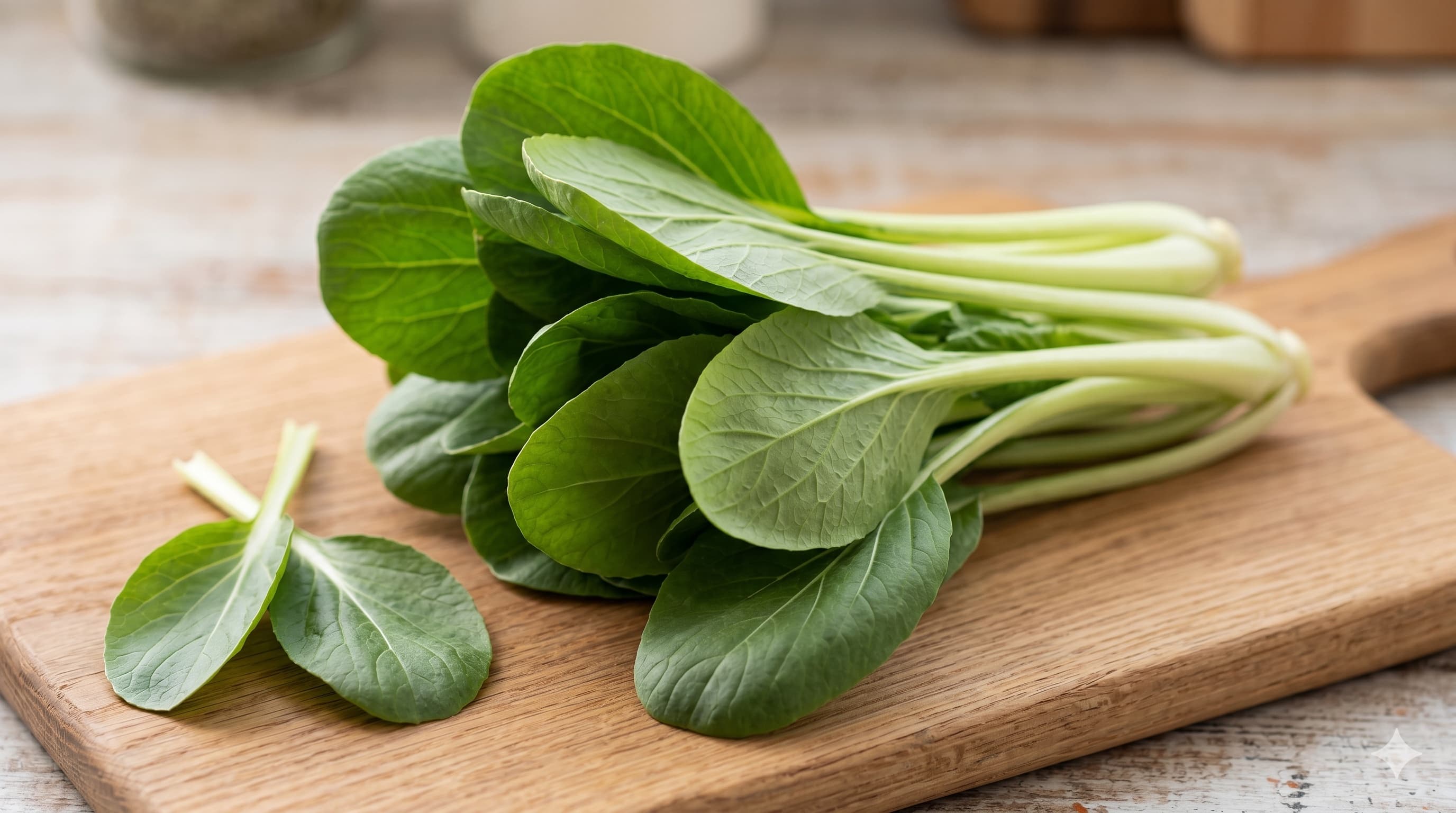
Pohang Mustard Greens (Pohangcho)
Brassica juncea (L.) Czern. var. integrifolia
Pohangcho (포항초) takes its name from the coastal city of Pohang (포항) in Gyeongsang Province, where it has been cultivated for generations as a regional specialty. The cold sea winds and mild winters of the southeastern Korean coast create ideal conditions for this mustard green, which develops its best flavor when stressed by cold temperatures — the plants convert starches to sugars as a natural antifreeze, resulting in sweet, peppery leaves. Pohangcho is one of Korea's treasured 'local vegetables' (향토 채소), the kind of ingredient that is famous in its home region but barely known elsewhere. In Pohang, it is eaten raw as ssam (wraps), blanched as namul, and made into geotjeori (fresh kimchi). The Donguibogam records mustard greens (芥菜) as warming vegetables that benefit the lungs and clear congestion — making pohangcho a natural winter food that warms the body from within.
New to Pohang Mustard Greens (Pohangcho)?
Is this edible?
Yes! This is a type of Asian mustard green — think of it as the Korean cousin of arugula or mizuna. Tender leaves with a peppery kick.
What does it taste like?
Peppery and slightly bitter, like a milder wasabi hit that fades into sweetness. If you enjoy arugula or mizuna, you will love this. Cold-weather growth makes it sweeter.
Where to buy
Difficult outside Korea. Korean grocery stores occasionally carry it in winter. Substitute mizuna or baby mustard greens, which are widely available.
How to prepare
Wash thoroughly, trim stem ends. For namul: blanch for just 30 seconds, rinse in cold water, squeeze dry, and dress. For ssam: serve raw leaves alongside rice and doenjang.
Pro tip: If your grocery store carries mizuna, use it as a stand-in — the flavor profile is very close. Dress with soy sauce, sesame oil, a touch of vinegar, and minced garlic for a Korean-style preparation.
Traditional Medicine
Source: Donguibogam (동의보감)
Nature (性)
Warm (溫)Flavor (味)
pungent, bitter
Target Organs (歸經)
Lung (肺), stomach
Benefits
- respiratory
Opens lung qi, dissolves phlegm, and clears nasal congestion
폐의 기운을 선통하고 담을 삭이며 코를 통하게 한다
Source: 동의보감 [탕액편] 채부 개채조
- digestion
Warms the spleen and stomach and resolves food stagnation
비위를 따뜻하게 하고 식체를 풀어준다
Source: 동의보감 [탕액편] 채부 개채조
Key Compounds
This information is based on traditional Korean medicine texts (Donguibogam) and is for cultural reference only. It does not constitute medical advice.
Seasonal Availability
Pohangcho is a cold-weather green, best from November to March. The cold sweetens the leaves and reduces bitterness. It is a regional specialty of Pohang city on Korea's southeastern coast.
Complementary Ingredients (궁합 재료)
Processing Methods (법제)
Brief blanching tames the sharp peppery bite while preserving the mustard green's character
Consumption Tips by Health Goal
respiratory
Eat pohangcho in winter to warm the body and clear cold-weather congestion — its warming, pungent nature counteracts winter chill
Culinary Profile
Flavor
Peppery and slightly bitter with a wasabi-like mustard kick that fades into a pleasant sweetness, especially in cold-grown leaves. More refined than Western mustard greens, with a cleaner finish
Texture
Tender, thin leaves with slim stems. The leaves are more delicate than Western mustard greens — almost lettuce-like in texture when young
Common Uses
Western Substitutes