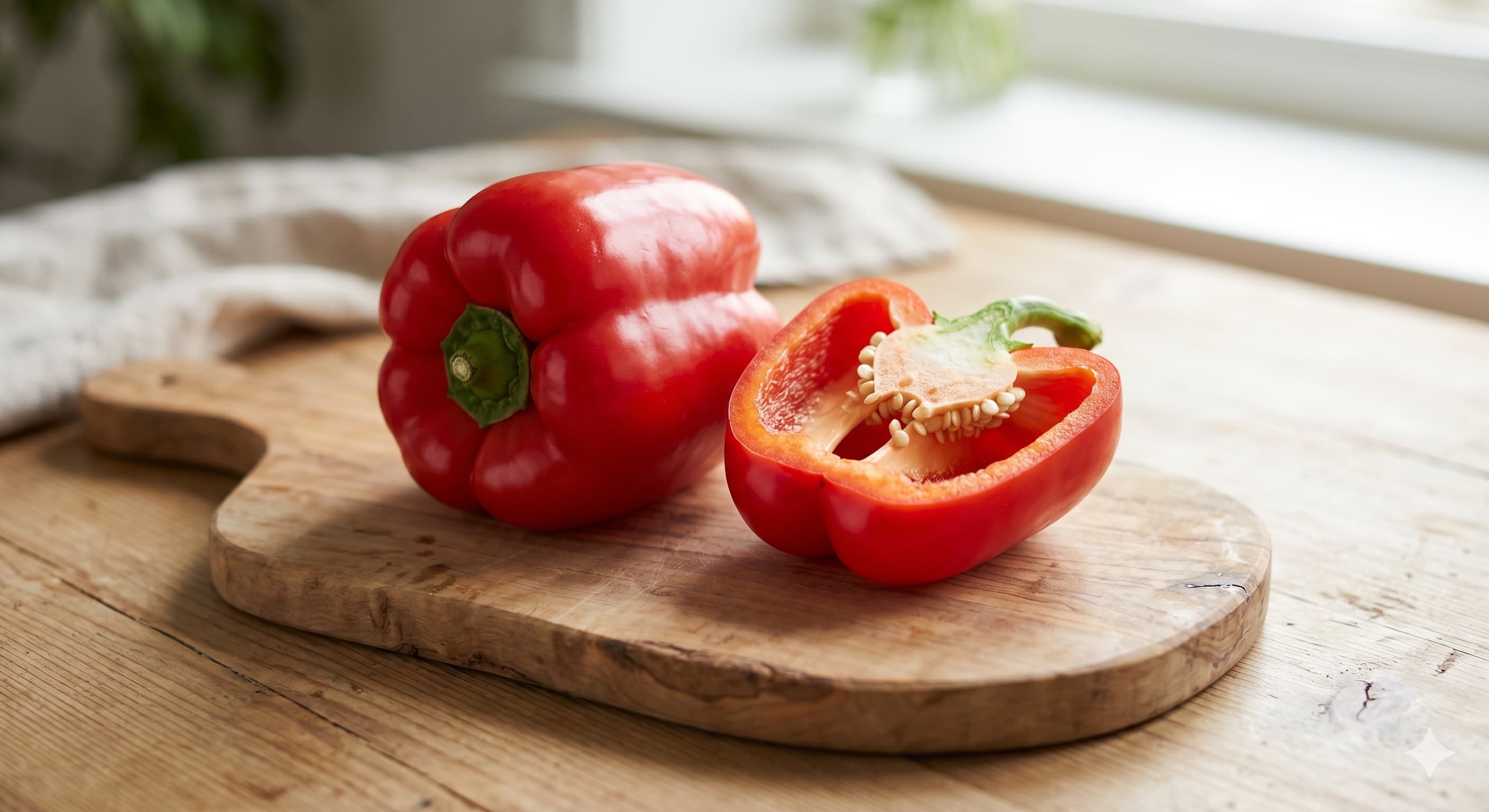
Red Bell Pepper
Capsicum annuum (sweet, red)
Like yellow bell peppers, red paprika originated in the Americas and is NOT recorded in the Donguibogam. Red bell peppers are simply the fully ripened stage of the pepper, having developed maximum sweetness and the highest concentration of beta-carotene and vitamin C. In Korean cuisine, they provide the red component of 오색 (five colors) plating alongside gochugaru, offering color without heat.
New to Red Bell Pepper?
Is this edible?
Yes! Red bell peppers appear frequently in Korean cuisine for their vibrant color and sweetness, adding visual appeal and a mild sweet crunch to dishes like japchae, kimbap, and stir-fries.
What does it taste like?
Same sweet red bell pepper you already know — the sweetest of the bell pepper colors, with no heat whatsoever.
Where to buy
Any supermarket carries red bell peppers.
How to prepare
Remove the stem, seeds, and white pith. Julienne into thin strips for most Korean dishes. Cut into diamond shapes for garnish.
Pro tip: Red bell pepper is NOT the same as Korean red chili pepper (gochu). If a recipe calls for gochu, do not substitute bell pepper — gochu provides essential heat that bell peppers cannot.
Traditional Medicine
Source: Traditional Korean Herbal Medicine
Nature (性)
Neutral (平)Flavor (味)
sweet
Target Organs (歸經)
Spleen (脾), stomach
Benefits
- energy
Supplements the spleen and stomach, boosts vitality
비위를 보하고 기운을 돋운다
Source: Traditional Korean herbal medicine
- eye health
Rich in beta-carotene, nourishes liver blood and supports vision
간혈을 보하여 눈을 밝게 한다
Source: Traditional Korean herbal medicine
Key Compounds
This information is based on traditional Korean medicine texts (Donguibogam) and is for cultural reference only. It does not constitute medical advice.
Seasonal Availability
Peak in summer. Available year-round from greenhouse cultivation. Red peppers are fully ripe and sweetest.
Culinary Profile
Flavor
Sweeter than green or yellow peppers; fruity and rich; no heat
Texture
Thick-walled, crunchy, and very juicy
Common Uses
Western Substitutes