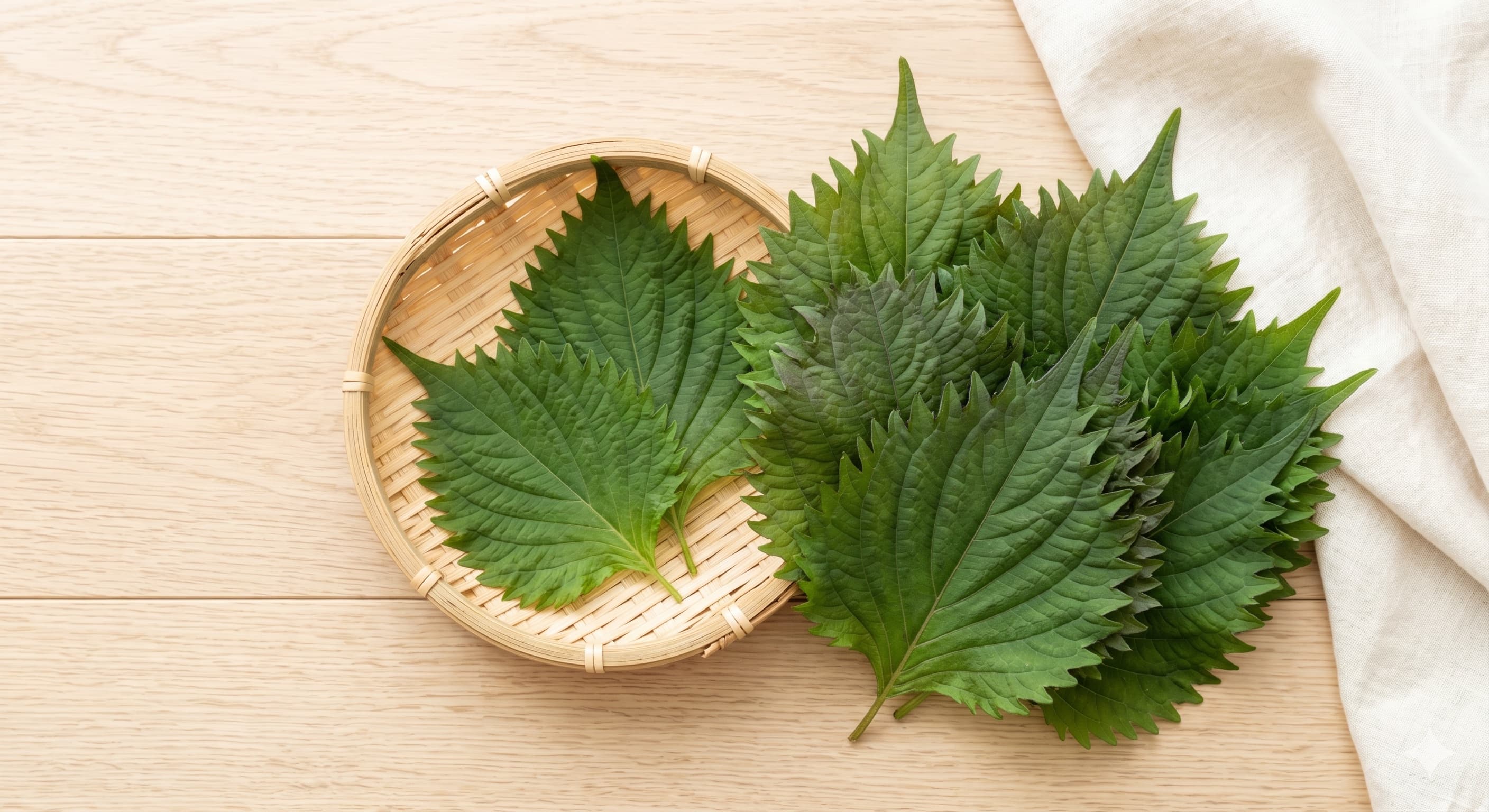
Shiso (Japanese Perilla)
Perilla frutescens var. crispa
Shiso (紫蘇) is the Japanese relative of Korean perilla (깻잎), though the two have distinctly different flavor profiles. The name 紫蘇 means 'purple reviver' — legend says a Chinese physician revived a dying patient with this herb, and the purple-leaved variety has been used medicinally ever since. In Donguibogam, 자소 (perilla) is valued for its lung-opening and detoxifying properties. Green shiso (oba) is the variety most commonly used in Japanese cooking, with its bright minty-basil aroma that defines the freshness of Japanese cuisine. Red shiso (aka-jiso) is essential for making umeboshi and is dried into yukari seasoning. In shojin ryori, shiso appears as both garnish and ingredient, adding aromatic complexity to dishes that eschew the bold flavors of garlic and onion.
New to Shiso (Japanese Perilla)?
Is this edible?
Yes! Shiso (Japanese perilla) is closely related to Korean perilla (kkaennip) and is used as an herb in Korean-Japanese fusion cooking and garnishes. It is a safe, widely eaten culinary herb across East Asia.
What does it taste like?
Similar to Korean perilla but more delicate, with stronger mint and basil notes and a slight cinnamon quality. The green variety is milder; the red/purple variety has a more intense, slightly medicinal flavor.
Where to buy
Japanese grocery stores (Mitsuwa, Nijiya) always carry it. Korean grocery stores may carry it alongside kkaennip. Some farmers markets sell it in summer. Not typically found in regular Western supermarkets. Korean kkaennip is a good substitute.
How to prepare
Wash gently and pat dry. Stack leaves, roll them tightly, and slice into thin ribbons (chiffonade) for garnish. Use whole leaves as wraps or garnish. No cooking needed — shiso is best raw.
Pro tip: Shiso is extremely perishable — use within 2-3 days. Store between damp paper towels in a sealed container in the refrigerator. If you enjoy it, shiso is one of the easiest herbs to grow in a home garden or pot.
Traditional Medicine
Source: Donguibogam (동의보감)
Nature (性)
Warm (溫)Flavor (味)
pungent
Target Organs (歸經)
Lung (肺), Spleen (脾)
Benefits
- lung health
Perilla leaf opens lung qi, stops coughing, and dissolves phlegm
소엽은 폐기를 통하게 하고 기침을 멎게 하며 담을 삭인다
Source: 동의보감 [탕액편] 초부 자소조
- digestion
Harmonizes spleen and stomach qi and stops nausea
비위의 기운을 고르게 하고 구역질을 멎게 한다
Source: 동의보감 [탕액편] 초부 자소조
- detox
Clears toxins from seafood and crab poisoning
어독과 게독을 풀어준다
Source: 동의보감 [탕액편]
Key Compounds
This information is based on traditional Korean medicine texts (Donguibogam) and is for cultural reference only. It does not constitute medical advice.
Seasonal Availability
Peak season is summer (June-September). Fresh shiso is available at Japanese and Asian grocery stores during warm months. Dried shiso and yukari (dried red shiso flakes) are available year-round.
Culinary Profile
Flavor
Bright, herbaceous, and slightly minty with hints of basil, cinnamon, and anise — distinctly aromatic and refreshing
Texture
Soft, delicate leaf with slightly serrated edges — tender enough to eat raw
Common Uses
Western Substitutes