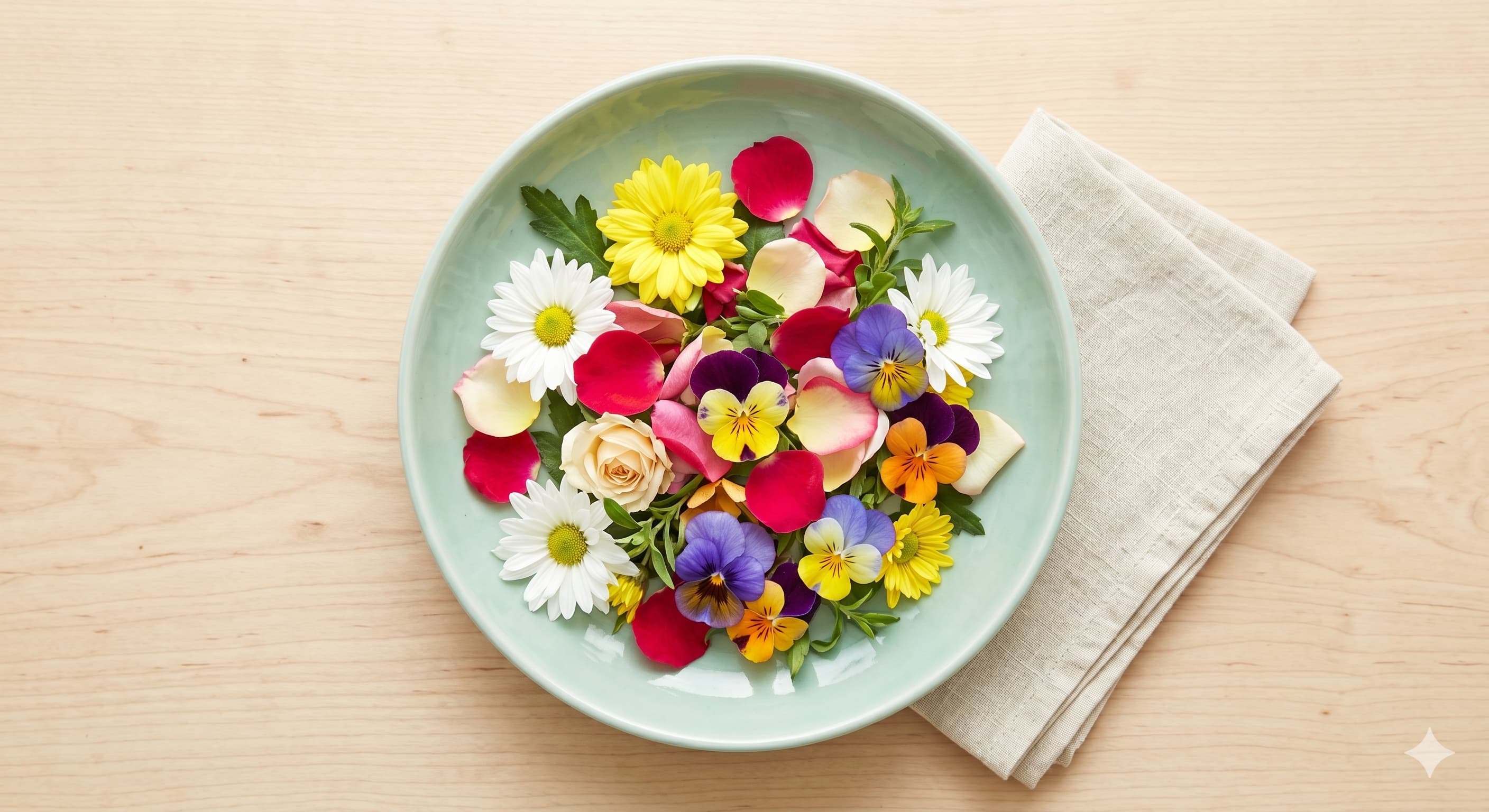
Edible Flowers
Various species
Hwajeon nori (화전놀이) — the flower cake picnic — was one of Korea's most elegant seasonal traditions. During the Joseon Dynasty, court ladies and yangban families would gather by streams on the third day of the third month to pick wild azaleas and make hwajeon together. Each season had its own flower: azalea in spring, rose in summer, chrysanthemum in autumn. This tradition beautifully embodies the Korean philosophy of eating in harmony with the seasons.
New to Edible Flowers?
Is this edible?
Yes! Edible flowers have been part of Korean cuisine for centuries, appearing in royal court dishes, temple food, traditional confections, and seasonal teas. Common varieties include chrysanthemum, azalea, and squash blossoms.
What does it taste like?
Varies by flower — chrysanthemum is slightly bitter and herbaceous, azalea petals are mildly sweet and floral, and squash blossoms are delicate and vegetal. Most are subtle in flavor and prized more for beauty than taste.
Where to buy
Korean grocery stores may carry dried chrysanthemums (for tea) and seasonal fresh flowers. Organic edible flowers at farmers markets and specialty stores like Whole Foods work well. Asian grocery stores carry dried chrysanthemum flowers for tea.
How to prepare
Gently wash and pat dry. Remove stems and any green parts (calyx). For hwajeon (flower pancakes): press individual petals into rice cake batter and pan-fry. For tea: steep dried flowers in hot water.
Pro tip: Only use flowers specifically labeled as edible or food-grade — florist flowers are often treated with pesticides. When making hwajeon, place flower petals face-down on the pan first, then pour batter over them for the prettiest presentation.
Traditional Medicine
Source: Donguibogam (동의보감)
Nature (性)
Cool (涼)Flavor (味)
sweet, bitter
Target Organs (歸經)
Liver (肝), Lung (肺)
Benefits
- eye health
Chrysanthemum brightens the eyes, clears the head, and treats wind disorders
국화는 눈을 밝게 하고 머리를 맑게 하며 풍증을 다스린다 (국화)
Source: 동의보감 [탕액편] 초부 국화조
- mental calm
Calms the mind and soothes the spirit
마음을 안정시키고 정신을 편안하게 한다
Source: 동의보감 [탕액편]
Key Compounds
This information is based on traditional Korean medicine texts (Donguibogam) and is for cultural reference only. It does not constitute medical advice.
Seasonal Availability
Spring: azalea (진달래) and cherry blossoms. Summer: rose petals. Autumn: chrysanthemum (국화). Each season's flower defines the hwajeon of that period.
Culinary Profile
Flavor
Varies by flower: azalea is slightly sweet, chrysanthemum is mildly bitter and herbal, rose is fragrant and sweet
Texture
Delicate petals that soften when cooked into rice cakes
Common Uses
Western Substitutes