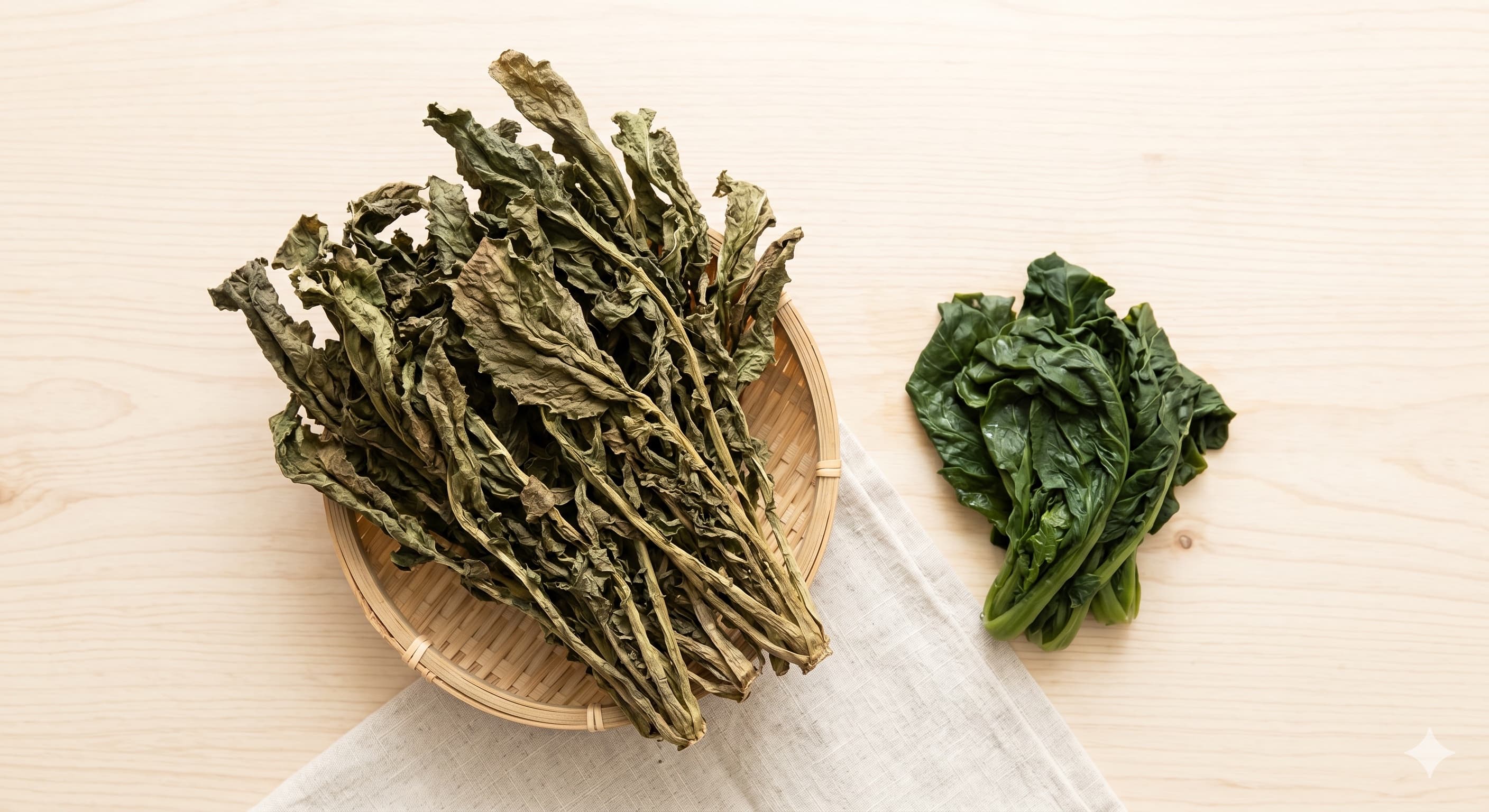
Dried Radish Greens
Raphanus sativus (dried leaves)
Dried radish greens (siraegi) exemplify the Korean philosophy of wasting nothing from the harvest. When Korean radishes are harvested in autumn for kimchi-making (gimjang), the leafy green tops are not discarded but carefully dried in the cold autumn-winter air, creating a preserved vegetable with concentrated flavor and chewy texture. While the Donguibogam discusses radish leaves as an extension of the radish itself, noting their ability to aid digestion and clear heat, siraegi has its own distinct culinary identity. Once rehydrated, the greens develop an earthy, slightly bitter depth that is completely different from the fresh leaves. Siraegi-doenjang-guk (dried radish green soybean paste soup) is one of Korea's most beloved comfort soups, deeply associated with home cooking and the wisdom of grandmothers who preserved summer's abundance for winter sustenance.
New to Dried Radish Greens?
Is this edible?
Yes! Dried radish greens are a traditional Korean preserved vegetable eaten throughout winter in soups, stews, and braised dishes. They are simply the leafy tops of Korean radish, dried for preservation — completely natural and widely eaten.
What does it taste like?
Earthy, slightly bitter, and deeply savory when cooked — quite different from the mild fresh greens. The drying concentrates the flavor, and the texture becomes pleasantly chewy and almost meat-like when simmered in stew.
Where to buy
Korean grocery stores (H Mart, Lotte) sell dried siraegi in bags in the dried goods section. Pre-soaked/rehydrated siraegi is sometimes available in the refrigerated section. Not available in regular Western supermarkets.
How to prepare
Soak dried siraegi in cold water for at least 4-6 hours (overnight is better). Boil for 20-30 minutes until tender, then rinse in cold water and squeeze out excess moisture. Cut into manageable lengths before cooking.
Pro tip: After boiling, cut the siraegi into 5-7cm lengths and freeze in portioned bags — this saves hours of prep for future meals. Siraegi-doenjang-guk tastes even better the next day as the flavors deepen.
Traditional Medicine
Source: Donguibogam
Nature (性)
Cool (涼)Flavor (味)
sweet, pungent
Target Organs (歸經)
Lung (肺), stomach
Benefits
- digestion
Aids food digestion and descends qi
음식을 소화시키고 기를 내린다
Source: Donguibogam
Key Compounds
This information is based on traditional Korean medicine texts (Donguibogam) and is for cultural reference only. It does not constitute medical advice.
Seasonal Availability
Radish greens dried in late autumn for winter consumption. A traditional preservation method.
Culinary Profile
Flavor
Earthy, slightly bitter, deeply savory when braised
Texture
Chewy and fibrous after rehydration and cooking
Common Uses
Western Substitutes