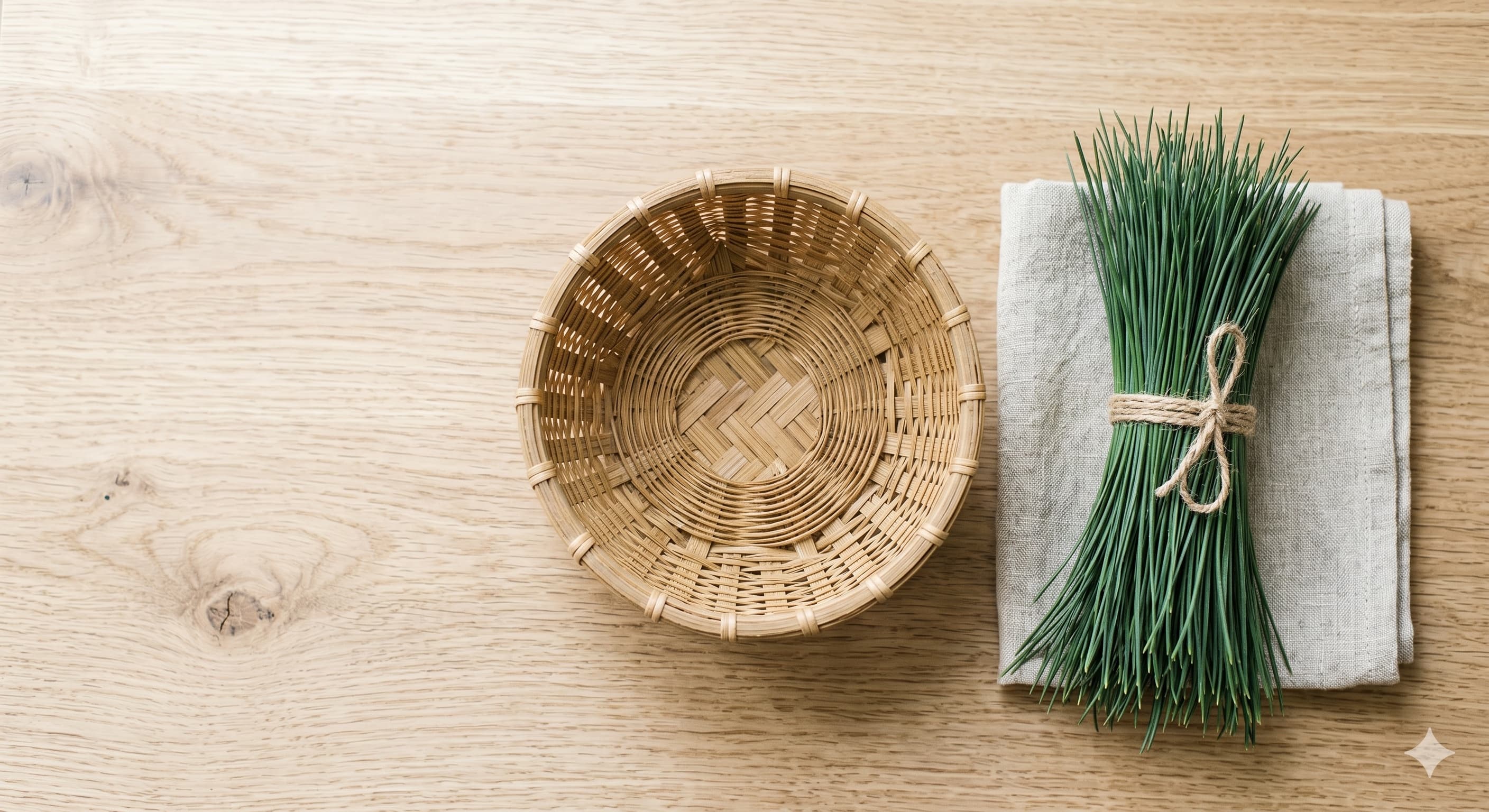
Pine Needles
Pinus densiflora Siebold & Zucc.
The Korean red pine (소나무, sonamu) is the national tree of Korea and permeates every aspect of Korean culture. Pine needles are most famously used as a steaming bed for songpyeon during Chuseok — as the rice cakes steam, they absorb the needles' subtle resinous fragrance, creating an aroma that every Korean associates with autumn harvest celebrations. Donguibogam praises pine as one of nature's great tonics, noting that Taoist hermits consumed pine needles as a longevity food.
New to Pine Needles?
Is this edible?
Yes! Pine needles have been consumed in Korean cuisine and medicine for centuries — brewed into tea, infused into rice cakes (songpyeon), and used as a natural food flavoring. Korean red pine needles are the variety used in cooking.
What does it taste like?
Resinous, slightly citrusy, and refreshingly piney — like a very mild gin flavor. In songpyeon (pine-needle steamed rice cakes), the needles impart a subtle woody fragrance rather than a strong taste.
Where to buy
Korean grocery stores sometimes sell fresh pine needles in autumn around Chuseok (Korean Thanksgiving). Dried pine needle tea is available year-round at Korean stores or online. You can also forage from unsprayed Korean red pine or Eastern white pine trees.
How to prepare
For songpyeon: wash fresh pine needles thoroughly and layer them between rice cakes in the steamer. For tea: simmer clean needles in water for 15-20 minutes. Always use only identified, unsprayed pine needles.
Pro tip: Never harvest pine needles from trees that may have been treated with pesticides (e.g., ornamental landscaping pines). Only use needles from trees you can confirm are untreated, or buy from a trusted Korean grocery source.
Traditional Medicine
Source: Donguibogam (동의보감)
Nature (性)
Warm (溫)Flavor (味)
bitter
Target Organs (歸經)
Heart (心), Lung (肺)
Benefits
- circulation
Expels wind-damp, promotes blood circulation, and benefits the joints
풍습을 제거하고 혈맥을 통하게 하며 관절을 이롭게 한다
Source: 동의보감 [탕액편] 목부 송엽조
- anti aging
Long-term consumption prevents aging and sustains the body without hunger
오래 먹으면 늙지 않고 곡식을 먹지 않아도 배고프지 않다
Source: 동의보감 [탕액편]
- respiratory
Promotes hair growth and calms the five organs
모발을 나게 하고 오장을 편안하게 한다
Source: 동의보감 [탕액편]
Key Compounds
This information is based on traditional Korean medicine texts (Donguibogam) and is for cultural reference only. It does not constitute medical advice.
Seasonal Availability
Young spring needles are most tender, but autumn needles (used for Chuseok songpyeon) carry the richest resinous aroma.
Culinary Profile
Flavor
Subtly resinous, fresh, and woodsy — imparts a gentle forest aroma rather than a strong flavor
Texture
Used as an aromatic bed for steaming, not eaten directly
Common Uses
Western Substitutes