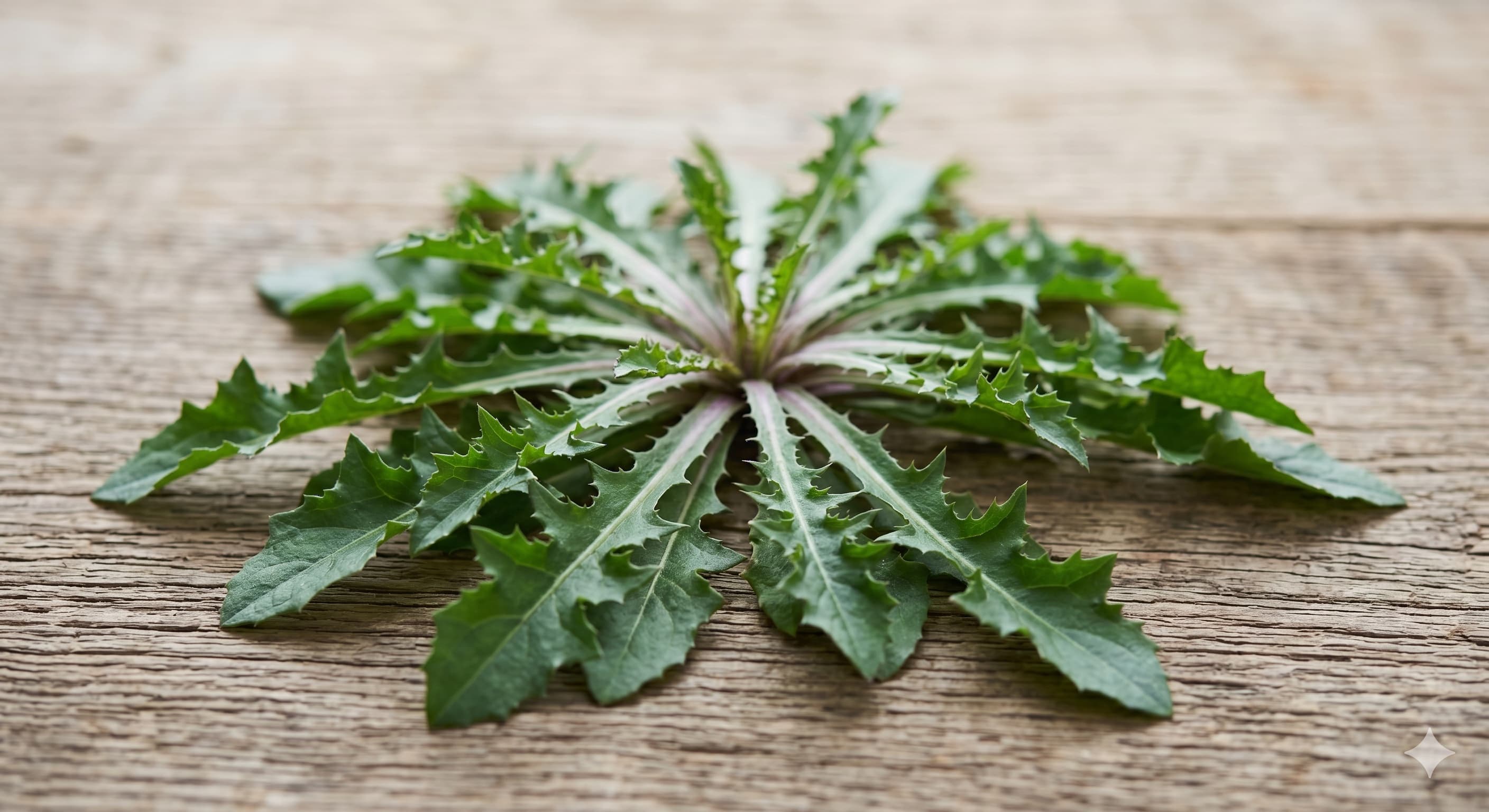
Ixeris / Korean Bitter Green (Sseumbagwi)
Ixeris dentata (Thunb.) Nakai
Sseumbagwi (씀바귀) is one of the most iconic Korean wild greens, and its name tells you everything: it comes from '쓴 맛' (sseun mat), meaning 'bitter taste.' This is the bitter green of Korean cuisine, and Koreans embrace that bitterness as a sign of spring's cleansing power. The Donguibogam classifies it as a 苦菜 (gochae, 'bitter vegetable') and prescribes it for clearing heat from the heart and brightening the eyes — in traditional Korean medicine, bitterness is the flavor that benefits the heart. In rural Korea, picking wild sseumbagwi is a spring ritual as important as cherry blossom viewing. Families head to fields and hillsides to gather the young rosette leaves, which are then eaten raw, dipped in gochujang — the spicy-sweet fermented paste perfectly counterbalancing the plant's sharp bitterness. This combination of sseumbagwi and gochujang is one of the most perfect flavor pairings in Korean cuisine: bitter, sweet, spicy, and fermented all in one bite.
New to Ixeris / Korean Bitter Green (Sseumbagwi)?
Is this edible?
Yes! Sseumbagwi is a traditional wild green eaten raw or blanched. Fair warning: it is very bitter. That is the whole point — Koreans consider this bitterness medicinal and refreshing.
What does it taste like?
Intensely bitter — think dandelion greens turned up to eleven. But paired with gochujang (spicy-sweet red pepper paste), the bitterness becomes addictively good. Trust the pairing.
Where to buy
Korean grocery stores (fresh in spring, dried year-round). Sometimes labeled as 'bitter greens' or 'ixeris' in English. Dried versions reconstitute well.
How to prepare
Fresh: wash, trim roots, and serve whole leaves with gochujang for dipping. For namul: blanch briefly, squeeze dry, and dress with sesame oil and gochujang.
Pro tip: Your first time, eat it raw with a generous dab of gochujang on each leaf — the traditional way. The interplay of bitter green and sweet-spicy paste is a revelation.
Traditional Medicine
Source: Donguibogam (동의보감)
Nature (性)
Cool (涼)Flavor (味)
bitter
Target Organs (歸經)
Heart (心), Liver (肝)
Benefits
- heart health
Clears heat from the heart and eliminates restless heat sensations
심장의 열을 내리고 번열을 없앤다
Source: 동의보감 [탕액편] 채부 고채조
- eye health
Cools liver heat to brighten the eyes and support vision
간의 열을 내려 눈을 맑게 하고 시력을 돕는다
Source: 동의보감 [탕액편] 채부 고채조
Key Compounds
This information is based on traditional Korean medicine texts (Donguibogam) and is for cultural reference only. It does not constitute medical advice.
Seasonal Availability
Sseumbagwi is best in spring (March-May) when the young rosette leaves are at their most tender. It grows wild across Korean fields and hillsides. Dried sseumbagwi is available year-round at Korean markets.
Complementary Ingredients (궁합 재료)
Processing Methods (법제)
Raw preserves the full bitter flavor; blanching reduces bitterness for those who prefer a milder taste
Consumption Tips by Health Goal
eye_health
Eat fresh sseumbagwi with gochujang in spring to clear liver heat and brighten vision — the spicy-sweet paste balances the intense bitterness
Culinary Profile
Flavor
Intensely bitter — the most bitter of the common Korean wild greens. The bitterness is clean and sharp, not unpleasant once you acquire the taste. Traditional Korean palates consider this bitterness cleansing and invigorating
Texture
Tender, slightly fuzzy leaves in a rosette pattern. Thin stems with a mild crunch. The texture is delicate, almost lettuce-like
Common Uses
Western Substitutes