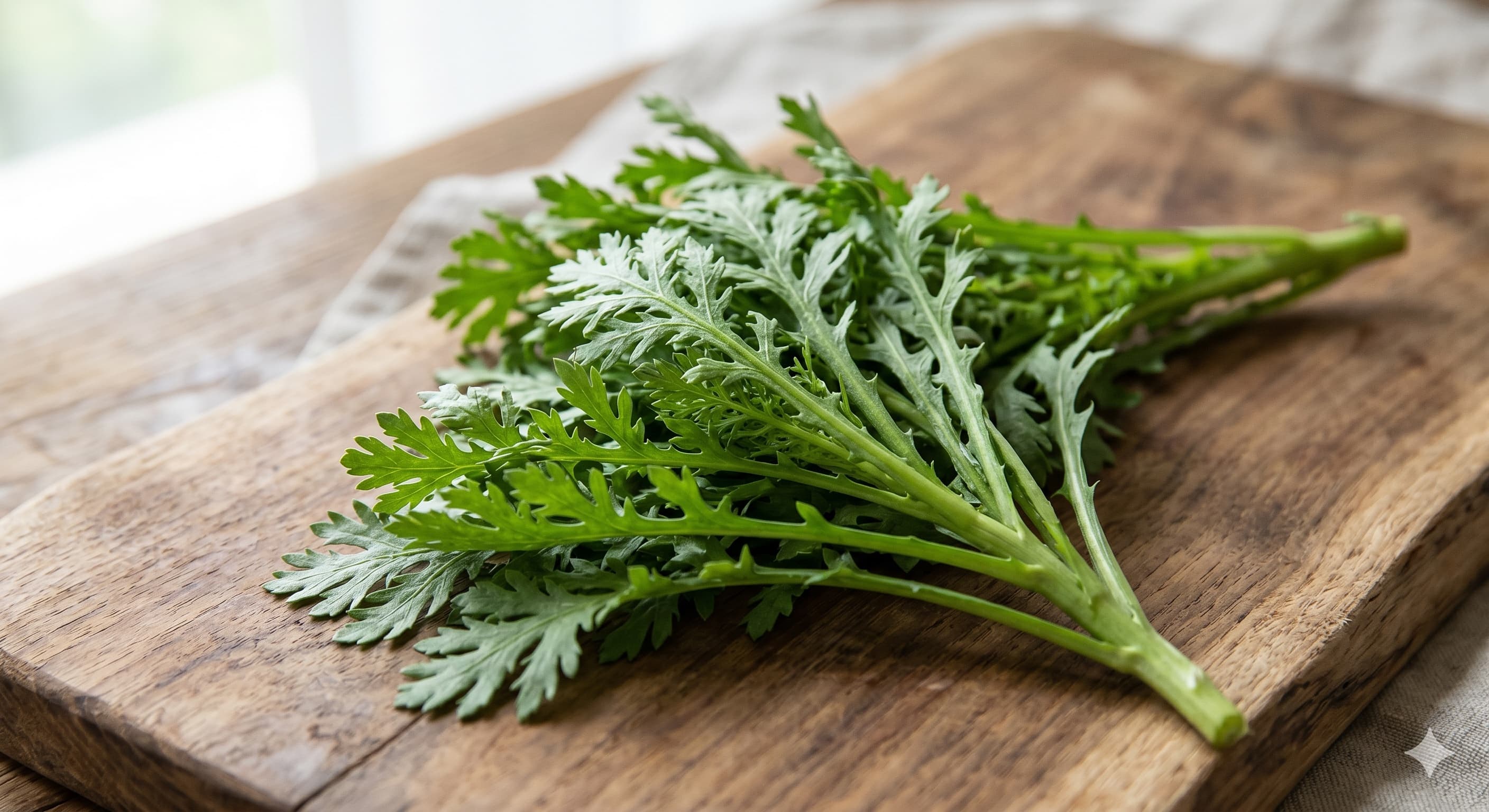
Crown Daisy / Chrysanthemum Greens (Ssukgat)
Glebionis coronaria (L.) Cass. ex Spach
Ssukgat (쑥갓) gets its Korean name from its resemblance to 쑥 (ssuk, mugwort), though it is actually a chrysanthemum — Glebionis coronaria, also known as crown daisy. The 갓 in its name means 'hat' or 'cap,' referring to its feathery crown of aromatic leaves. This is one of the most important greens in East Asian hot pot culture: no Korean jeongol (전골), Japanese sukiyaki, or Chinese hot pot is complete without handfuls of these fragrant greens wilting into the bubbling broth. The Donguibogam records 茼蒿 (dongho) as a harmonizer of the spleen and stomach, which aligns perfectly with its traditional role — it is always eaten alongside rich, heavy stews and soups, where its aromatic compounds aid digestion. The scent of ssukgat is deeply evocative for Koreans: it means warmth, shared meals, and the communal experience of gathering around a bubbling pot. For Americans, ssukgat is readily available at Asian grocery stores under various names — 'tong ho,' 'shungiku,' 'chrysanthemum greens,' or 'crown daisy' — making it one of the most accessible Korean greens to try.
New to Crown Daisy / Chrysanthemum Greens (Ssukgat)?
Is this edible?
Yes! Ssukgat is chrysanthemum greens — edible leaves from a species of chrysanthemum. Despite the flower connection, it is a common vegetable across East Asia, not an exotic curiosity.
What does it taste like?
Strongly herbal and aromatic, like a green that decided to be an herb instead. The flavor is distinctive — chrysanthemum-like, slightly camphoraceous, and deeply savory when cooked in broth. You will either love it immediately or grow to love it.
Where to buy
Asian grocery stores — very common and easy to find. Look for labels saying 'tong ho,' 'shungiku,' 'crown daisy,' or 'chrysanthemum greens.' Usually sold in large bunches.
How to prepare
Wash, trim the bottom stems, and tear or cut into manageable pieces. For hot pots: add in the last 1-2 minutes of cooking. For namul: blanch for 30 seconds, squeeze dry, and dress.
Pro tip: Start by adding ssukgat to any Asian soup or stew you are already making — just throw a handful in at the end. Its aromatic magic transforms ordinary broth into something special. Do not overcook — it should wilt, not dissolve.
Traditional Medicine
Source: Donguibogam (동의보감)
Nature (性)
Neutral (平)Flavor (味)
pungent, aromatic
Target Organs (歸經)
Spleen (脾), stomach
Benefits
- digestion
Harmonizes the spleen and stomach, promotes qi flow, and aids digestion
비위를 고르게 하고 기를 순행시키며 소화를 돕는다
Source: 동의보감 [탕액편] 채부 동호조
- respiratory
Dissolves phlegm, moistens the lungs, and stops coughing
담을 삭이고 폐를 윤택하게 하며 기침을 멎게 한다
Source: 동의보감 [탕액편] 채부 동호조
Key Compounds
This information is based on traditional Korean medicine texts (Donguibogam) and is for cultural reference only. It does not constitute medical advice.
Seasonal Availability
Ssukgat is available most of the year, with peak flavor in cool weather from autumn through spring. It bolts and becomes bitter in summer heat. Widely cultivated in Korean greenhouses for year-round supply.
Complementary Ingredients (궁합 재료)
Processing Methods (법제)
Brief cooking preserves the aromatic volatile oils that give ssukgat its distinctive herbal fragrance
Consumption Tips by Health Goal
digestion
Add ssukgat to hot pots and stews toward the end of cooking — its aromatic oils aid digestion of the rich broth and other ingredients
Culinary Profile
Flavor
Distinctly herbal and aromatic with a chrysanthemum-like fragrance — vegetal, slightly camphoraceous, and utterly unique. The flavor is polarizing: people either love it instantly or need a few tries. It is essential to Korean hot pots
Texture
Tender, feathery leaves that wilt quickly in heat. The thin stems are slightly crunchy. After brief cooking, the greens become silky and soft
Common Uses
Western Substitutes
Related Recipes
Crown Daisy (Ssukgat) Namul with Doenjang
쑥갓무침
Easy | 40 min
Crown Daisy & Tofu Salad
쑥갓두부무침
Easy | 40 min
Shungiku no Gomaae (Chrysanthemum Greens with Sesame)
슌기쿠 고마에 (쑥갓 참깨무침)
Easy | 8 min
Mountain Burdock with Sake Lees
산우엉 주박 무침
Easy | 0 min
Sweet Potato, Apple, and Crown Daisy Sesame Vinegar Salad
고구마 사과 쑥갓 참깨초 무침
Easy | 0 min