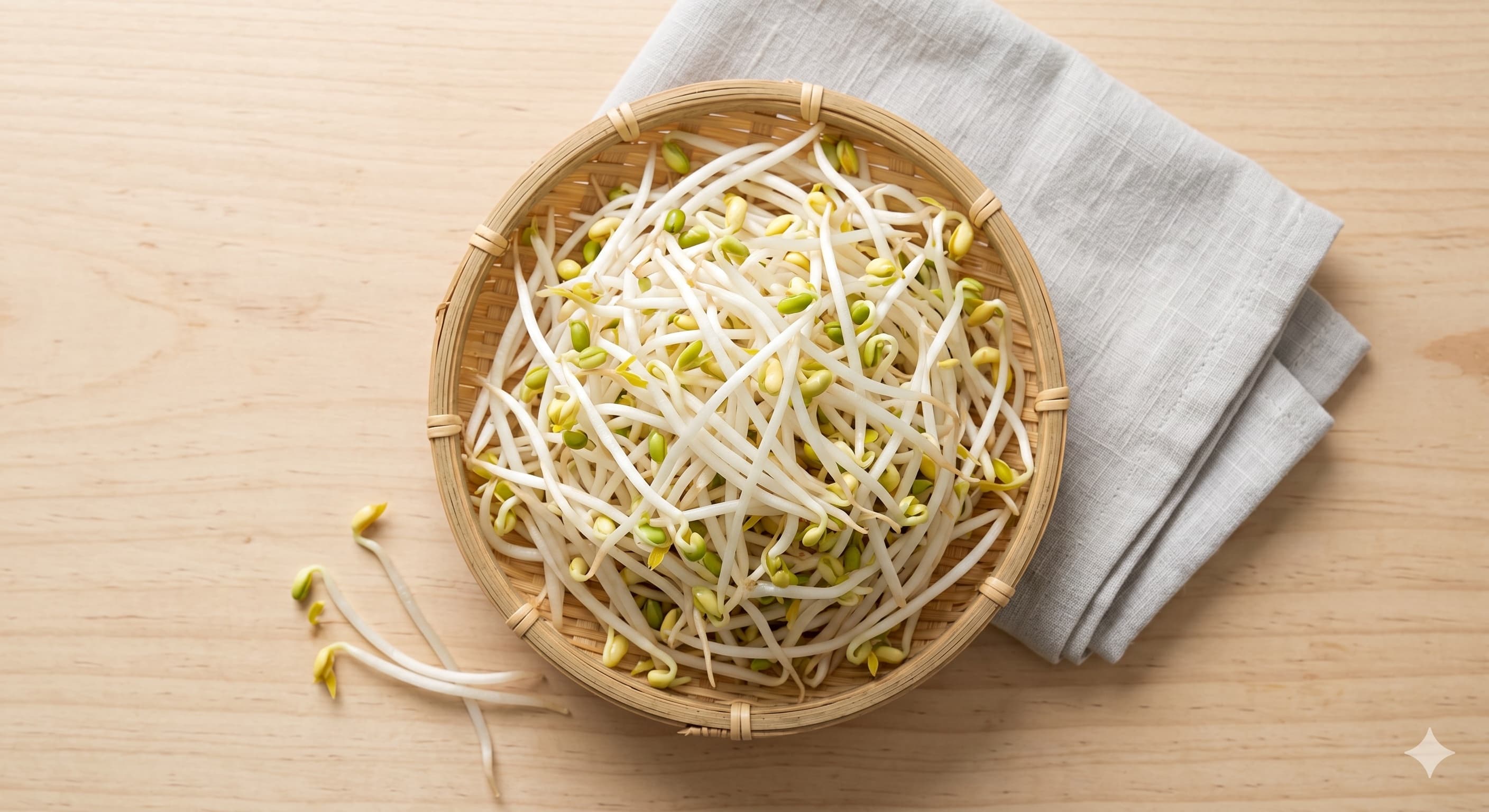
Mung Bean Sprouts
Vigna radiata (sprouted)
Mung bean sprouts derive from the mung bean (녹두/綠豆), which is classified in the Donguibogam under 곡부 녹두조 as cool in nature with sweet flavor. The name '숙주나물' has an unusual origin: it is said to be named after Shin Sukju, a scholar who betrayed his king in the 15th century — just as the sprouts spoil quickly (are 'unfaithful'), so was the scholar. This folk etymology reflects how deeply food is embedded in Korean cultural memory. The cool, detoxifying nature of mung bean sprouts makes them a staple cooling food in summer and a counterbalance to spicy or heavy dishes.
New to Mung Bean Sprouts?
Is this edible?
Yes! Mung bean sprouts are one of the most common vegetables in Korean cooking, used in everything from bibimbap to japchae to stir-fries. They are inexpensive, nutritious, and cook in minutes.
What does it taste like?
Mild, clean, and slightly sweet with a refreshing crunch. Much more delicate in flavor than soybean sprouts — like a crisper, juicier version of bean sprouts you may have had in Chinese or Thai food.
Where to buy
Any supermarket carries mung bean sprouts, usually in the produce section near other Asian vegetables. For the freshest sprouts, check Korean or Asian grocery stores where turnover is higher.
How to prepare
Rinse well in cold water. Remove any brown seed husks and wilted pieces. Blanch in boiling water for 30 seconds to 1 minute (they should still be crunchy), then drain and rinse with cold water.
Pro tip: Unlike soybean sprouts, mung bean sprouts do NOT require the lid-on-no-peeking technique. But do not overcook them — they should retain a definite crunch. Wilted, soggy sprouts ruin the texture of any dish.
Traditional Medicine
Source: Donguibogam (동의보감)
Nature (性)
Cool (涼)Flavor (味)
sweet
Target Organs (歸經)
stomach, bladder
Benefits
- detox
Clears heat-toxins and cools the body
열독을 내리고 몸의 열을 식힌다
Source: 동의보감 [탕액편] 곡부 녹두조
- digestion
Benefits spleen and stomach, promotes urination and detoxification
비위를 이롭게 하고 소변을 통하게 한다
Source: 동의보감 [탕액편] 곡부
Key Compounds
This information is based on traditional Korean medicine texts (Donguibogam) and is for cultural reference only. It does not constitute medical advice.
Seasonal Availability
Available year-round as sprouts are grown indoors. Fresh sprouts should be white, plump, and crisp without browning.
Processing Methods (법제)
Quick blanching (under 30 seconds) preserves the crunch while removing raw bean taste. Do not overcook or they become mushy and lose nutritional value.
Consumption Tips by Health Goal
Detox
Blanch quickly and dress with sesame oil and salt for a refreshing, cooling side dish. Especially beneficial in summer to clear heat.
Culinary Profile
Flavor
Clean, fresh, mildly sweet with a neutral bean flavor; very delicate
Texture
Crisp and juicy with a satisfying snap when properly blanched
Common Uses
Western Substitutes
Related Recipes
Gujeolpan
구절판
Hard | 85 min
Herb Garden Bibimbap
허브비빔밥
Easy | 40 min
Crispy Kimchi Jeon with Mung Bean Sprouts
김치 숙주전
Easy | 20 min
Seasoned Mung Bean Sprouts
숙주나물무침
Easy | 15 min
Tangy Mung Bean Sprouts with Carrot & Apple
당근 숙주나물무침
Easy | 20 min
Blanched Mung Bean Sprout Namul
숙주나물무침
Easy | 15 min
Tangpyeongchae
탕평채
Medium | 25 min