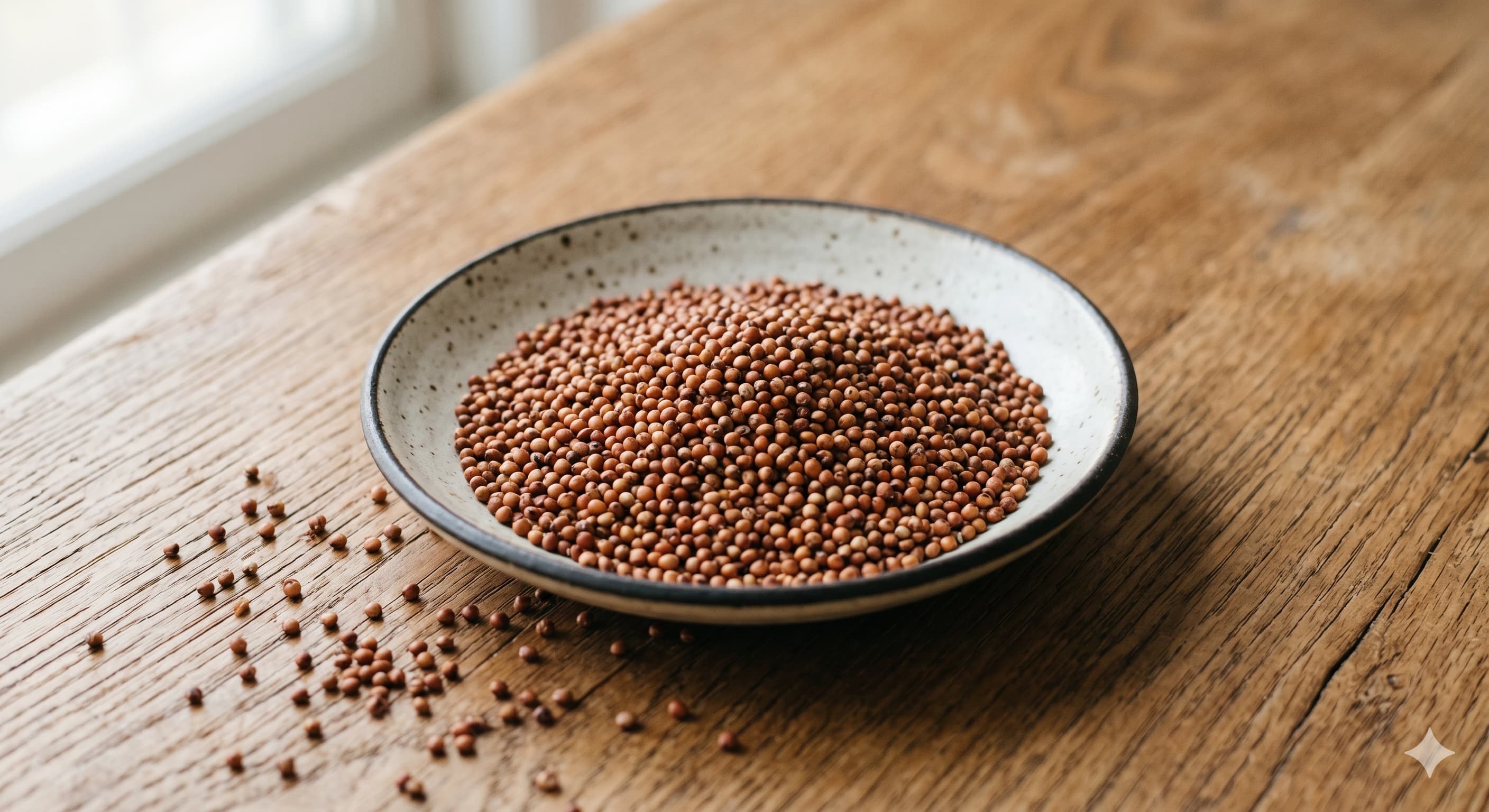
Sorghum
Sorghum bicolor (L.) Moench
Sorghum holds a special place in Korean birth culture. Susupattteok — sorghum rice cakes with red bean coating — is the traditional food served at a baby's first birthday (돌잔치). The deep red color of both the sorghum and red beans was believed to repel evil spirits and protect the child. This ancient shamanistic belief in red as a protective color runs deep in Korean food culture.
Traditional Medicine
Source: Donguibogam (동의보감)
Nature (性)
Warm (溫)Flavor (味)
sweet
Target Organs (歸經)
Spleen (脾), Kidney (腎)
Benefits
- digestion
Warms the spleen/stomach and strengthens the intestines
비위를 따뜻하게 하고 장을 튼튼하게 한다
Source: 동의보감 [탕액편] 곡부
- energy
Supplements vital energy and harmonizes the middle energizer
기운을 보하고 중초를 고르게 한다
Source: 동의보감 [탕액편]
Key Compounds
This information is based on traditional Korean medicine texts (Donguibogam) and is for cultural reference only. It does not constitute medical advice.
Seasonal Availability
Harvested in autumn. The deep reddish-brown color was believed to ward off evil spirits.
Culinary Profile
Flavor
Mildly sweet and earthy with a slightly tannic, astringent quality from its red pigment
Texture
Slightly chewy and dense — denser than regular rice
Common Uses
Western Substitutes
Related Recipes
Okara Croquette with Soy Milk Sauce
비지 크로켓 두유 소스
Hard | 0 min
Summer Vegetables in Sesame Vinegar
여름 채소 참깨초 절임
Easy | 0 min
Yaki Toumorokoshi (Grilled Soy-Glazed Corn)
야키 도로모코시 (숯불 옥수수)
Easy | 20 min
Temple-Style Cilantro Fried Rice
고수 정진 볶음밥
Hard | 0 min
Corn and Edamame Rice Rolls
옥수수 에다마메 주먹밥
Medium | 0 min
Susupattteok (Sorghum & Red Bean Rice Cake)
수수팥떡
Medium | 55 min
Kanoko-Style Potato Tempura
감자 가노코 튀김
Hard | 0 min
Green Beans in Tomato Stew
깍지콩 토마토 조림
Medium | 0 min
Yasai Ramen (Vegetable Ramen)
야사이 라멘 (채소 라멘)
Medium | 55 min
Hiyashi Chuka (Cold Ramen Noodle Salad)
히야시츄카 (냉라면 샐러드)
Easy | 20 min