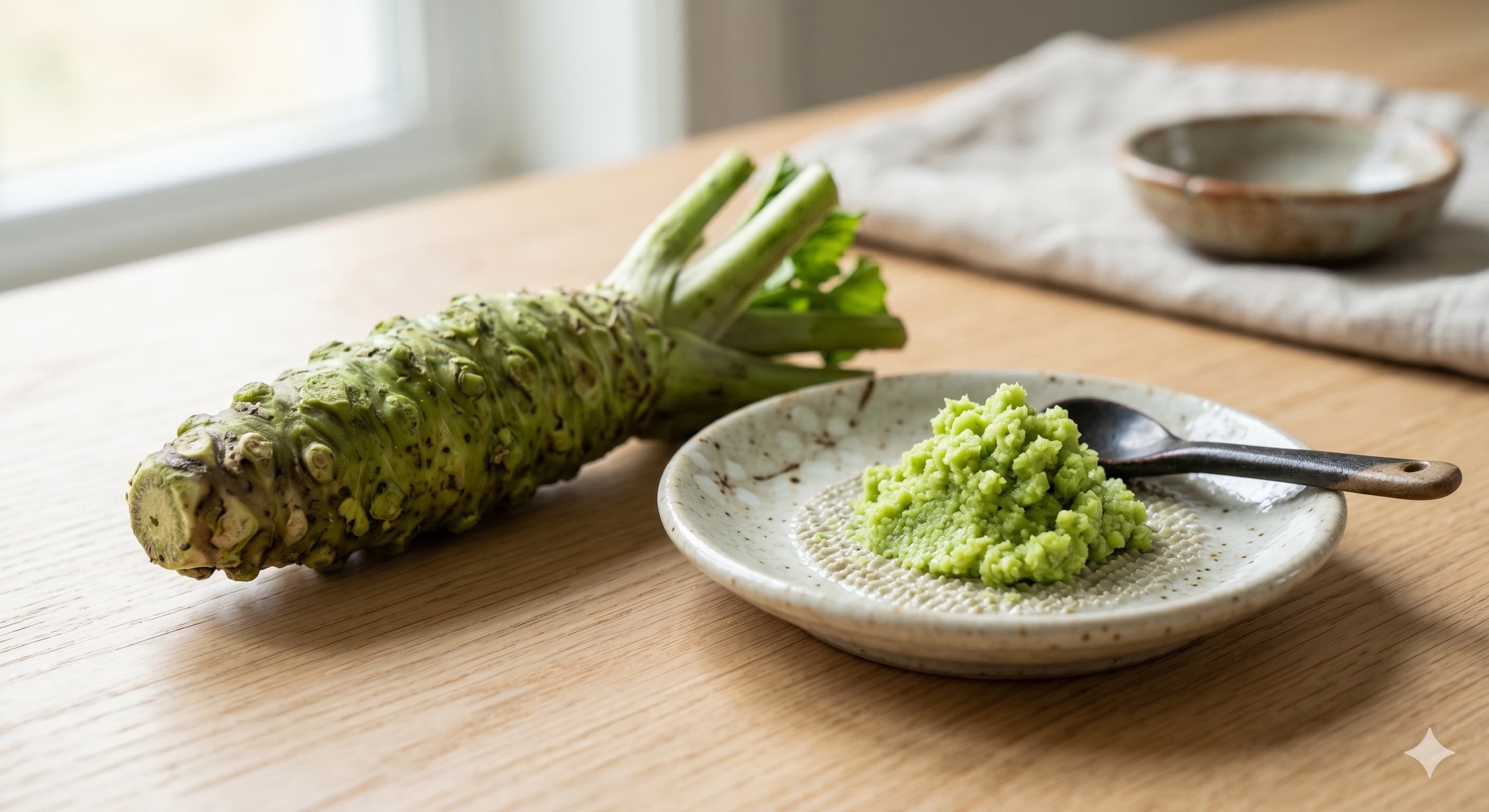
Wasabi (Japanese Horseradish)
Eutrema japonicum (Miq.) Koidz.
True wasabi (山葵) is one of the most difficult plants to cultivate in the world — it requires cool mountain streams with precisely filtered, mineral-rich water flowing at a constant temperature. This is why real wasabi is extraordinarily expensive and why an estimated 95% of 'wasabi' served worldwide is actually colored horseradish. The plant is native to Japan and has been used since at least the 10th century. Its name in Japanese, 山葵, means 'mountain hollyhock,' describing where it grows and the shape of its leaves. In shojin ryori, wasabi is used sparingly as a condiment for cold tofu (hiyayakko) and as an accent in dipping sauces — its brief, clean heat is considered more refined than chili pepper's lingering burn. The ritual of freshly grating wasabi on sharkskin (oroshigane) just moments before serving reflects the Japanese aesthetic of impermanence — wasabi's volatile compounds dissipate within minutes of grating, making freshness not just preferable but essential.
Traditional Medicine
Source: Traditional East Asian Medicine
Nature (性)
Warm (溫)Flavor (味)
pungent
Target Organs (歸經)
Lung (肺), stomach
Benefits
- digestion
Its pungent compounds stimulate digestion and improve appetite
매운 성분이 소화를 촉진하고 식욕을 돋운다
Source: Traditional East Asian Medicine
- anti inflammation
Antimicrobial and anti-inflammatory properties help prevent food poisoning
항균 및 항염 작용으로 식중독을 예방한다
Source: Traditional East Asian Medicine
Key Compounds
This information is based on traditional Korean medicine texts (Donguibogam) and is for cultural reference only. It does not constitute medical advice.
Seasonal Availability
Fresh wasabi rhizomes are available spring through autumn but are rare and expensive outside Japan. Wasabi paste (tube) and powder are available year-round, though most contain horseradish and mustard rather than real wasabi.
Culinary Profile
Flavor
Sharp, clean heat that rises through the sinuses rather than burning the tongue — real wasabi has a brief, elegant pungency followed by natural sweetness, unlike the harsh, lingering burn of horseradish substitutes
Texture
Freshly grated: fine, moist paste with a creamy consistency. Tube wasabi: smooth, dense paste
Common Uses
Western Substitutes