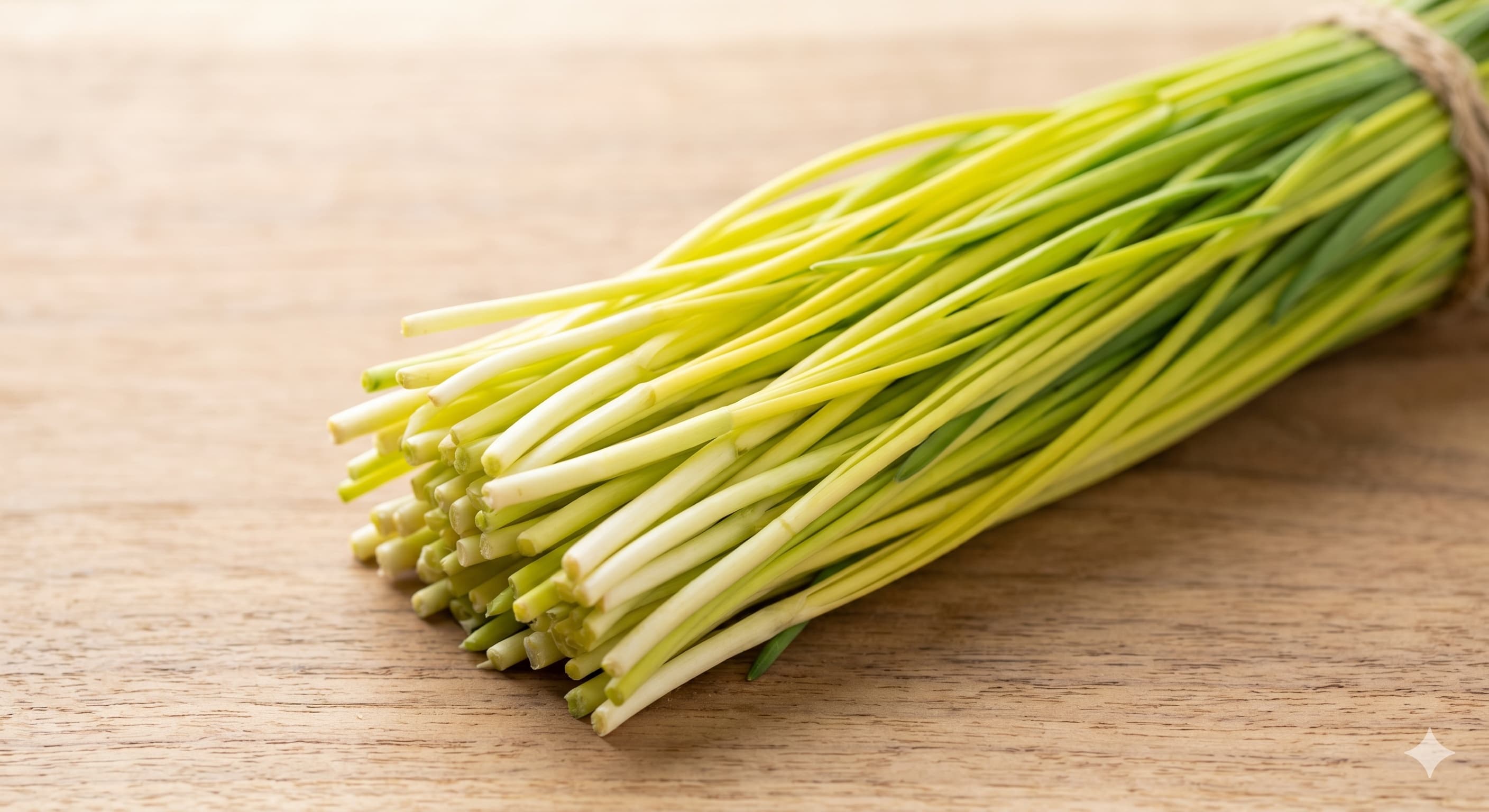
Daylily Buds (Wonchuri)
Hemerocallis fulva
Wonchuri carries one of the most poetic names in Korean herbalism. Its classical name hwoncho means forgetting-worry grass, and the related name mangwucho literally translates to forget-sorrow plant. Ancient Korean and Chinese traditions held that planting daylilies near the home would ease the heart and help forget worries. This belief was so widespread that daylilies became a symbol of motherly devotion. In Korean temple food, wonchuri holds special significance: monks valued its calming properties for meditation practice, believing it helped quiet the restless mind. The dried form, known as golden needles, connects Korean and Chinese culinary traditions.
New to Daylily Buds (Wonchuri)?
Is this edible?
Yes, but with an important caveat: daylily buds and shoots MUST be cooked before eating. Raw daylily can cause nausea. Thorough blanching or cooking makes them completely safe and delicious.
What does it taste like?
Sweet, delicate, and gently floral — like a mildly sweet, tender green bean with a hint of honey. Much more subtle than most wild greens.
Where to buy
The easiest way to find this is as dried golden needles at Chinese or Asian grocery stores. These are the same daylily buds, already dried and safe. Fresh wonchuri is rare outside Korea.
How to prepare
For dried golden needles: soak in warm water for 30 minutes, then trim the hard ends. For fresh wonchuri: blanch in boiling water for at least 3 minutes (do not undercook!), shock in cold water, squeeze dry, and season.
Pro tip: If using dried golden needles, tie each one in a loose knot before adding to soups or stir-fries. This is a traditional Chinese technique that gives them a more interesting texture and helps them hold sauce.
Traditional Medicine
Source: Donguibogam (동의보감)
Nature (性)
Cool (涼)Flavor (味)
sweet
Target Organs (歸經)
Heart (心), Liver (肝)
Benefits
- mental health
Calms the heart-mind and dispels worry — traditionally called the forget-worry plant for its anxiety-relieving properties
심을 안정시키고 근심 걱정을 잊게 한다
Source: 동의보감 [탕액편] 채부
- detox
Drains damp-heat and promotes urination, helping the body eliminate excess fluid and toxins
습열을 내리고 소변을 잘 나가게 한다
Source: 동의보감 [탕액편] 채부
Key Compounds
This information is based on traditional Korean medicine texts (Donguibogam) and is for cultural reference only. It does not constitute medical advice.
Seasonal Availability
Young shoots and unopened buds harvested in spring (April-May). IMPORTANT: must be cooked thoroughly — raw daylily contains colchicine-like compounds that can cause nausea. Dried buds (golden needles) are available year-round.
Complementary Ingredients (궁합 재료)
Processing Methods (법제)
CRITICAL: Raw daylily buds and shoots contain colchicine-like alkaloids that cause nausea and digestive distress. Thorough blanching (3+ minutes) or cooking destroys these compounds entirely.
Dried daylily buds — known as golden needles — are safe to eat after soaking. Drying eliminates the toxic compounds and intensifies the sweet, musky flavor.
Consumption Tips by Health Goal
Calming anxiety
Cook daylily buds into a light soup or congee. The calming effect on the heart-mind is enhanced when consumed warm as a broth-based dish.
Reducing edema
Blanch thoroughly and dress as namul, or add to soups. The diuretic effect helps with water retention and bloating.
Culinary Profile
Flavor
Delicately sweet with a musky, slightly floral undertone — reminiscent of a mild, sweet green bean with a hint of honeyed aroma
Texture
Buds are tender and slightly crunchy; cooked shoots become soft and silky, similar to cooked asparagus
Common Uses
Western Substitutes