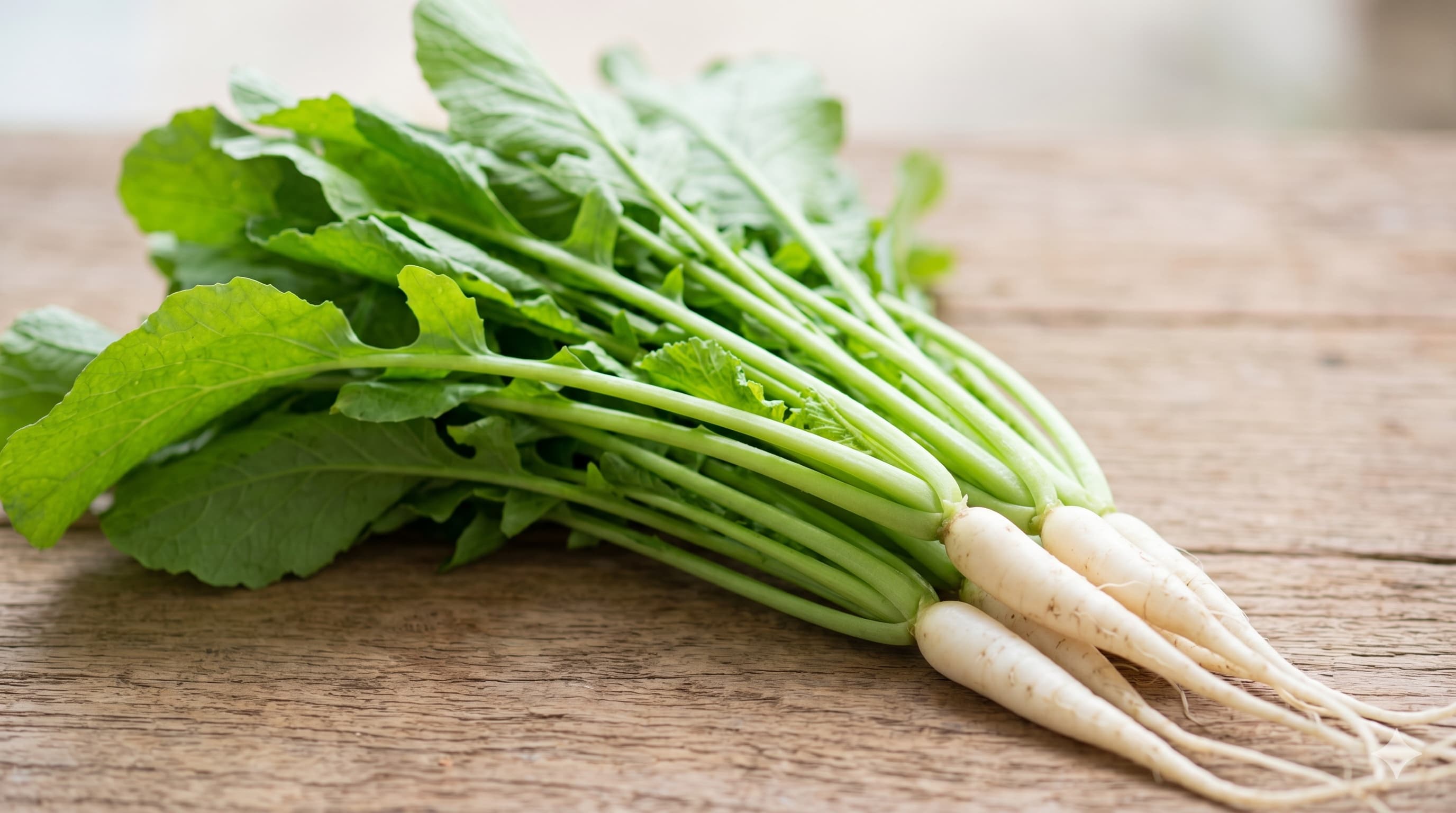
Young Radish Greens (Yeolmu)
Raphanus sativus L.
Yeolmu (열무) literally means 'young radish' — it is simply the common Korean radish harvested at its youth, before the root has a chance to swell. This is a case where Korean culinary wisdom treats the baby and the adult as entirely different vegetables with different names, different seasons, and different uses. While winter radish (mu, 무) is dense and starchy, summer yeolmu is all about the greens: thin stems, tender leaves, and a slender root no thicker than a finger. Yeolmu-kimchi is the defining taste of Korean summer — light, tangy, refreshing, often served swimming in its own brine as a cold soup. Mixed with chewy somyeon noodles and gochugaru, it becomes yeolmu bibim-guksu, one of the most beloved hot-weather meals. The Donguibogam notes radish's ability to dissolve stagnation and promote digestion, qualities especially valued in the humid Korean summer when appetite flags.
New to Young Radish Greens (Yeolmu)?
Is this edible?
Yes! These are young radish plants with thin stems, small leaves, and a tiny root. The entire plant is eaten — nothing is wasted.
What does it taste like?
Mildly peppery and refreshing, like a gentler version of radish. Think of it as somewhere between arugula and baby turnip greens, with a crisp, juicy crunch.
Where to buy
Korean grocery stores in summer (June-August). Look for bunches of thin-stemmed greens with small leaves, often labeled 'yeolmu' in English. They wilt fast, so buy fresh.
How to prepare
Trim the root ends, wash thoroughly in several changes of water (they can be sandy). For kimchi, cut into 2-inch pieces. For namul, blanch briefly and season.
Pro tip: Yeolmu-kimchi is the easiest kimchi to make — no salting overnight required. Just cut, mix with seasoning paste, and ferment for a day. It is the perfect gateway kimchi for beginners.
Traditional Medicine
Source: Donguibogam (동의보감)
Nature (性)
Cool (涼)Flavor (味)
pungent, sweet
Target Organs (歸經)
Lung (肺), stomach
Benefits
- digestion
Radish aids digestion and dissolves stagnant qi in the stomach
무는 소화를 촉진하고 기가 뭉친 것을 풀어준다
Source: 동의보감 [탕액편] 채부 나복조
- lung health
Dissolves phlegm, stops coughing, and directs lung qi downward
담을 삭이고 기침을 멎게 하며 폐의 기운을 내린다
Source: 동의보감 [탕액편] 채부 나복조
Key Compounds
This information is based on traditional Korean medicine texts (Donguibogam) and is for cultural reference only. It does not constitute medical advice.
Seasonal Availability
Yeolmu is a summer vegetable, best from June to August. It is harvested young when the greens are tender and the root is still thin and immature. Off-season, look for greenhouse-grown yeolmu at Korean groceries.
Complementary Ingredients (궁합 재료)
Processing Methods (법제)
Preserves the pungent digestive enzymes and maximizes freshness
Consumption Tips by Health Goal
digestion
Eat fresh yeolmu-kimchi in summer to stimulate appetite and aid digestion in hot weather
Culinary Profile
Flavor
Mildly pungent with a refreshing sweetness — much more delicate than mature radish. The thin stems are crisp and juicy, the small leaves slightly peppery
Texture
Thin, crisp stems with tender, slightly chewy leaves. The tiny root is crunchy but not fibrous
Common Uses
Western Substitutes