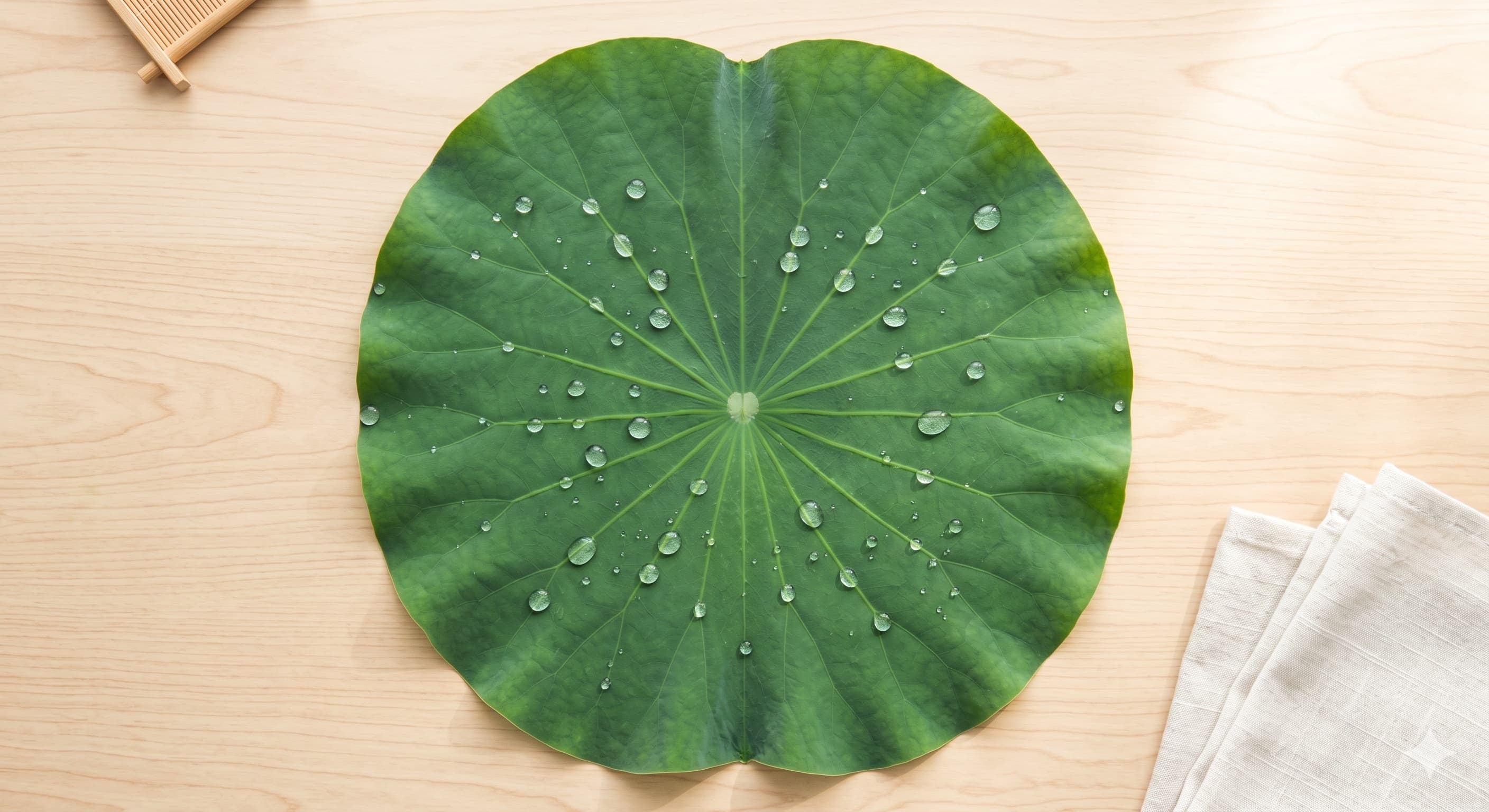
Lotus Leaf
Nelumbo nucifera
Lotus leaves (yeonip) have been used in Korean cuisine and medicine for over a thousand years, inseparable from the lotus plant's profound Buddhist symbolism — the flower that grows pure from muddy water. The Donguibogam classifies lotus leaf as neutral in nature and bitter-astringent in flavor, noting it stops bleeding, clears summer-heat, and promotes weight management by dispersing dampness. In Korean temple cuisine, lotus leaves serve as natural wrappers for rice and other ingredients, imparting a subtle, tea-like fragrance during steaming — the dish yeonip-bap (lotus leaf rice) is one of the most elegant presentations in Korean Buddhist cooking. The leaves are also dried and brewed into a mild, pleasant tea believed to aid digestion and promote calm.
New to Lotus Leaf?
Is this edible?
Yes! Lotus leaves have been used in Korean temple cuisine for centuries as fragrant food wrappers. You do not eat the leaf itself — it serves as a natural steaming wrapper that infuses the food inside with a delicate, tea-like aroma.
What does it taste like?
The leaf itself is not eaten, but it imparts a subtle, earthy, tea-like fragrance to the rice and ingredients wrapped inside it — clean, herbal, and slightly sweet.
Where to buy
Korean or Chinese grocery stores sell dried lotus leaves in the dried goods section. They come folded flat in large packages. Online retailers (Amazon, Hmart.com) also carry them.
How to prepare
Soak dried lotus leaves in warm water for 20-30 minutes until pliable. Pat dry. Place rice and ingredients in the center, fold the leaf over to enclose, and steam for 30-40 minutes.
Pro tip: Do not skip the soaking step — brittle dry leaves will crack and tear. The leaf is a wrapper, not food, so peel it away before eating. Double-wrapping (using two leaves) ensures no leaking during steaming.
Traditional Medicine
Source: Donguibogam
Nature (性)
Neutral (平)Flavor (味)
bitter
Target Organs (歸經)
Heart (心), Liver (肝), Spleen (脾)
Benefits
- circulation
Raises clear yang qi, clears heat, and has hemostatic properties
맑은 양기를 올리고 열을 내린다. 지혈 작용이 있다
Source: Donguibogam
- detox
Eliminates dampness-heat and cools summer-heat
습열을 제거하고 서열(暑熱)을 식힌다
Key Compounds
This information is based on traditional Korean medicine texts (Donguibogam) and is for cultural reference only. It does not constitute medical advice.
Seasonal Availability
Fresh leaves available in summer; dried leaves used year-round.
Culinary Profile
Flavor
Subtle floral, tea-like aroma
Texture
Used as wrapper, not eaten directly
Common Uses
Western Substitutes