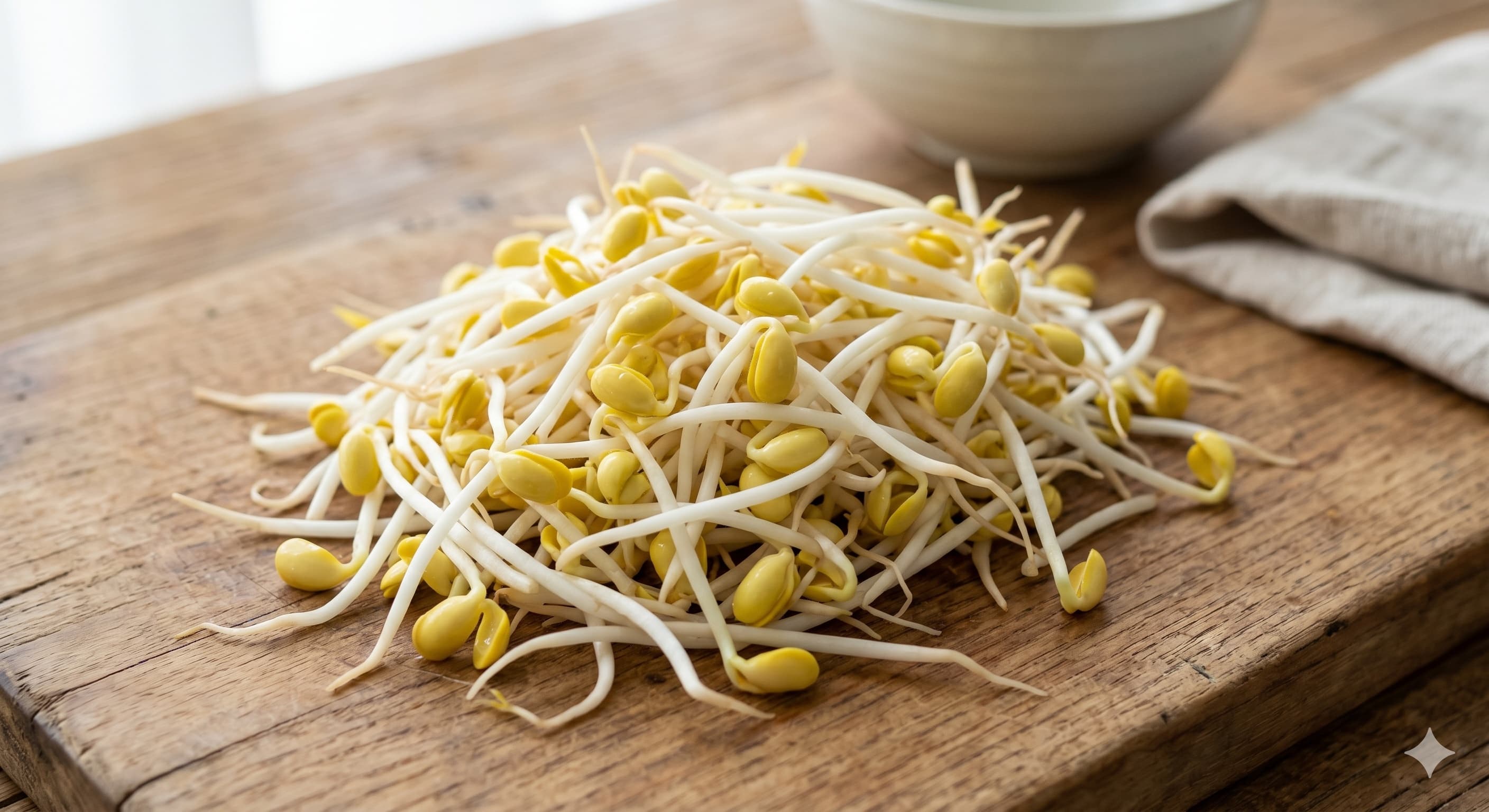
Soybean Sprouts
Glycine max (sprouts)
Soybean sprouts may be the single most eaten vegetable in Korea. They appear on the table at breakfast, lunch, and dinner — as side dish, soup, rice topping, and emergency late-night meal. Koreans have been sprouting soybeans for over a thousand years, and the Donguibogam specifically categorizes them as 대두황권 (大豆黃卷) — 'Great Bean Yellow Curl' — distinguishing them from the dried soybean, recognizing that the sprouting process creates an entirely different medicinal substance. Indeed, modern science confirms this: vitamin C, which is absent in dried soybeans, is synthesized during sprouting, and the bioavailability of isoflavones increases dramatically. Perhaps the most beloved cultural role of kongnamul is as Korea's definitive hangover cure. Kongnamul-guk (soybean sprout soup), simmered with dried anchovies or kelp and finished with gochugaru and garlic, is the morning-after ritual for millions of Koreans. The asparagine naturally present in the sprouts genuinely helps the liver metabolize alcohol byproducts, giving this folk remedy real scientific backing. The strict rule of never lifting the lid while boiling is one of the first cooking lessons Korean children learn.
Traditional Medicine
Source: Donguibogam (동의보감)
Nature (性)
Cool (涼)Flavor (味)
sweet
Target Organs (歸經)
Spleen (脾), Heart (心), Lung (肺)
Benefits
- detox
Opens blockages in all five organs and harmonizes stomach qi, helping the body clear accumulated toxins
오장의 막힌 것을 뚫고 위기를 고르게 한다
Source: 동의보감 [탕액편] 곡부 대두황권조
- digestion
Harmonizes spleen and stomach, eliminates dampness, and aids digestion
비위를 고르게 하고 습을 제거하며 소화를 도운다
Source: 동의보감 [탕액편] 곡부
- anti inflammation
Clears heat and treats damp-type joint pain and inflammation
열을 내리고 습비(관절통)를 낫게 한다
Source: 동의보감 [탕액편] 곡부
Key Compounds
This information is based on traditional Korean medicine texts (Donguibogam) and is for cultural reference only. It does not constitute medical advice.
Seasonal Availability
Soybean sprouts are grown indoors in water year-round and are always in season. They are one of the most affordable and ubiquitous vegetables in Korea — no Korean refrigerator is without them. Freshness matters: look for firm, white stems with plump yellow heads.
Complementary Ingredients (궁합 재료)
In bibimbap, the crunchy sprouts and silky spinach provide essential textural contrast — they are always served together
A touch of gochugaru transforms plain soybean sprouts into a lively, spicy-nutty side dish with depth
Sesame oil is the essential dressing for kongnamul-muchim, its nutty warmth complementing the sprouts' clean crunch
Processing Methods (법제)
Soybean sprouts MUST be boiled with the lid on and never opened during cooking. Opening the lid allows the raw soybean enzyme to oxidize, creating a strong beany off-smell that ruins the dish. Keeping the lid sealed is the single most important technique.
Consumption Tips by Health Goal
Detox (hangover relief)
Make kongnamul-guk (soybean sprout soup) and drink the broth. The asparagine in soybean sprouts helps the liver break down acetaldehyde, the toxic byproduct of alcohol. This is Korea's most famous hangover remedy.
Digestion
Eat blanched and seasoned as a side dish (kongnamul-muchim). The cool nature gently soothes an overheated digestive system without being harsh.
Anti-inflammation
Consume regularly as part of daily banchan. The combination of isoflavones and vitamin C provides gentle, sustained anti-inflammatory support.
Culinary Profile
Flavor
Clean, nutty, and slightly sweet with a fresh bean flavor; the yellow soybean heads have a richer, nuttier taste than the white stems
Texture
Distinctively crunchy and snappy — the stems break with a satisfying crunch while the bean heads are slightly soft and creamy. Proper cooking preserves this signature crunch.
Common Uses
Western Substitutes
Related Recipes
Bibimbap
비빔밥
Medium | 50 min
Soybean Sprout Soup
콩나물국
Easy | 80 min
Clear and Spicy Soybean Sprout Soup
깔끔하고 매콤한 콩나물국
Easy | 20 min
Sweet Soy Simmered Bean Sprouts (Tsukudani)
숙주 쓰쿠다니
Easy | 30 min
Clear Vegetable Noodle Soup (Cheongjeong-myeon)
청정면
Easy | 20 min
Spicy Soybean Sprout Japchae
매운콩나물잡채
Easy | 80 min
Seasoned Soybean Sprouts
콩나물무침
Easy | 10 min
Braised Tofu with Soybean Sprouts
콩나물 두부조림
Easy | 40 min
Angelica Sprout and Soybean Sprout Namul
이색 나물 : 어린신선초나물
Easy | 20 min
Microwave Soybean Sprout Namul
콩나물 나물
Easy | 10 min
Bean Sprouts in Sesame Dressing (Goma-Ae)
숙주 깨무침
Easy | 10 min